
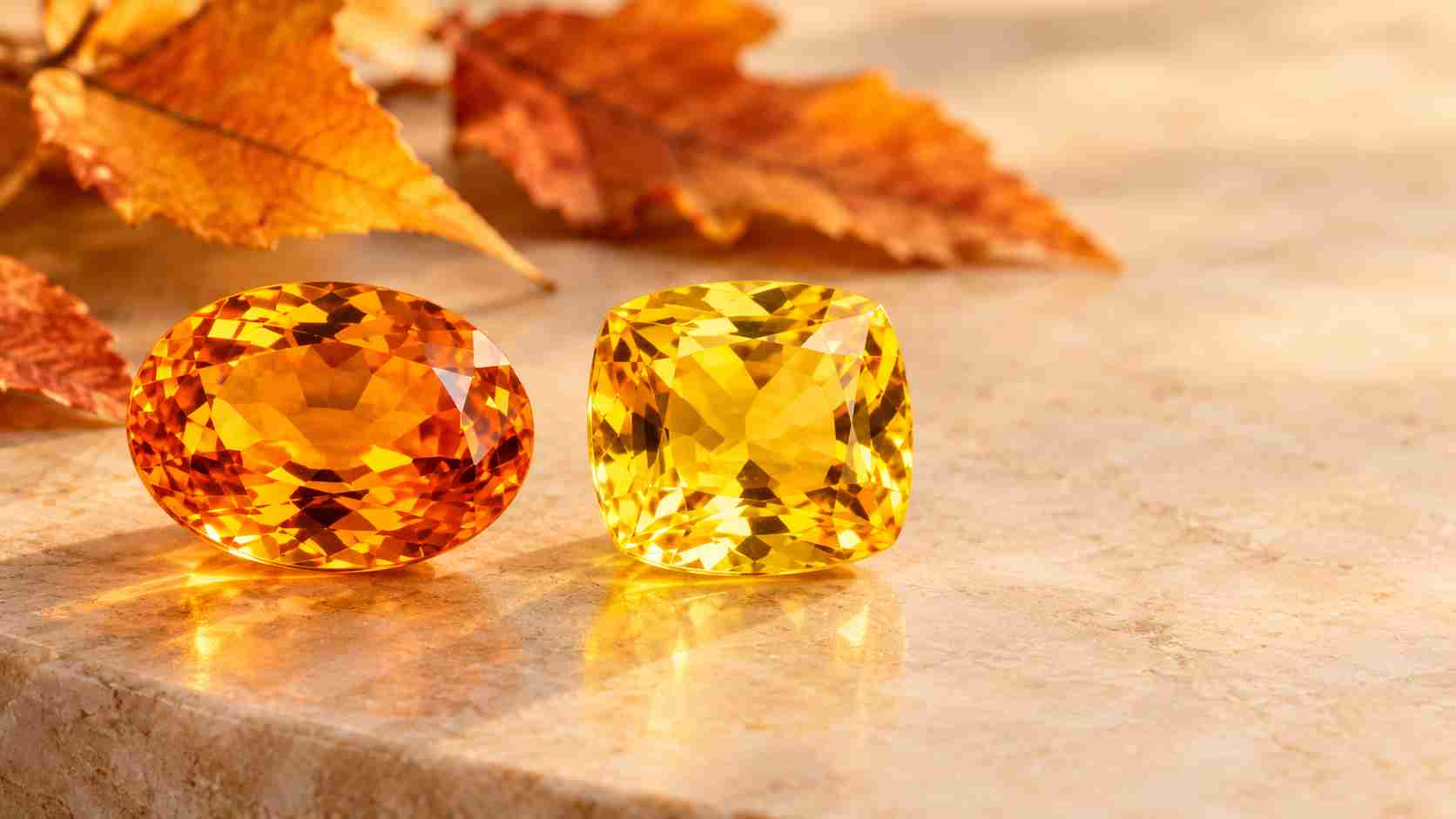
The November birthstone is not one gem but two: topaz and citrine. Both glow in warm yellow and orange shades that suit the season, and both are widely available at friendly prices. Yet they are completely different minerals, with different strengths, treatments and cleaning rules.
The short answer: the birthstone for November is topaz, and citrine is November’s second birthstone. Topaz is a harder gem that comes in many colors, with golden to orange “precious topaz” linked to November. Citrine is a yellow to brownish orange variety of quartz. Choose topaz for hardness and rare colors, and citrine for value and everyday toughness.
Quick Answer: November has two birthstones: topaz (Mohs hardness 8, colors from yellow and orange to pink and blue) and citrine (a yellow-to-orange quartz, Mohs hardness 7). Clean topaz only with warm, soapy water. Citrine can usually go in an ultrasonic cleaner, but never use steam on either.
What Is November’s Birthstone?
November’s birthstones are topaz and citrine, and both appear on the US birthstone list used by GIA and the American Gem Society. According to GIA’s birthstone guide, topaz comes in a rainbow of colors while citrine is prized for its yellow and orange hues. GIA adds that both are generally affordable because good-quality stones are not as rare as many other gems.
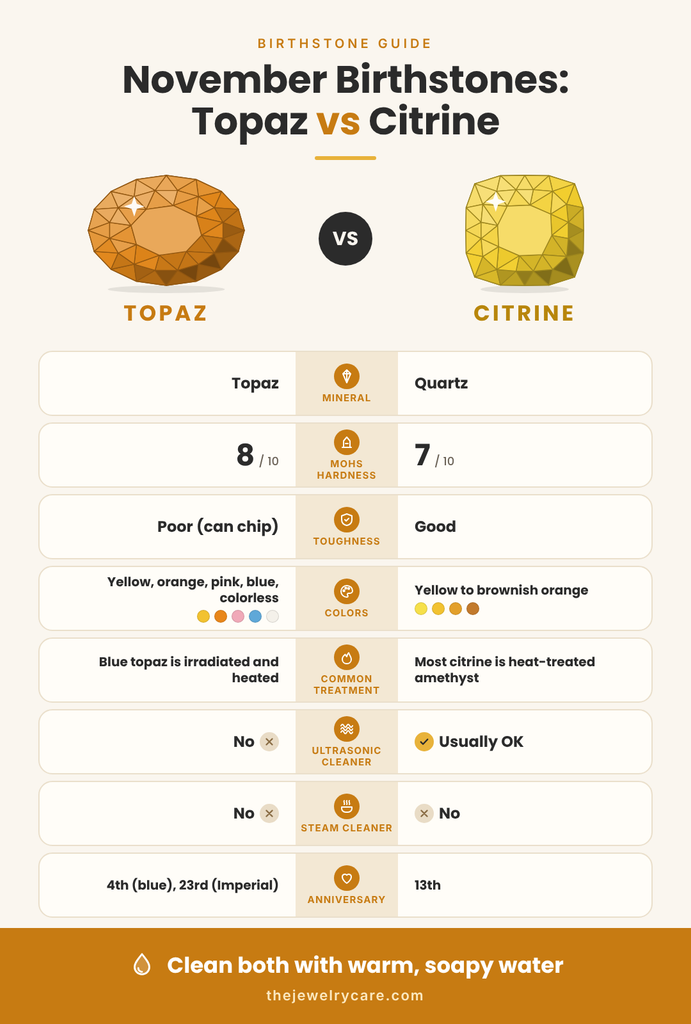
The two are often confused because they can look almost identical in yellow. For centuries, almost any yellow gem was called topaz. Today gemologists separate them easily by hardness, density and optical tests. The infographic below shows the key differences at a glance.
Why Does November Have Two Birthstones?
November has two birthstones because topaz and citrine share the same golden colors and were confused for centuries. The American Gem Society explains that through much of history, all yellow gemstones were considered topaz and all topaz was thought to be yellow. Modern birthstone lists keep both, which gives November birthdays a choice of price, color and durability. Next, here is what makes topaz special.
Topaz Birthstone: What Is Topaz?
Topaz is an aluminum silicate mineral containing fluorine, rated 8 on the Mohs hardness scale (a 1–10 scale of scratch resistance). That makes it harder than quartz, so a topaz resists everyday scratches better than citrine does. GIA lists its chemistry as Al₂(F,OH)₂SiO₄, its specific gravity (density compared with water) as 3.53, and its colors as yellow, orange, brown, pink to red, blue, light green and colorless, according to the GIA topaz entry.
Hardness is not the whole story. Topaz has poor toughness, meaning a hard knock can chip or split it along internal planes. That is why topaz rings benefit from protective settings, which the buying section covers below.
What Color Is the November Topaz Birthstone?
The topaz linked to November is “precious topaz”, in golden yellow to orange shades, while blue topaz is listed by GIA as a December birthstone. Topaz has more natural color variety than most gems, and each color has its own story and value.
| Topaz color | How it gets its color | What to know |
|---|---|---|
| Golden yellow to orange (precious topaz) | Natural | The classic November birthstone color |
| Imperial topaz (pinkish orange to reddish orange) | Natural | Among the most valued topaz colors; the gem of the 23rd anniversary |
| Pink and purplish pink | Natural, sometimes heat-treated | Fine natural pink is rare; Pakistan is a known source |
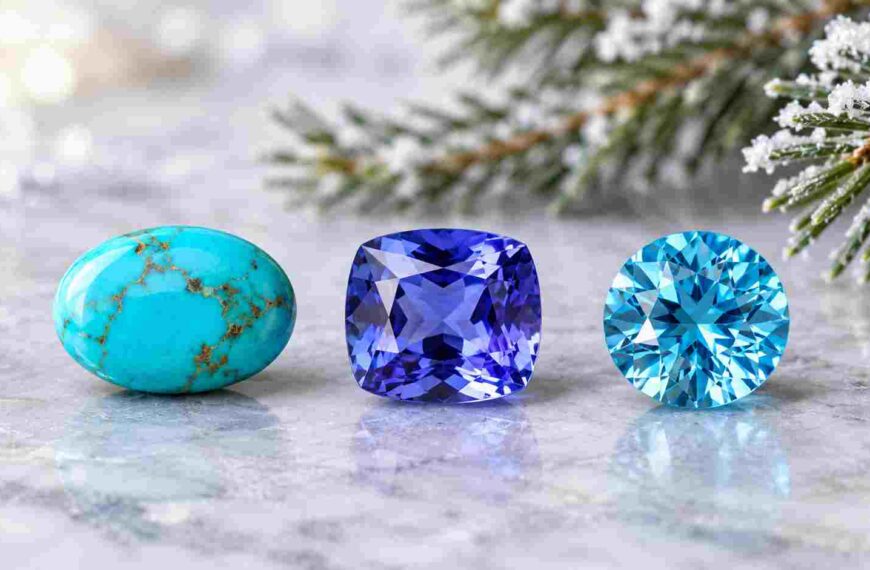
| Blue (sky, Swiss, London) | Almost always irradiation plus heating of colorless topaz | Permanent color; the gem of the 4th anniversary; a December birthstone |
| “Mystic” rainbow topaz | A thin artificial coating on colorless topaz | The coating can wear off with abrasive cleaners |
| Colorless | Natural | Used as a diamond alternative and as the raw material for blue topaz |
GIA explains that the vast majority of blue topaz is the permanent result of treating colorless topaz with irradiation and heating, and that the rainbow effect in Mystic topaz comes from a thin artificial film.
Is Blue Topaz Safe to Wear?
Yes. The US Nuclear Regulatory Commission says it has no reason to believe that wearing irradiated gemstones such as blue topaz is harmful. Because irradiation can make stones slightly radioactive at first, NRC rules require the stones to be set aside to let any radioactivity decay, and surveyed before they reach the market.
The NRC also estimated the dose to a person wearing a large six-carat blue topaz at the highest radioactivity allowed: about 0.03 millirem in the first year, and falling after that. Once stones are released, jewelers and consumers need no license to sell or own them.
What Does the Topaz Birthstone Mean?
Topaz has long been linked with strength and calm in folklore. According to GIA, the ancient Greeks believed topaz gave them strength, and from the 1300s to the 1600s Europeans thought it could thwart magic spells and dispel anger. These are traditional beliefs, not proven effects, but they explain why topaz has been a popular gift for so long.
The name “Imperial topaz” has two origin stories. One links it to the Russian royal family, who reportedly kept the finest Ural Mountains topaz for their own use. The other, popular in Brazil, links it to an 1881 visit by Emperor Pedro II to Ouro Preto, where he was given a reddish topaz.
Where Is Topaz Found?
Brazil’s Minas Gerais state is one of the most important sources of fine topaz, and northwestern Pakistan is known for pink topaz. GIA notes that Ghundao Hill, near the town of Katlang in Pakistan, has been mined since 1972, and that its finest violet-tinged pink stones are rare even there. Other sources include Namibia, Nigeria, Madagascar, Mexico, Myanmar, Sri Lanka, Russia and the United States.
Two US states honor topaz. Utah law names topaz the state gem, and the Utah Geological Survey notes that crystals at Topaz Mountain are naturally amber colored but become colorless after exposure to sunlight, a real-world example of why some topaz should be kept out of strong sun. Texas adopted blue topaz as its state gem in 1969.
Topaz also holds a museum record. The Smithsonian’s American Golden Topaz weighs 22,892.5 carats and was cut over two years from an 11.8 kg (26 lb) Brazilian cobble, with 172 facets. Now for November’s second stone.
Citrine: November’s Second Birthstone
Citrine is the transparent, pale yellow to brownish orange variety of quartz, rated 7 on the Mohs scale with good toughness. Its name is believed to come from the French word citron, meaning lemon. GIA lists citrine’s chemistry as SiO₂ (silicon dioxide), its specific gravity as about 2.66, and calls it the top-selling yellow-to-orange gem thanks to its color, durability and affordability.
Because citrine is lighter than topaz (2.66 versus 3.53), a citrine looks larger than a topaz of the same carat weight. That is one reason citrine is popular for large cocktail rings and bold pendants.
Is Most Citrine Natural or Heat-Treated?
Most citrine sold today is heat-treated amethyst or smoky quartz, because natural citrine is rare. The American Gem Society explains that citrine’s yellow color comes from traces of iron, which occurs rarely in nature, so most citrine gems are made by heat treating amethyst and smoky quartz. The resulting color is stable and is an accepted, common treatment.
Natural citrine does exist. GIA notes that Bolivia’s Anahí mine is an important source of natural, unheated citrine, and that it also produces ametrine, a single crystal that shows both purple amethyst and yellow citrine. Other sources include Brazil, Spain, Madagascar, Mexico and Uruguay.
What Does the Citrine Birthstone Mean?
In folklore, citrine has been called a stone of calm, warmth and prosperity, and it is the gem for the 13th wedding anniversary. Because it was long confused with topaz, people believed citrine shared topaz’s powers, such as soothing tempers. As with topaz, these are traditional beliefs rather than proven effects. With both stones introduced, the next question is which one to buy.
Topaz vs Citrine: How Are the Two November Birthstones Different?
Topaz is harder but more brittle, while citrine is slightly softer but tougher and usually less expensive. The table below compares them side by side.
| Feature | Topaz | Citrine |
|---|---|---|
| Mineral family | Topaz (aluminum silicate with fluorine) | Quartz (silicon dioxide) |
| Mohs hardness | 8 | 7 |
| Toughness | Poor; can chip or split from a hard knock | Good |
| Specific gravity | 3.53 | 2.66 |
| November colors | Golden yellow, orange, Imperial pinkish orange | Pale yellow to brownish orange |
| Common treatments | Irradiation and heat (blue); coatings (Mystic) | Heat treatment of amethyst or smoky quartz |
| Ultrasonic cleaner | Not recommended | Usually safe |
| Steam cleaner | Not recommended | Not recommended |
| Anniversary | 4th (blue), 23rd (Imperial) | 13th |
You cannot reliably tell a yellow topaz from a citrine by eye. A jeweler can separate them quickly by refractive index (how strongly the stone bends light) and specific gravity. If the label matters to you, ask the seller to write the gem name and any treatment on the receipt.
How Do You Choose the Right November Birthstone?
Choose topaz if you want maximum scratch resistance or a rare color such as Imperial or pink; choose citrine if you want a large, warm stone at a lower price for everyday wear. Your lifestyle and the type of jewelry matter as much as color.
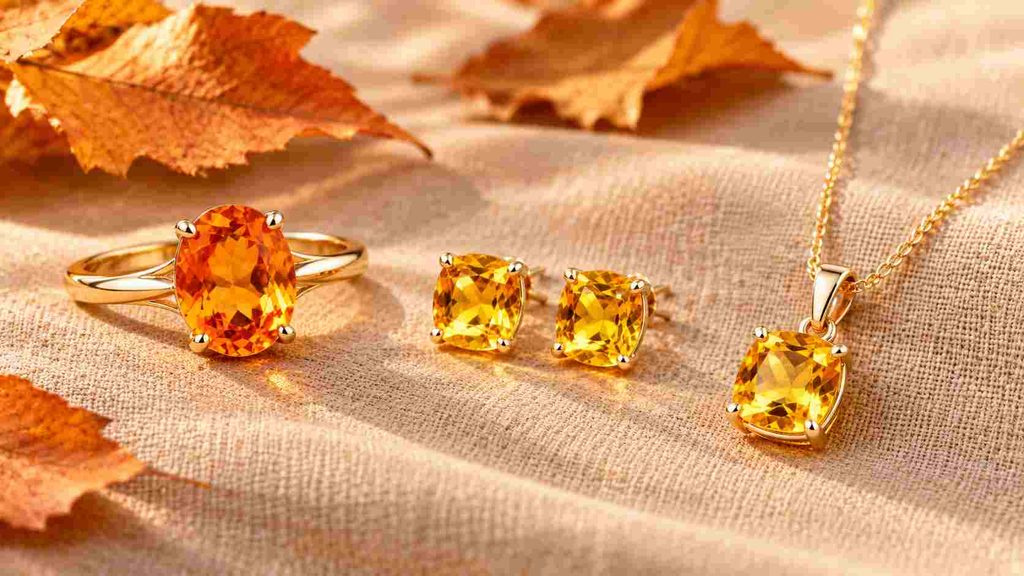
For rings worn every day, topaz’s hardness is a plus, but its poor toughness means a protective bezel or halo setting is wise. Citrine’s better toughness makes it forgiving in rings, though its lower hardness means it can scratch over years of wear. A topaz or citrine is also a popular choice for a meaningful ring; our guides on promise vs engagement rings and the promise ring finger cover the etiquette.
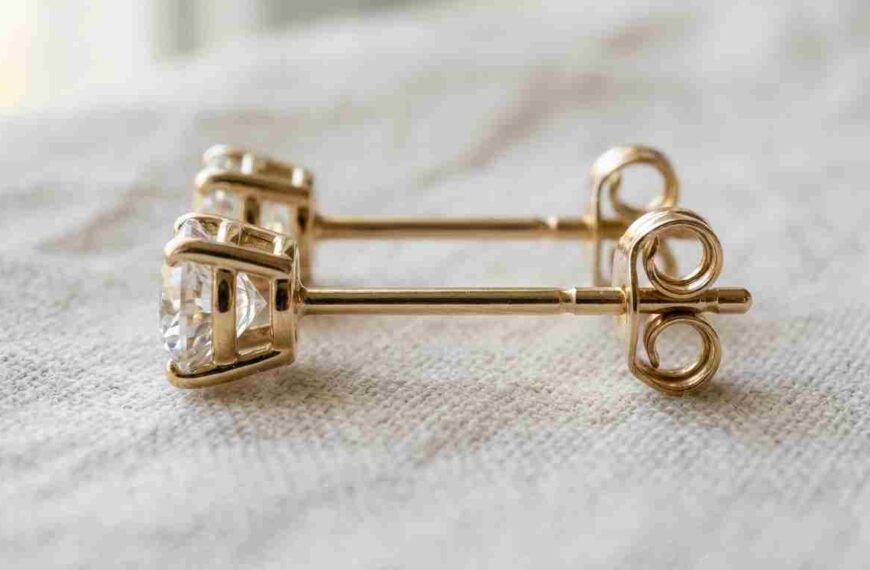
For earrings and pendants, which take fewer knocks, either stone works well. Studs are a classic November gift, and our guide to choosing post earrings helps you pick a secure back. Birthstone pendants are popular with men too, as our men’s pendant guide shows, and a birthstone bracelet suits anyone, as explained in our guide to men’s bracelet styles.
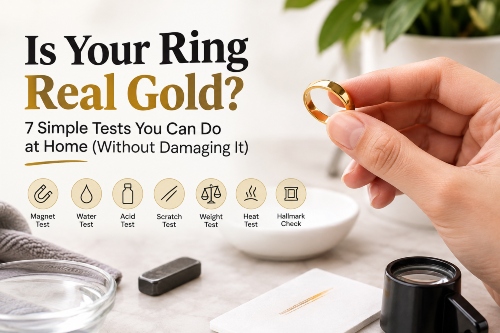
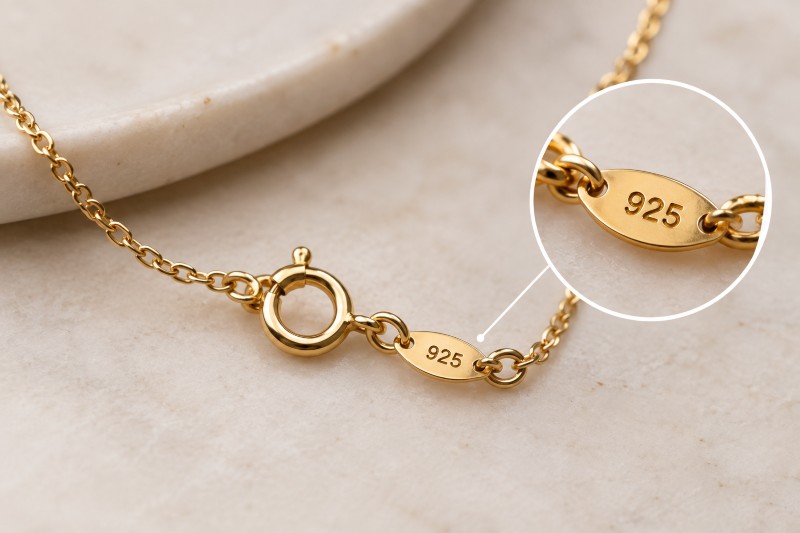
For the setting metal, yellow and rose gold warm up golden topaz and citrine, while white gold and platinum make blue topaz look crisper. If you are buying in gold, check the karat stamp; our guide to spotting real gold explains the marks, and our 14K gold ring value guide shows how metal value is set.
How Do You Clean and Care for November Birthstones?
Clean both topaz and citrine with warm water, a few drops of mild dish soap and a soft brush; avoid steam for both, and avoid ultrasonic cleaners for topaz. GIA warns that high heat or sudden temperature changes can cause internal breaks in topaz, and that steam cleaning is risky for citrine because heat could crack it.
| Care step | Topaz | Citrine |
|---|---|---|
| Warm soapy water and soft brush | Yes | Yes |
| Ultrasonic cleaner | No | Usually OK |
| Steam cleaner | No | No |
| Long sunlight or heat exposure | Avoid; some yellow-brown topaz can fade | Avoid high heat |
| Abrasive polish or buffing | Never on Mystic (coated) topaz | Gentle only |
| Storage | Separately, so harder gems and metals cannot chip it | Separately, away from diamonds, sapphires and topaz that can scratch it |
Note the difference from diamonds. A diamond ring can often go in an ultrasonic cleaner, as our guide to cleaning a diamond ring explains, but a topaz in the same piece should not. If a ring mixes diamonds and topaz, use the gentle soap method for the whole piece. For the gold chain on a birthstone pendant, our gold chain cleaning guide has step-by-step instructions.
Stop! Don’t do this. Never steam-clean topaz or citrine, never drop topaz onto a hard floor or tile, and never use a jewelry polishing wheel on Mystic topaz. Each of these can crack the stone or strip its coating permanently.
November Birthstone Myths vs Facts
| Myth | Fact |
|---|---|
| “Blue topaz is November’s main birthstone.” | GIA lists precious (golden to orange) topaz for November and blue topaz for December. |
| “Blue topaz is radioactive and unsafe.” | The NRC says it has no reason to believe wearing irradiated gems is harmful, and stones are checked before sale. |
| “Topaz is unbreakable because it’s hard.” | Topaz is hard (8) but has poor toughness and can chip from a knock. |
| “Citrine and yellow topaz are the same stone.” | They are different minerals: topaz is an aluminum silicate; citrine is quartz. |
| “All citrine is natural.” | Most citrine is heat-treated amethyst or smoky quartz; natural citrine is rare. |
Frequently Asked Questions About the November Birthstone
What is the birthstone for November?
The birthstone for November is topaz, with citrine as November’s second birthstone. Both are on the US birthstone list recognized by GIA and the American Gem Society. Golden to orange “precious topaz” is the November topaz color, while blue topaz is usually listed for December. Citrine ranges from pale yellow to brownish orange.
What color is the November birthstone?
November’s birthstone colors are mainly golden yellow and orange. Precious topaz ranges from yellow to orange and pinkish orange (Imperial topaz), and citrine ranges from pale lemon yellow to deep brownish orange. Topaz also comes in pink, blue and colorless, so a November birthday can be honored with almost any topaz color.
Which is more expensive, topaz or citrine?
Both are affordable compared with many gems, but fine natural topaz in rare colors, such as Imperial or natural pink, usually costs more than citrine. Blue topaz and citrine are widely available and among the most budget-friendly colored stones. Price depends on color, clarity, cut, size and whether the color is natural or treated.
Can topaz be worn every day?
Yes, with sensible care. Topaz’s hardness of 8 resists scratches well, but its poor toughness means a sharp knock can chip it. Choose a protective setting such as a bezel for rings, and take topaz rings off for sports, gardening and heavy work. Earrings and pendants face fewer knocks and suit daily wear.
Is a topaz birthstone good for a gift?
Yes. Topaz is the traditional November birthstone and the gem for the 4th (blue) and 23rd (Imperial) wedding anniversaries, which makes it a meaningful gift. Studs, pendants and protected-setting rings are popular choices. Ask the seller to note the gem name and any treatment on the receipt.
Can I add a November birthstone to a permanent bracelet?
Many permanent jewelry studios offer small birthstone charms that can be welded onto a chain. Ask whether the charm is real topaz or citrine, or a glass or cubic zirconia stand-in. Our guide to how permanent jewelry works explains the process and the metals used.
Choosing Your November Birthstone With Confidence
The November birthstone gives you two good choices: topaz for hardness and rare colors, and citrine for value, size and toughness. Whichever you choose, ask about treatments, pick a setting that protects the stone, and clean it with warm, soapy water instead of steam. A topaz or citrine cared for this way will keep its warm glow for decades. For more on caring for the gold around your gem, read our gold chain cleaning guide next.

 By