
What is permanent jewelry? Permanent jewelry is a fine chain, usually a bracelet, anklet or necklace, that’s fitted to your body and closed with a tiny weld instead of a clasp. You wear it day and night. It isn’t truly permanent: a jeweller (or you, with small cutters) can snip it off in seconds, and it can often be welded back on.
You may also see it called welded jewelry, an infinity bracelet or clasp-less jewelry. They all mean the same thing.
This guide answers the questions people ask before booking: how it’s done, what it costs in 2026, which metals last, whether it’s safe for MRIs, airports and pregnancy, how to care for it, and how to take it off.
Permanent jewelry at a glance
| Question | Quick answer |
|---|---|
| What is it? | A chain welded closed on your body, with no clasp |
| Where can you wear it? | Wrist, ankle and neck; some studios also weld rings |
| How long does it take? | About 10–20 minutes per piece |
| Does it hurt? | No. The spark doesn’t touch your skin |
| Typical cost (US, 2026) | About $50–$150 for silver or gold-filled; about $150–$400+ for solid 14K gold |
| Best metals | Solid 14K gold, 14K gold-filled, sterling silver, platinum |
| Can it come off? | Yes, by cutting one link; it can usually be re-welded |
| How long does it last? | Years with solid gold or gold-filled; less with plated chains |
What does permanent jewelry mean?
The word “permanent” describes how you wear it, not how long the metal lasts. A normal bracelet has a clasp, and you take it on and off. A permanent bracelet has no clasp at all. Once it’s closed, the only way off is to cut it.
People choose it for three main reasons:
- Convenience: No clasp to fiddle with, nothing to forget or lose on the bathroom counter.
- Meaning: Matching pieces with a best friend, sister, mother or partner, or a piece marking a milestone.
- A clean look: A thin chain that sits close to the skin and layers well with a watch or other bracelets.
How permanent jewelry works, step by step
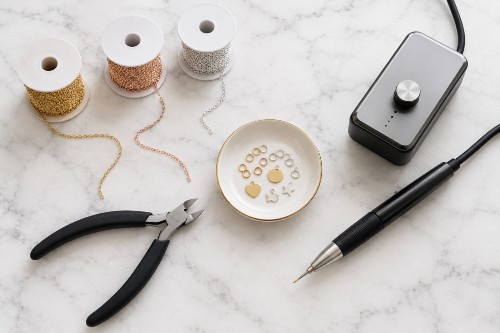
Image prompt: Clean flat-lay photo of permanent jewellery studio tools on a white marble counter: three spools of fine gold, rose-gold and silver chain, small flush cutters, a few tiny jump rings and charms in a dish, and a compact pulse arc welder with its stylus. Bright natural light, top-down view, no people, no text, no logos. 3:2 ratio.
Alt text: Permanent jewelry tools: chain spools, cutters, jump rings, charms and a pulse arc welder
File name: permanent-jewelry-tools.jpg
- Choose your chain and metal. Thicker chains last longer; thinner ones look more delicate.
- Add charms or connectors (optional). Decide first, because they change the final length.
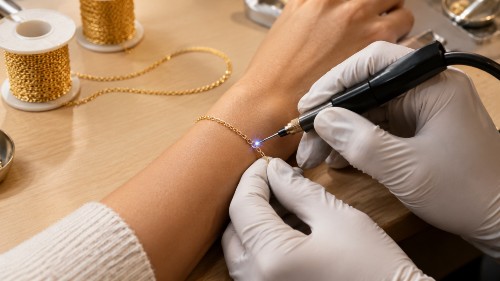
- Fit the chain. The jeweller wraps it around your wrist, ankle or neck and cuts it to size. A good fit leaves room for a fingertip underneath.
- Add a jump ring. A tiny open ring joins the two ends of the chain.
- Protect your skin. A leather or rubber pad goes under the join, and a grounding clip is attached to the chain.
- Weld it closed. A pulse arc welder sends a split-second electrical pulse that fuses the jump ring shut. You may see a small flash; you shouldn’t feel heat.
- Check the join. The jeweller checks that the ring is fully closed and smooth, then gives you care advice.
Ask the studio if they’ll give you eye protection or look-away instructions during the weld. The flash is bright, and it’s a fair question to ask.
How much does permanent jewelry cost?
Prices depend mostly on the metal, the chain’s thickness and length, and any charms. These are typical US studio prices in 2026:
| Metal | Bracelet | Anklet | Necklace |
|---|---|---|---|
| Sterling silver | $50–$90 | $65–$110 | $90–$160 |
| 14K gold-filled | $60–$110 | $75–$130 | $110–$190 |
| Solid 14K gold | $150–$400+ | $190–$500+ | $300–$900+ |
| Charms / connectors | +$20–$80 each (more for diamonds) |
Treat these as guides. Gold prices move daily, so solid-gold pieces are often priced by the inch and change over time. Prices also vary a lot by country and city.
What’s usually included: the chain, the jump ring, the weld, and basic aftercare advice.
What to ask about: free or paid re-welds, repairs if a link breaks, and the fee for cutting it off and adding a clasp later.
Solid gold costs more because you’re paying for real gold content. Our guides on how much a 14K gold bracelet is worth and how much a 14K gold ring is worth show how gold value is calculated by weight, and the same maths applies to a welded chain.
Which metal is best for permanent jewelry?
Because you’ll wear it in the shower, at the gym and while you sleep, the metal matters more than with ordinary jewellery.
| Metal | Durability | Tarnish | Skin-friendliness | Value | Best for |
|---|---|---|---|---|---|
| Solid 14K gold | High | Very low | High (ask about nickel in white gold) | High | A true long-term piece |
| 14K gold-filled | Good | Low | High | Low–medium | The best value for daily wear |
| Sterling silver | Medium | Yes, cleanable | High | Low | Cool tones; lowest price |
| Platinum | Very high | None | Very high | High | Sensitive skin; premium budgets |
| Gold-plated | Low | Plating wears off | Low over time | Very low | Avoid for permanent wear |
Solid 14K gold is the most popular choice. 14K (marked 14K or 585) is 58.3% gold, and the alloy makes it stronger than 18K or 22K, so a fine chain is less likely to stretch. The Gemological Institute of America’s guide to gold karats explains that lower-karat gold is generally more durable, while higher-karat gold is softer.
Gold-filled is often confused with gold-plated, but it’s very different. Gold-filled has a thick layer of real gold bonded to a base metal by heat and pressure. Under the FTC’s Jewelry Guides, “gold filled” must be a mechanically applied gold-alloy layer thick enough for reasonable durability, marked with its karat. When the FTC updated the Guides in 2018, it kept the weight ratio for gold-filled products, which is why genuine pieces are marked like “1/20 14K GF”.
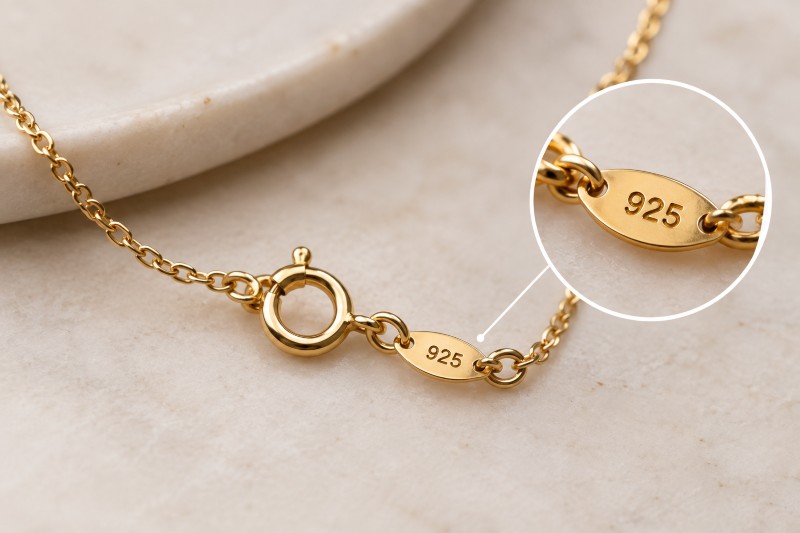
Sterling silver (925) is affordable and bright but tarnishes with sweat, lotion and chlorine. Learn more in our guide on what a silver bracelet is made of.
Gold-plated chains have only a thin gold layer that wears through, exposing the base metal underneath. Since you can’t easily take a welded chain off for re-plating, skip plated chains.
Before the weld, ask to see the stamp or the label on the chain spool. If you want to double-check at home later, use our guide on how to tell if gold is real.
Is permanent jewelry safe?
For most people, yes. The weld lasts a fraction of a second, and a pad keeps the spark away from your skin. The real safety questions come later, in daily life.
Metal allergies
Nickel is one of the most common causes of skin reactions to jewellery. The American Academy of Dermatology says jewellery is a common way people develop a nickel allergy, and recommends nickel-free or high-quality metals such as sterling silver, higher-karat gold and platinum. Mayo Clinic adds that once a nickel allergy develops, it usually lasts for life.
Because permanent jewellery never comes off, a reaction won’t go away on its own. If you’re sensitive, choose solid yellow gold, gold-filled or platinum, and ask whether any white-gold chain contains nickel.
MRI scans and medical procedures
RadiologyInfo.org, run by the American College of Radiology and the Radiological Society of North America, advises patients to remove all metallic jewellery before an MRI. Metal can be pulled by the magnet, heat up, or blur the images.
What this means for you:
- Always tell your medical team that you’re wearing a welded chain.
- Expect to remove it for an MRI and for some surgeries. The team decides, not the studio.
- Keep small flush cutters at home or know a studio nearby. One snip removes it, and most studios can re-weld the same chain later.
Don’t rely on a studio’s promise that gold is “MRI safe.” Only the imaging team can make that call.
Airport security
Thin permanent chains rarely set off metal detectors. TSA’s own blog has said passengers do not have to remove jewelry at checkpoints, and heavier pieces are what usually trigger alarms. If a scanner does alarm, officers can resolve it with a quick pat-down. You won’t be asked to cut a welded chain off.
Pregnancy and swelling
Wrists and ankles can swell with heat, salty food, long flights, injury, and pregnancy. Health guidance on swelling during pregnancy notes that mild swelling of the face, hands and feet is common, and that sudden swelling of the face and hands should be checked by a doctor.
If you’re pregnant or planning to be, choose a looser fit or an anklet-free option, and cut the chain off straight away if it ever feels tight, pinches, or leaves a deep mark.
Sports and work
Many sports allow jewellery but give officials the final say. For example, the National Federation of State High School Associations lifted its jewellery ban in high school baseball, but still says any jewellery that could injure a player should be removed. Workplaces with machinery, food handling or clinical rules may also ban jewellery. Check before you book.
Pros and cons of permanent jewelry
| Pros | Cons |
|---|---|
| No clasp to break, lose or fiddle with | Must be cut off for some medical scans and jobs |
| Hard to lose by accident | Fine chains can snag on knitwear, towels and hair |
| Meaningful for friends, couples and families | Can’t swap it to match an outfit |
| Solid gold holds real metal value | Quality varies a lot between studios |
| Quick appointment, no pain | Swelling can make a tight fit uncomfortable |
Is permanent jewelry right for you?
It’s a good fit if you:
- Already wear the same bracelet or necklace every day
- Like a minimal, low-maintenance look
- Want a shared piece with someone special
- Are fine with cutting it off when you need to
Think twice if you:
- Change jewellery often to match outfits
- Work with machinery or in a no-jewellery job
- Have frequent swelling or are pregnant
- Have a metal allergy and the studio can’t confirm the alloy
If you’d rather keep the option to take it off yourself, a regular chain with a secure lobster clasp may suit you better. Men who want a similar everyday look can see our guides to whether men wear bracelets and wearing pendants.
Permanent jewelry for couples and friends
Matching welded bracelets have become a popular alternative or addition to rings. Some couples get them as a commitment piece before engagement. If you’re comparing options, our guides on promise rings vs engagement rings and which finger a promise ring goes on explain the differences.
Tips for matching pieces:
- Choose the same chain style in each person’s preferred metal.
- Add a small initial or birthstone charm for meaning.
- Book together, but get each piece fitted individually; wrist sizes differ.
How to care for permanent jewelry
Do:
- Rinse it with fresh water after the beach, pool, gym or heavy sweating.
- Pat it dry, especially under charms and connectors.
- Let lotion, sunscreen and perfume dry before they touch the chain.
- Check the weld and links every few weeks for gaps or thin spots.
Don’t:
- Use bleach, harsh cleaners or abrasive powders.
- Tug or twist the chain when it snags; slide it free instead.
- Use an ultrasonic cleaner on fine chains without asking your jeweller.
Simple weekly clean:
- Mix warm water with a drop of mild dish soap.
- Brush the chain gently with a soft toothbrush while you’re wearing it.
- Rinse under clean water.
- Pat dry with a soft, lint-free cloth.
For a deeper clean of gold chains, follow our step-by-step guide to cleaning a gold chain at home. If your piece has a diamond charm, use the stone-safe method in how to clean a diamond ring.
Common problems and how to fix them
| Problem | Likely cause | What to do |
|---|---|---|
| It keeps snagging | Chain too fine or too loose | Ask for a slightly thicker chain or shorter fit next time |
| Skin is red or itchy | Metal reaction or trapped soap | Rinse and dry; if it continues, cut it off and switch metals |
| Green or black marks | Copper in the alloy or worn plating | Clean it; switch to solid gold or platinum |
| It looks dull | Soap, lotion and sunscreen build-up | Do the weekly clean above |
| A link has opened | Snag or weak chain | Stop wearing it hard; take it to a jeweller |
| It feels tight | Swelling | Cut it off immediately; don’t wait |
How to remove permanent jewelry
Yes, you can take it off, and it takes seconds.
- Find the jump ring (the small ring at the weld), or any link next to it.
- Slide a finger under the chain so it’s lifted off your skin.
- Snip one link with small flush cutters or sharp nail clippers.
- Keep the chain. Most studios can re-weld it with a new jump ring, or add a clasp so you can wear it as normal jewellery.
In an emergency, medical staff can cut it with standard tools.
Questions to ask before you book
- What metal and karat is this chain, and can I see the stamp or spool label?
- Is it solid gold, gold-filled, silver or plated?
- Does it contain nickel?
- How much room will you leave for swelling?
- How experienced is the person welding, and what protection do you use?
- What’s the total price, including charms?
- Do you offer free re-welds or repairs, and for how long?
- What does it cost to remove it or add a clasp later?
If a studio can’t answer clearly, book somewhere else.
Frequently asked questions
What is permanent jewelry in simple words? A chain bracelet, anklet or necklace that’s welded closed on you instead of using a clasp.
How much is permanent jewelry? In the US in 2026, usually about $50–$150 for silver or gold-filled and about $150–$400+ for solid 14K gold, plus any charms.
Does permanent jewelry hurt? No. A pad protects your skin, and most people feel nothing.
How long does permanent jewelry last? Solid gold and gold-filled pieces can last years. Thin silver and plated chains wear out sooner.
Can you shower and swim with permanent jewelry? Yes, but rinse off chlorine and salt water and dry it well. Chlorine dulls silver and some gold alloys over time.
Can I wear permanent jewelry during an MRI? Usually not. Imaging teams generally ask patients to remove metal jewellery. Tell them about it, and expect to cut it off.
Will permanent jewelry set off airport security? Thin chains rarely do. If it alarms, a short pat-down usually clears it.
Can permanent jewelry be re-welded after removal? Usually yes, if the chain isn’t damaged. Many studios re-weld for a small fee or free.
Can men get permanent jewelry? Yes. Thicker chains, such as 2.5–3 mm curb or Figaro links, are popular with men.
Where can I get permanent jewelry? At jewellery stores, dedicated studios and pop-up events. Choose one that shows metal stamps and explains its repair policy. Some jewellery stores that weld chains also pierce ears, so you can ask about both.

 By