
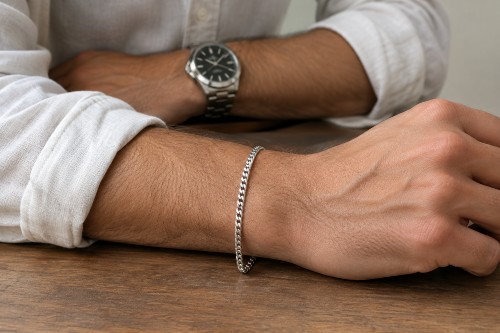
Do men wear bracelets? Yes. Men have worn bracelets for thousands of years, and today they’re one of the most common pieces of men’s jewelry, alongside watches and rings. A single slim chain, leather band or beaded bracelet works with casual clothes, office wear and even a suit, as long as it fits properly and matches the rest of what you’re wearing.
What holds most men back isn’t whether bracelets are acceptable. It’s not knowing where to start, what size to buy, or what to do when the bracelet slides over the hand, turns the skin green or snaps open on the bus. This guide answers all of that in plain terms, so you can choose a bracelet you’ll actually wear every day.
A short history of men wearing bracelets
The idea that bracelets are only for women is surprisingly recent. In ancient Mesopotamia, kings wore them openly as symbols of power. A wall relief from the palace of the Assyrian king Ashurnasirpal II, now in the British Museum, shows the king riding in his chariot wearing two rosette wristlets, positioned exactly where a man would wear a watch today. That carving dates to around 874 BC.
Bracelets have also carried deep religious meaning for men. For Sikh men and women, the kara, a plain steel bracelet, is one of the five articles of faith. A guide from the Sikh Coalition, hosted by the University of Massachusetts Dartmouth, explains that the kara is meant to be worn at all times as a reminder of a Sikh’s commitment to their faith. Across South Asia, the Middle East, Africa and the Mediterranean, men have long worn bracelets as protection, as signs of status, and as markers of belonging.
In other words, today’s man wearing a bracelet isn’t following a trend. He’s returning to one of the oldest forms of personal style there is.
Why do men wear bracelets today?
Most men wear bracelets for a mix of style and meaning. A bracelet adds a small point of interest to an outfit without the commitment of a statement necklace or several rings. It can balance a watch on the opposite wrist, soften a formal look, or add texture to a plain T-shirt.
Many bracelets also carry personal meaning. Some men wear a bracelet given by a partner or child, a matching piece with a best friend, or a religious bracelet that reflects their faith. Couples increasingly choose matching bracelets instead of, or as well as, rings, including welded, clasp-free pieces. If that interests you, our guide to permanent jewelry explains how it works.
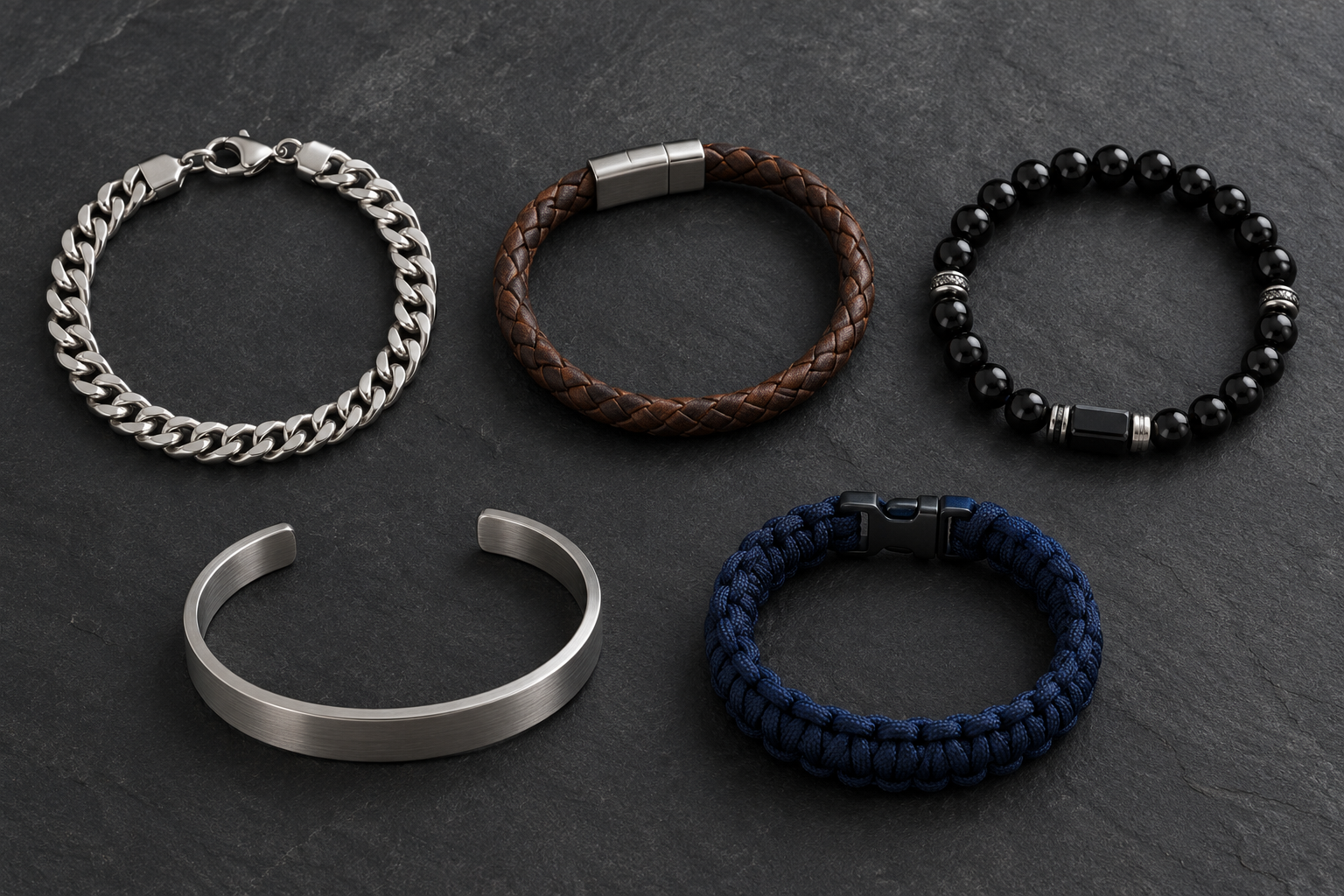
Which bracelet styles suit men best?
The right style depends on how you dress, how much you use your hands, and how bold you want to look. Most men find it easiest to start with one simple, narrow piece and build from there.
| Style | What it looks like | Best for | Good first choice? |
|---|---|---|---|
| Chain (curb, figaro, box, rope) | Linked metal | Everyday wear, office, evenings | Yes, in 3–5 mm |
| Leather band | Flat or braided leather with a clasp | Casual and smart-casual looks | Yes |
| Beaded | Stone, wood or metal beads on cord | Casual wear, stacking | Yes, in dark stone |
| Cuff | Open, rigid metal band | Bold, minimal style | Later |
| Bangle | Closed rigid ring | Stacking; cultural and religious pieces | Later |
| ID bracelet | Flat plate on a chain, often engraved | Personal gifts | Yes |
| Rope or paracord | Woven cord | Outdoor and sport | Yes |
A slim sterling silver curb chain is the most versatile option for most men, because it works with denim, chinos and a suit. A leather band feels relaxed and masculine and lies comfortably under a shirt cuff. Dark beaded bracelets in onyx, lava stone or tiger’s eye are casual and easy to wear in pairs, while cuffs and bangles make more of a statement and suit men who already like jewelry. Before buying a rigid style, read our guide on how to measure bangle size, because rigid bracelets fit very differently from chains.
How do you find the right bracelet size?
Most men buy a bracelet that’s too big. It then slides over the hand, bangs on the desk and catches on everything. Getting the size right is the single biggest difference between a bracelet you love and one that ends up in a drawer.
To measure, wrap a soft tape measure, or a strip of paper you can mark, snugly around your wrist just above the wrist bone, on the side closer to your elbow. Note the length, then add a little room depending on the style. Measure in the afternoon if you can, because wrists swell slightly with heat, exercise and salty food, and a bracelet sized on a cold morning can feel tight by evening.
| Bracelet type | Add to your wrist measurement | Why |
|---|---|---|
| Chain | 1.5–2 cm (about ¾ in) | Allows a slight drape |
| Leather band | About 1 cm (½ in) | Leather molds to the wrist |
| Beaded | 0.5–1 cm (¼–½ in) | Round beads take up inside space |
| Cuff | Choose by wrist width; adjust gently | Rigid; opening varies by brand |
| Bangle | Measure around the widest part of the hand | It must slide over the knuckles |
Once the bracelet is on, you should be able to slide one finger underneath it, and it should move about an inch when you shake your hand. If it slides onto the back of your hand, it’s too big. If it leaves a red line, it’s too tight and will trap sweat against your skin, which is where most irritation begins.
Fit also matters for safety. Cleveland Clinic warns that loose jewelry has more room to catch on tools and machinery, and advises removing it before working with heavy equipment or playing contact sports. A bracelet that fits well, and comes off before risky work, protects both you and the piece.
Which metal is best for a men’s bracelet?
The metal decides how your bracelet looks after a month, how it treats your skin, and whether it’s worth anything later. Here’s how the most common choices compare.
| Material | Looks after daily wear | Skin-friendly? | Water-safe? | Value |
|---|---|---|---|---|
| Sterling silver (925) | Tarnishes; polishes back | Usually | Limited | Low to moderate |
| Solid 14K gold | Stays bright | Usually | Yes | High |
| Gold-plated | Plating wears at edges | Often not, over time | No | Very low |
| Stainless steel (316L) | Stays bright | Usually; trace nickel | Yes | None |
| Titanium | Stays bright | Yes | Yes | None |
| Leather | Ages and softens | Yes | No | None |
| Stone beads on cord | Beads last; cord stretches | Yes | Limited | Low |
Sterling silver is the best value in men’s jewelry. The Royal Society of Chemistry notes that sterling contains 92.5% silver, with the rest usually copper for strength. That copper is why silver tarnishes and, in hot or humid conditions, sometimes leaves a gray mark on skin. Tarnish isn’t damage, and it polishes off easily. Our guide on what a silver bracelet is made of explains the stamps and the best ways to clean it.
Solid 14K gold is the buy-once option. It doesn’t tarnish, handles sweat and water well, and holds real metal value. The Gemological Institute of America’s guide to gold karats explains that lower-karat gold is more durable, which is why 14K usually suits a man’s wrist better than softer 18K. If you want to know what a gold bracelet is actually worth, see our 14K gold bracelet value guide.
Stainless steel and titanium are tough, water-safe and affordable, which makes them ideal for gym-goers, swimmers and men who never want to take a bracelet off. Steel can be heavy in wide styles and is hard to resize; titanium is lighter and nickel-free.
Leather and beads are comfortable and relaxed, but water is their weakness. Wet leather dries stiff and cracks, and the elastic in beaded bracelets stretches and eventually snaps.
Why does a bracelet turn your wrist green, and how do you stop it?
Green or gray marks are the most common complaint from men who wear bracelets, and they rarely mean you’ve been cheated. The marks come from metals such as copper and brass reacting with sweat, lotion and humidity, leaving a stain that washes off. They’re most common with brass, unmarked “alloy” bracelets, gold-plated pieces whose plating has worn through, and sometimes sterling silver in hot weather.
The fix is mostly habit. Take your bracelet off before the gym, the shower and bed. Put on cologne, deodorant and lotion first, let them dry, then put the bracelet on. Wipe it and your wrist after heavy sweating. If marks keep appearing, switch to solid gold, titanium or stainless steel, which almost never stain.
Itching, redness or small bumps are different from a stain. They usually point to a nickel allergy. The American Academy of Dermatology lists nickel among the most common causes of skin reactions to jewelry and recommends nickel-free metals, and Mayo Clinic notes that a nickel allergy usually lasts for life once it develops. If your skin reacts, stop wearing that bracelet and choose titanium, platinum or solid yellow gold.
Do copper and magnetic bracelets have health benefits?
Many men first try a bracelet because someone recommends copper or magnets for joint pain. It’s worth knowing what the research shows before spending money for that reason.
In the first randomized controlled trial of its kind, researchers at the University of York asked 70 people with rheumatoid arthritis to wear copper bracelets, magnetic wrist straps and placebo devices over five months. The study, published in PLOS ONE, found no meaningful benefit beyond placebo for pain, inflammation or disease activity. The U.S. National Center for Complementary and Integrative Health reaches a similar conclusion in its fact sheet on magnets for pain, and warns that magnets can interfere with pacemakers and some other medical devices.
That doesn’t mean you shouldn’t wear a copper bracelet if you like the look. Just wear it as jewelry, not as a treatment, and see a doctor about ongoing joint pain.
| Claim | What the evidence says |
|---|---|
| Copper bracelets ease arthritis pain | No meaningful benefit beyond placebo in a randomized trial |
| Magnetic bracelets relieve pain | Not supported by rigorous studies |
| Magnets are safe for everyone | No; they may interfere with pacemakers and some medical devices |
Which wrist should a man wear a bracelet on?
There’s no strict rule, but there are sensible habits. Many men wear a bracelet on the wrist opposite their watch, which keeps the watch from getting scratched and balances the look. Others prefer the non-dominant wrist, so the bracelet stays out of the way while writing, typing or working.
If you’d like to wear a bracelet on the same wrist as your watch, choose one that’s thinner than the watch strap, keep it in a matching metal, and let it sit just below the watch, closer to your hand. This looks deliberate and stops the two pieces fighting each other.
How do you wear a bracelet with a watch and other jewelry?
The simplest rule is to match your metals. A silver bracelet looks best with a steel or silver watch and a silver belt buckle; a gold bracelet looks best with gold tones. Mixing metals can work, but it’s easier to get right once you’re comfortable wearing jewelry.
Keep the overall amount restrained. For most outfits, one bracelet plus a watch is plenty, and two bracelets on one wrist is a sensible limit. If you also wear a chain necklace or pendant, keep the metals consistent; our guide on whether guys can wear pendants covers how to balance a necklace with the rest of your look. Men who wear a ring, such as a promise ring, can follow the same idea; see which finger a promise ring goes on.
Can you wear a bracelet to work or with a suit?
Yes, in almost every workplace. A slim chain or a leather band that sits under the shirt cuff is barely visible at conversational distance and looks polished when it shows. Choose a flat clasp so it doesn’t snag the cuff, avoid noisy beads or charms in meetings, and keep the metal matched to your watch and belt.
Some jobs restrict jewelry for safety or hygiene, especially roles involving machinery, food or patient care. In sport, rules vary too. The National Federation of State High School Associations lifted its jewelry ban in high school baseball, but still says jewelry that could injure a player should be removed. When in doubt, take it off.
Is a men’s bracelet real gold or silver?
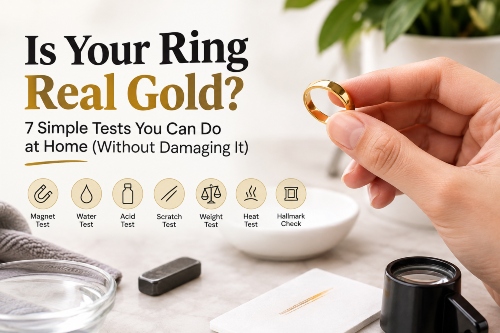
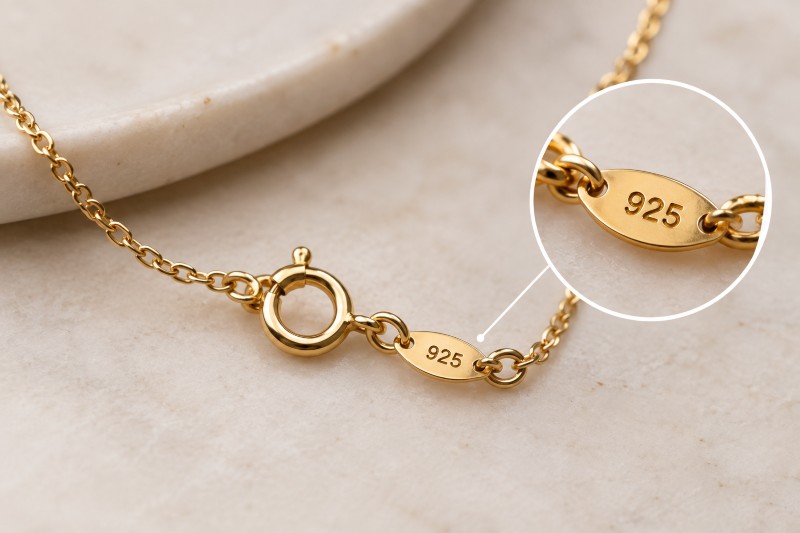
It’s worth checking, especially for gifts and pricier pieces. Look first for a stamp near the clasp: 925, STER or Sterling for sterling silver, and 14K, 585 or 14KT for 14-karat gold. Markings such as GP, GF or HGE mean plated or filled, not solid. A strong magnet is a useful second check, because silver and gold aren’t magnetic, though a small pull at the clasp may come from a steel spring inside.
Weight and wear tell you more over time. Solid gold feels heavier than it looks, while plated brass feels light, and plating tends to wear through in patches at the edges and clasp. For a step-by-step method, use our guides on telling if a necklace is real gold and telling if a ring is real gold. For anything expensive, a jeweler can confirm in minutes.
How do you clean and care for a men’s bracelet?
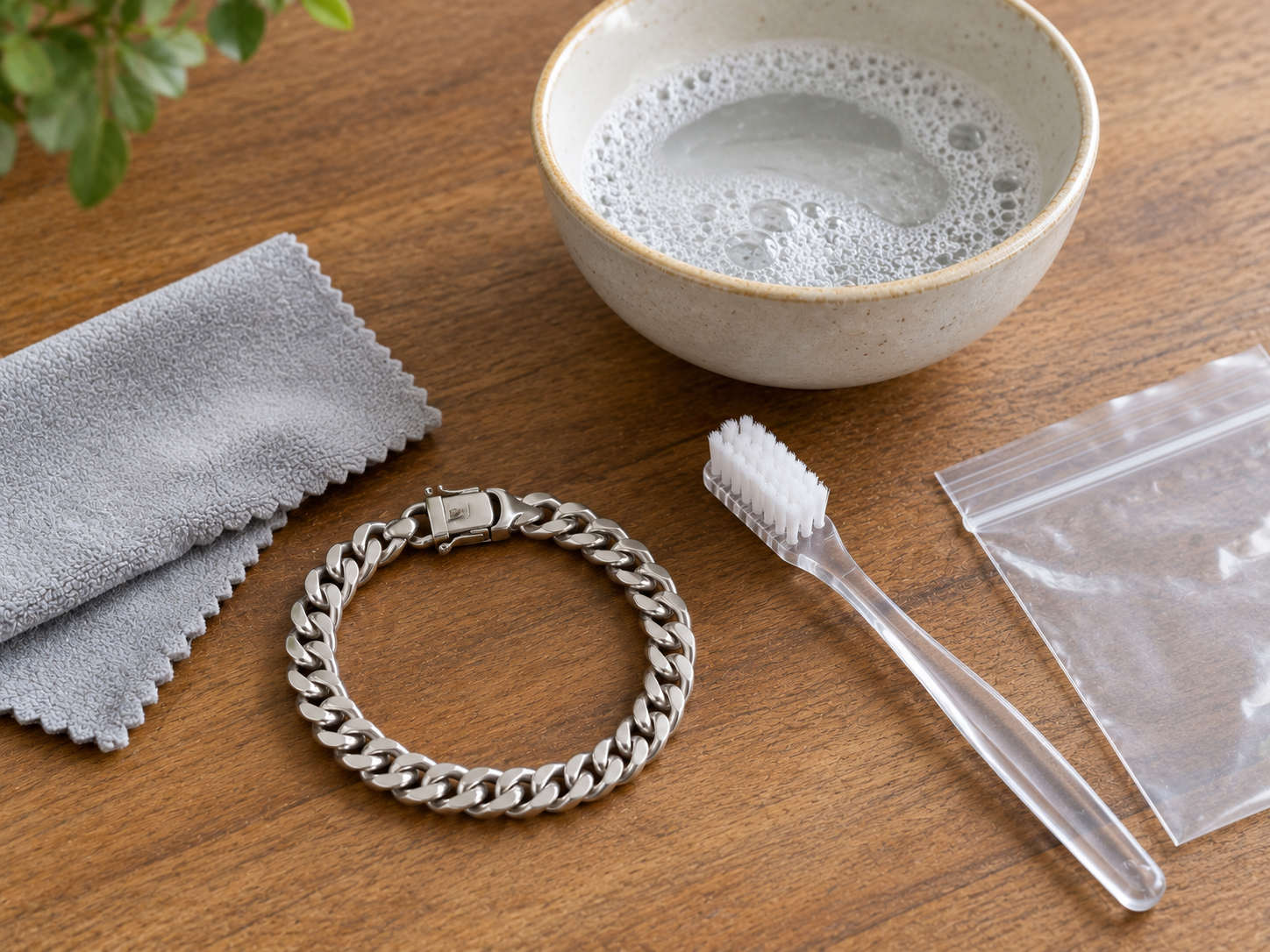
A little care goes a long way. After each wear, wipe metal bracelets with a dry, soft cloth to remove skin oil. Once a month, wash sterling silver, gold and steel in warm water with a drop of mild dish soap, brush gently with a soft toothbrush, rinse, and dry completely. Avoid toothpaste and baking soda on silver; they’re abrasive and scratch the surface. For gold chains, our guide to cleaning a gold chain at home goes into more detail.
Leather needs a different approach. Wipe it with a barely damp cloth, never soak it, and let it air-dry away from heat; a small amount of leather conditioner twice a year keeps it supple. For beaded bracelets, watch the cord. If you can see it stretching between beads, have it restrung before it breaks.
Storage is the quiet secret to keeping silver bright. Keep silver in a small zip bag with the air pressed out, or in a lined box with an anti-tarnish strip, and store each piece separately so links don’t scratch each other.
What are the most common bracelet problems, and how do you fix them?
If your bracelet keeps snagging sweaters, the culprit is usually a chunky clasp or raised links; a flat leather band or a smooth box chain works better in winter. If a clasp has popped open once, it will do it again, so replace a worn spring-ring clasp with a lobster clasp before you lose the bracelet. A chain that’s slightly too loose can have links removed by any jeweler for a small fee, a leather band can have an extra hole punched, and a cuff can be squeezed narrower by hand, though only slightly, because repeated bending weakens metal until it cracks.
If leather or cord starts to smell, that’s sweat absorption. Wipe it after wearing and rotate between two bracelets rather than wearing one nonstop.
Frequently asked questions
Is it normal for men to wear bracelets? Yes. Men have worn bracelets for thousands of years, and today they’re a mainstream part of men’s style.
Which wrist should a man wear a bracelet on? Whichever you prefer. Many men choose the wrist opposite their watch, or their non-dominant wrist.
Can I wear a bracelet and a watch on the same wrist? Yes. Choose a thinner bracelet in a matching metal and wear it just below the watch, closer to your hand.
How many bracelets should a man wear? One is enough for most outfits, and two on one wrist is a sensible maximum.
Can I shower with my bracelet? Stainless steel, titanium and solid gold are fine. Sterling silver will tarnish faster, and leather, beads and plated pieces should stay dry.
What size bracelet does a man need? Measure your wrist and add about 1.5–2 cm for a chain, 1 cm for leather, or 0.5–1 cm for beads.
Are bracelets professional for work? A slim chain or leather band under a shirt cuff is appropriate in most workplaces.
Do copper bracelets help with joint pain? A randomized trial found no meaningful benefit beyond placebo. Wear one for style, not as treatment.

 By