
How much is a 14K gold ring worth? At the gold price of about $4,013 per ounce on October 27, 2026, 14K gold is worth about $75 per gram. A 3-gram ring contains about $226 of gold, a 5-gram ring about $376, and a 10-gram men’s ring about $752. Gold buyers typically pay 60–90% of that melt value. Diamonds, designer names and craftsmanship are valued separately and can make a ring worth far more than its gold.
A 14K ring’s value has two parts: the gold, which depends on weight, karat and the daily gold price, and everything else, such as stones, brand, design and condition. This guide shows how to calculate the gold value, lists current values by weight and by ring type, explains how to handle diamonds and stamps, and sets out what buyers pay and how to sell safely. Wedding bands are covered in detail in the separate guide on how much a 14K gold wedding ring is worth.
14K Gold Ring Value at a Glance
| Item | Figure (October 27, 2026) |
|---|---|
| Gold price | About $4,013 per troy ounce |
| Pure (24K) gold per gram | $129.02 |
| 14K gold per gram | $75.22 |
| 14K gold content | 58.3% gold |
| Typical buyer payout | 60–90% of melt value |
| 3 g ring | About $226 melt; $135–$203 payout |
| 5 g ring | About $376 melt; $226–$338 payout |
| 10 g ring | About $752 melt; $451–$677 payout |
How to Calculate the Value of a 14K Gold Ring
The Melt Value Formula
The gold value of a 14K ring is calculated from its gold weight, its gold fraction and the price of pure gold per gram.
Melt value = gold weight (g) × 0.583 × price of pure gold per gram
Pure gold is 24 karat, so 14-karat gold contains 14 parts gold in 24, or 58.3%. Gold prices are quoted per troy ounce, which equals 31.1035 grams, so the ounce price is divided by 31.1035 to give the price per gram.
Worked Example
At $4,013 per troy ounce, pure gold is worth $4,013 ÷ 31.1035 = $129.02 per gram. A plain 14K ring weighing 4 grams contains 4 × 0.583 = 2.33 grams of pure gold, which is worth 2.33 × $129.02 = about $301. Multiplying the ring’s weight by the 14K price per gram gives the same result: 4 × $75.22 = $301.
How to Weigh a Ring at Home
A digital jewelry scale or a kitchen scale that reads to 0.1 gram gives a usable weight. The ring is cleaned and dried first, because residue adds a small amount of weight. Jewelers and gold buyers often use pennyweights (dwt); one pennyweight equals 1.555 grams, so a ring weighed at 3 dwt weighs about 4.67 grams. Ordinary (avoirdupois) ounces of 28.35 grams are not used for gold.
14K Gold Ring Value Chart by Weight (October 2026)
| Gold weight | Pure gold content | Melt value | Typical payout (60–90%) |
|---|---|---|---|
| 1 g | 0.58 g | $75 | $45–$68 |
| 2 g | 1.17 g | $150 | $90–$135 |
| 3 g | 1.75 g | $226 | $135–$203 |
| 4 g | 2.33 g | $301 | $181–$271 |
| 5 g | 2.92 g | $376 | $226–$338 |
| 6 g | 3.50 g | $451 | $271–$406 |
| 7 g | 4.08 g | $527 | $316–$474 |
| 8 g | 4.66 g | $602 | $361–$542 |
| 10 g | 5.83 g | $752 | $451–$677 |
| 12 g | 7.00 g | $903 | $542–$812 |
| 15 g | 8.75 g | $1,128 | $677–$1,015 |
Based on gold at about $4,013 per troy ounce on October 27, 2026. Use the gold-only weight for rings with stones.
How Much Does a 14K Gold Ring Weigh?
Ring weight depends on the ring type, width, thickness, profile and size. Weighing the ring is the only accurate method, but typical ranges help estimate value before a ring is weighed.
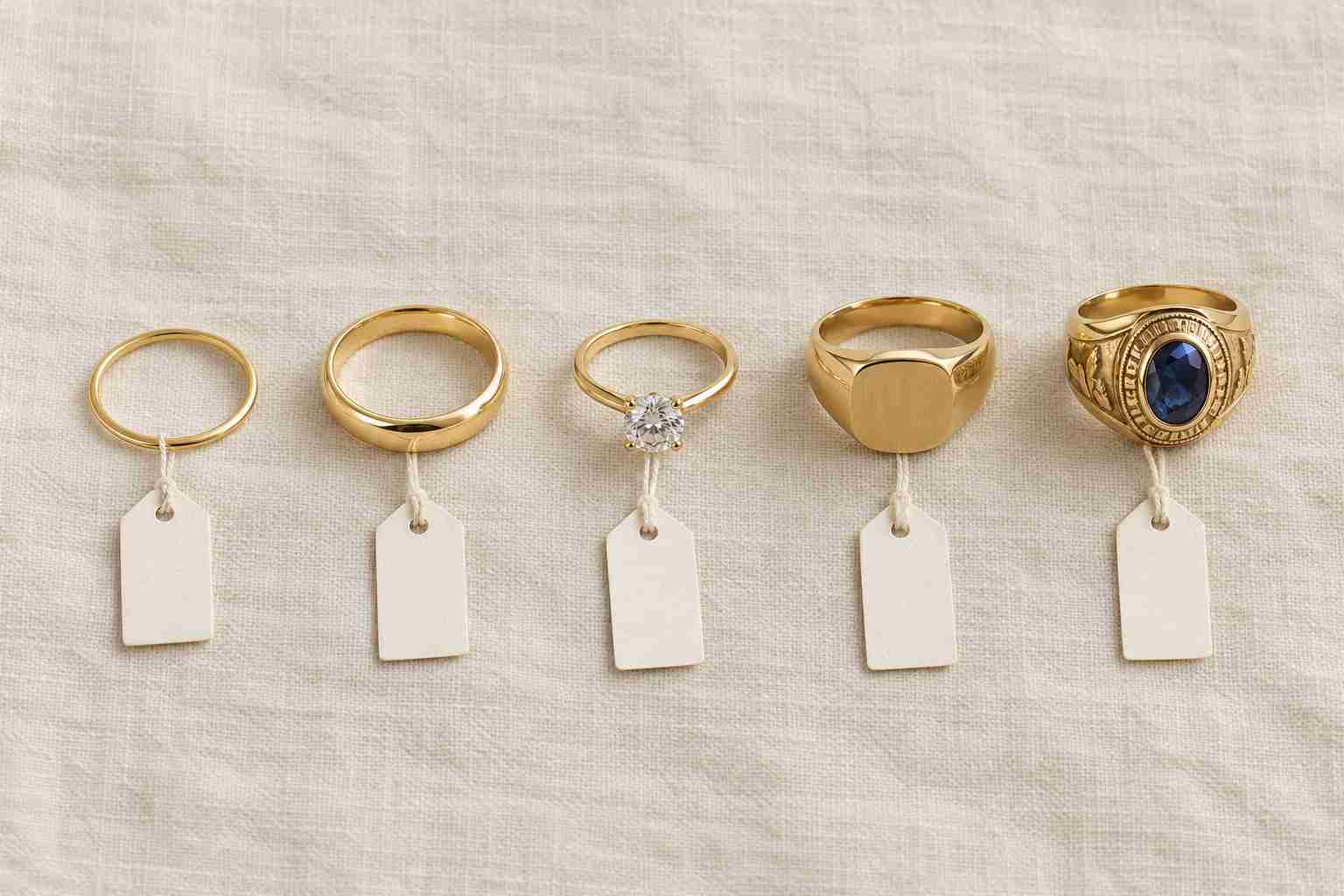
Typical Weights by Ring Type
| Ring type | Typical gold weight | Typical melt value |
|---|---|---|
| Thin stacking band | 1–2 g | $75–$150 |
| Women’s plain band | 2–4 g | $150–$301 |
| Engagement ring mounting (setting only) | 2–5 g | $150–$376 |
| Cocktail or statement ring | 5–12 g | $376–$903 |
| Women’s class ring | 5–12 g | $376–$903 |
| Men’s plain band | 5–10 g | $376–$752 |
| Men’s signet ring | 6–16 g | $451–$1,204 |
| Men’s class ring | 15–25 g | $1,128–$1,881 |
These ranges are typical for adult rings in common sizes. Many class rings are made in 10K rather than 14K gold, so the stamp is checked before using 14K figures. Wedding-band weights by width are listed in how much a 14K gold wedding ring is worth.
How Ring Size Changes Weight
A larger ring size uses a longer band of metal, so the same design weighs more in a larger size. Each full US ring size increases the inside diameter by about 0.8 millimeters, which adds roughly 4–5% to the length of the band around the finger. A design that weighs 5 grams in size 6 therefore weighs about 5.5 grams in size 8. Resizing a ring up adds gold and resizing it down removes gold, which changes its melt value.
How Much Is a 14K Gold Ring With Diamonds Worth?
Subtracting Stone Weight
A scale reads the total weight of the ring, including stones, but only the metal is gold. Diamond weight is stated in carats, and one carat equals 200 milligrams, or 0.2 gram, as the Gemological Institute of America explains in its guide to the 4Cs. A ring that weighs 4.5 grams with a 1-carat diamond therefore contains about 4.3 grams of gold alloy. At $75.22 per gram, that is about $323 of gold, not the $338 that the full scale weight suggests. For rings with many small stones, the total carat weight is often stamped inside the band.
How the Diamond Is Valued
Diamonds are valued separately from the gold, using the 4Cs: color, clarity, cut and carat weight. GIA’s 4Cs guide notes that two diamonds of the same carat weight can have very different values because of the other three factors. Scrap gold buyers generally pay for the gold and may ignore small accent diamonds, so a ring with a significant diamond is appraised separately before it is sold. Lab-grown diamonds must be disclosed as such under FTC guidance, and their resale values differ from those of mined diamonds. Diamond rings are cleaned before appraisal using the method in how to clean a diamond ring, and the differences between ring types are explained in promise ring vs engagement ring.
14K vs 10K vs 18K Rings: Value per Gram
| Karat | Gold content | Value per gram (at $4,013/oz) | 5 g ring melt value |
|---|---|---|---|
| 10K | 41.7% | $53.80 | $269 |
| 14K | 58.3% | $75.22 | $376 |
| 18K | 75.0% | $96.77 | $484 |
| 22K | 91.7% | $118.27 | $591 |
| 24K | 100% | $129.02 | $645 |
The Gemological Institute of America’s guide to gold karats explains that lower-karat gold is generally more durable and higher-karat gold is softer. The color of the gold does not change its gold content: a 14K yellow, white or rose gold ring of the same weight contains the same amount of gold.
How to Confirm a Ring Is Solid 14K Gold
Stamps and What They Mean
| Stamp | Meaning | Gold value |
|---|---|---|
| 14K, 14KT, 585 | Solid 14-karat gold | Full melt value |
| 14K GF, 1/20 14K | Gold-filled: a layer of 14K gold bonded to a base metal | A small fraction of solid gold |
| 14K GP, 14K HGE, GEP | Gold-plated or electroplated | Little or no scrap value |
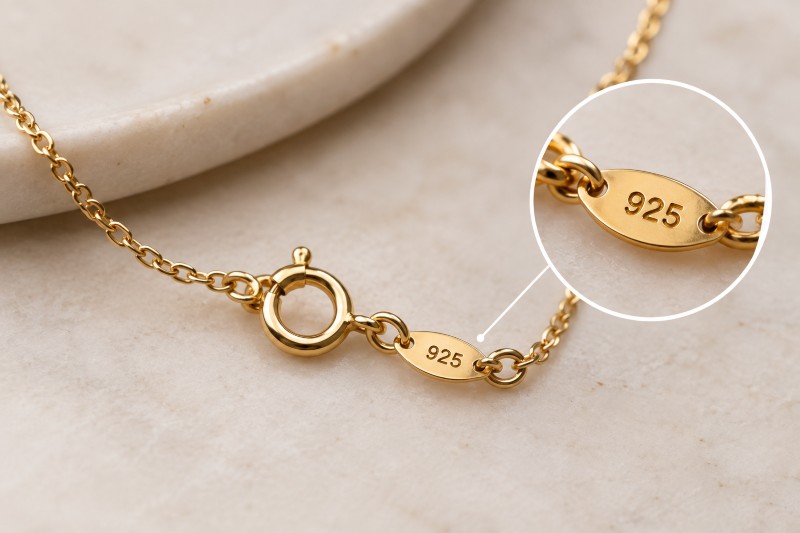
The FTC’s Jewelry Guides, §23.3, set out how gold content is described and require plated and filled products to be identified as such. A ring that feels light for its size or shows a different color where it is worn may be plated or filled despite a karat mark. The home checks in how to tell if a ring is real gold identify most plated rings, and a jeweler can confirm the karat with an acid test or an XRF scanner. The same stamps appear on chains, as described in how to tell if a necklace is real gold.
Legal Tolerance on a 14K Stamp
In the United States, the National Gold and Silver Stamping Act limits how far a gold article can fall short of its stamp. Under 15 U.S.C. §295, the actual fineness may be lower than the stamped fineness by no more than three parts per thousand, or seven parts per thousand when solder is included in the assay. The stamp 585 expresses 58.5% in parts per thousand, slightly above the exact 14/24 ratio of 58.3%.
White Gold and Two-Tone Rings
White gold rings are usually coated with rhodium, a white metal applied as a thin surface layer. The FTC’s Jewelry Guides, §23.7, address disclosure of rhodium surface layers. The rhodium coating does not change the gold content, so a 14K white gold ring is valued by weight in the same way as a yellow gold ring. Two-tone rings made from 14K yellow and white gold are also valued by total gold weight. Some white gold alloys contain nickel, which the American Academy of Dermatology lists among the most common causes of skin reactions to jewelry.
What Makes a 14K Ring Worth More Than Melt?
Melt value is the minimum a solid 14K ring is worth as metal. Several factors raise its resale value above that minimum. Diamonds and gemstones are valued separately and can exceed the value of the gold. Designer and brand names from recognized makers sell above melt on the secondary market. Craftsmanship such as hand engraving, filigree and custom settings adds value for buyers who intend to wear the ring. Condition affects resale: secure prongs, an unworn shank and an undented surface sell for more. Age and provenance, for example signed antique or estate rings, attract collectors.
Engraved names and dates usually reduce resale value to another wearer, but do not change melt value. Melt value depends only on gold weight, karat and the gold price.
How Much Will a Buyer Pay for a 14K Gold Ring?
Gold buyers pay a percentage of melt value to cover testing, refining, resale costs and profit. The percentage depends on the type of buyer and on the ring.
| Where you sell | Typical payout | Best suited to |
|---|---|---|
| Pawn shop | About 50–70% of melt | Fast cash for plain rings |
| Local jeweler | About 60–80% of melt | Plain rings; some resell wearable pieces |
| Dedicated gold buyer or refiner | About 70–90% of melt | Plain and scrap rings |
| Estate or vintage dealer | Varies; can exceed melt | Antique, signed or collectible rings |
| Diamond buyer or consignment | Varies | Rings with significant diamonds |
| Private sale | Melt or above | Wearable and designer rings |
These percentages are typical industry ranges, not fixed rates. A 6-gram ring with a melt value of $451 earns about $316 at a 70% payout and about $406 at a 90% payout.
How to Sell a 14K Gold Ring for a Fair Price
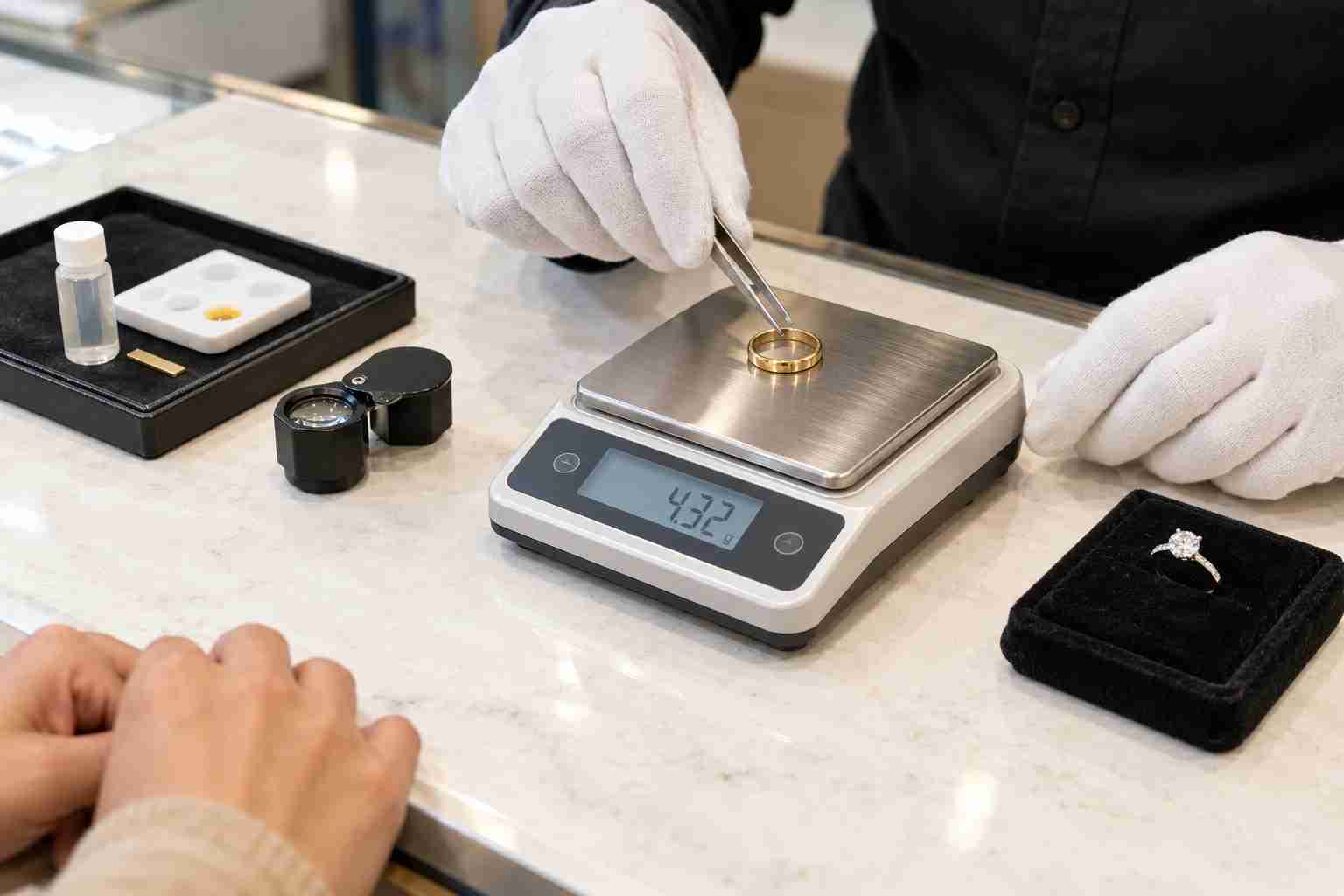
Preparation establishes a benchmark for every offer. The stamp is checked first, then the ring is weighed on a scale that reads to 0.1 gram and the weight recorded. Any stone weight is subtracted using the carat-to-gram conversion, and the melt value is calculated from the current gold price. Rings with significant diamonds, designer marks or antique features are appraised before they are offered to scrap buyers.
Quotes from at least three buyers show the range of offers. Asking each buyer what percentage of melt value they pay, and asking them to weigh the ring in view, makes offers directly comparable. A receipt that lists weight, karat and price paid provides a record of the sale.
Consumer Protections When Selling Gold
Some local governments regulate gold buyers. New York City’s Department of Consumer Affairs, for example, advises sellers to use licensed buyers, to have items weighed in full view and to be cautious about “cash for gold” parties, and notes that gold buyers in the city must hold purchased items for 15 days before reselling them. Licensing rules vary by city and state.
Mail-In Gold Buyers
The Federal Trade Commission has testified to Congress that it receives complaints from consumers who sell jewelry and precious metals to online buyers. Sellers using mail-in services can photograph and weigh rings before shipping, insure the package for its full value, and confirm that the buyer will return the ring at no cost if the offer is declined.
What Is a 14K Ring Worth for Insurance?
Insurance value is usually replacement value: the cost of buying a comparable new ring, including the gold, any stones, design and labor. It is normally close to retail price and well above melt value. An independent appraiser provides a written valuation that describes the metal, weight, dimensions and stones. Because gold prices change, appraisals are updated every few years.
Is Tax Due When You Sell a Gold Ring?
Tax depends on whether the sale produces a gain. The Internal Revenue Service treats precious metals and gems as collectibles, and IRS Topic 409 states that long-term gains on collectibles are taxed at a maximum rate of 28%. Losses on property held for personal use, such as a ring that was worn, are generally not deductible. Purchase records help establish whether a gain exists, and a tax professional can confirm how the rules apply to a specific sale.
Condition affects resale value, so rings are cleaned and stored separately to prevent scratches. The same gold-value calculation applies to other pieces, as shown in how much a 14K gold bracelet is worth, and gold chains are cleaned using the method in how to clean a gold chain. Ring placement is covered in what finger a promise ring is worn on, gold earrings follow the same karat rules described in what are post earrings, and diamond studs are cleaned as described in how to clean diamond earrings. Sterling silver rings are valued differently, as explained in what is a silver bracelet, and men’s jewelry pairing is covered in do men wear bracelets.
Frequently Asked Questions
How much is a 14K gold ring worth per gram today? About $75.22 per gram, based on gold at about $4,013 per troy ounce on October 27, 2026.
How much is a 3-gram 14K gold ring worth? About $226 in gold. Buyers typically pay $135–$203.
How much is a 14K gold ring worth at a pawn shop? Pawn shops typically pay about 50–70% of melt value, so about $188–$263 for a 5-gram ring with a melt value of $376.
How much is a 14K gold ring with a diamond worth? The gold is valued by its gold-only weight (subtract 0.2 gram per carat), and the diamond is valued separately using the 4Cs.
How much is a 14K class ring worth? Women’s class rings typically contain 5–12 grams and men’s 15–25 grams of gold, or about $376–$903 and $1,128–$1,881 at today’s price. Many class rings are 10K, so the stamp is checked first.
Is a 14K white gold ring worth less than yellow gold? No. Rings of the same karat and weight contain the same amount of gold regardless of color.
What does 585 mean on a ring? 585 means 58.5% gold in parts per thousand, the European marking for 14K gold.
Is a 14K GP ring worth anything? A 14K GP ring is gold-plated and has little or no scrap value.
Why do buyers pay less than melt value? Buyers cover testing, refining and resale costs and their profit, so offers are typically 60–90% of melt value.

 By