
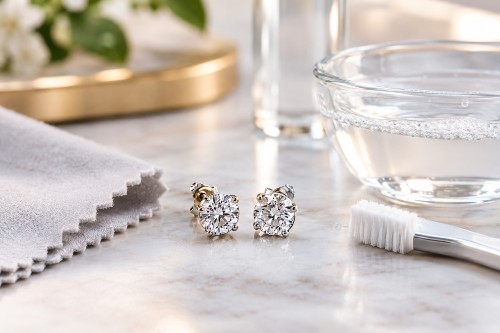
Ever look in the mirror and notice your diamond studs aren’t sparkling like they used to? Instead of that crisp, blinding flash of light, they look kind of cloudy or dull.
Here is the good news: your diamonds haven’t lost their shine forever.
Diamonds are natural oil magnets. Every time you touch your hair, put on moisturizer, spray hairspray, or put on makeup, a tiny film of oil and product coats the diamond. Add natural skin oils, dead skin cells, and sweat around your earlobes, and your brilliant diamonds end up hidden under a stubborn layer of gunk.
With 20 years of experience in the bench jewelry and diamond trade, I can assure you that you do not need expensive jewelry cleaners or fancy gadgets to bring back their sparkle. You just need 15 minutes, a few basic household items, and the right technique.
In this guide, you’ll learn step-by-step how to clean diamond studs, hoops, and drops safely at home, how to sanitize the posts for sensitive ears, and the critical mistakes that can ruin your precious metals or send your diamond down the drain.
Why Diamond Earrings Get Dirty So Quickly
To understand how to clean diamond earrings properly, it helps to understand why they get dirty in the first place.
Diamonds have a physical property called lipophilia—meaning they naturally attract grease and oils while repelling water.
When you wear diamond earrings, they sit right next to your scalp and skin. Over time, several everyday items form a thick film on top of and underneath the stone:
- Skincare & Cosmetics: Face lotions, sunscreen, foundation, and setting sprays.
- Hair Products: Hairspray, dry shampoo, leave-in conditioners, and hair oils.
- Body Chemistry: Natural sebum (skin oil), sweat, and shed skin cells.
- Hygiene Residue: Soap scum from taking showers while wearing your earrings.
When light hits a diamond, it enters through the top (table), bounces around inside, and reflects back out to your eyes. When oil coats the bottom pavilion or the prongs, light cannot bounce properly. A clean 0.50-carat diamond will always look larger and brighter than a dirty 1.00-carat diamond.
What You Need Before Starting
Gathering your tools beforehand keeps the process simple and prevents small parts from disappearing.
| Item | What to Look For | Why It Matters |
| Gentle Liquid Dish Soap | Mild, degreasing formulas (e.g., plain blue Dawn) | Breaks down oil without leaving a chemical film or moisturizing residue |
| Warm Water | Lukewarm to warm water (never boiling) | Softens dirt without thermal shocking vulnerable metals or gems |
| Soft Toothbrush | Extra-soft bristles or a specialized baby toothbrush | Hard bristles scratch gold and platinum settings |
| Microfiber or Lint-Free Cloth | Smooth weave polish cloth | Paper towels contain wood fibers that leave fine scratches on precious metals |
| Small Strainer or Plug | Kitchen mesh strainer or rubber sink stopper | Prevents catastrophic losses down the bathroom drain |
| 70% Isopropyl Alcohol | Standard rubbing alcohol (optional) | Sanitizes post backings to prevent ear infections |
Step-by-Step: The Best Way to Clean Diamond Earrings at Home
This gentle soap-and-water method works for natural diamonds, lab-grown diamonds, and all precious metals (14k/18k yellow, white, and rose gold, as well as platinum).
1.Prep Your Sink & Area:Rule #1: Block the drain before touching jewelry.
Before opening any jewelry box, plug your sink drain. Put a rubber stopper down or place a small towel over the sink. Better yet, work at a clean kitchen table or desk using a glass mug or small bowl. If an earring slips from soapy fingers, it lands safely on a flat surface rather than disappearing into plumbing.
2.Mix the Soaking Solution:
Fill a small bowl or cup with warm water. Add 3 to 4 drops of mild liquid dish soap. Stir gently until you see mild suds. Avoid soaps with added lotions, aloe, or heavy antibacterial fragrance, as these leave a cloudy residue on the diamond pavilion.
3.Soak for 20 to 30 Minutes:
Submerge your diamond earrings and their backings (butterfly backs, screw backs, or friction backs) into the warm soapy solution. Let them soak uninterrupted for 20 to 30 minutes. The warm soap breaks down stubborn organic oils and softens caked-on hairspray trapped behind the diamond basket.
4.Gently Scrub settings and Backings:Pay special attention to the pavilion (back of the stone).
Remove one earring at a time. Dip your extra-soft toothbrush into the soapy water. Gently brush the diamond, focusing heavily on the underside of the setting. Dirt accumulates in the tiny gap between the metal basket and the bottom tip (culet) of the diamond.
- Prongs: Brush gently around each prong tip where lint gets trapped.
- Posts: Scrub the post ridges—especially on screw-back studs where oil hardens inside the threads.
- Backings: Brush inside the butterfly holes to clear out trapped dead skin and lotion.
5.Rinse Under Lukewarm Water:
Place your earrings into a small mesh wire strainer and hold them under a gentle stream of lukewarm tap water to rinse away all soap residue. Alternatively, swish them vigorously in a second bowl filled with clean warm water.
6.Dry and Sanitize:
Pat the earrings dry using a clean, lint-free microfiber cloth. Avoid paper towels, tissues, or fluffy cotton towels whose loops can catch on prongs. For an extra sparkle boost, dip a cotton swab in 70% isopropyl alcohol and wipe the metal post to sanitize it before inserting it back into your ear.
How to Clean Different Types of Diamond Earrings
Different styles collect dirt in unique ways. Adjust your technique based on your setting type:
1. Diamond Stud Earrings (Solitaires)
Studs sit directly against the earlobe tissue, making them magnet for sebum, dead skin cells, and crusty product buildup.
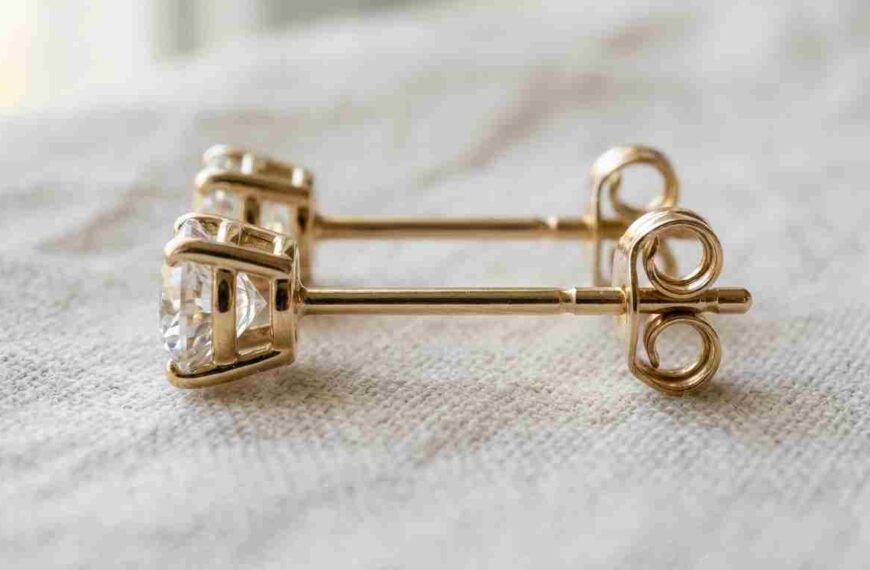
- The Secret Area: Pay attention to the back basket. Most people only brush the front face of the diamond, but light enters through the back. Brush through the side gallery wires of the setting.
- Screw-Back Care: Threaded posts trap skin oils inside the tiny grooves. Spin the backing back and forth along the post while soaking to clear out debris.
2. Diamond Hoop Earrings & Huggies
Hoops feature channel settings, prong rows, or pavé bands that catch light—and dirt—along their curves.
- Inside the Inner Arc: Hair products settle on the inside edge of the hoop that faces your head.
- Hinge & Clasp Mechanics: Dirt and grit accumulate inside small latch mechanisms and spring locks. Scrub the hinge pivot gently so the clasp continues to snap securely.
3. Diamond Drop & Dangle Earrings
Drop earrings feature multiple moving parts, joints, and delicate jump rings.
- Joint Cleanliness: Move the individual links gently in the soapy water to flush out trapped oils between metal joints.
- Snag Warning: Never scrub back and forth aggressively across pave drop earrings, as toothbrush bristles can pull up micro-prongs. Use a gentle dabbing motion instead.
Metal Care Considerations
The diamond itself is virtually indestructible during household cleaning, but the metal holding your diamond requires extra care.
| Metal Type | Main Risk Factor | Expert Care Tip |
|---|---|---|
| White Gold | Rhodium plating wearing down | Avoid harsh rubbing; use a gentle soak. |
| Yellow Gold | Soft metal that scratches easily | Use ultra-soft bristles only. |
| Rose Gold | Copper content can darken over time | Avoid ammonia-based cleaning solutions. |
| Platinum | Oils can create a dull patina | Use a polishing cloth to restore shine. |
| Sterling Silver | Can tarnish from exposure to water and air | Use a silver polishing cloth on metal parts. |
- White Gold: Most white gold is plated with Rhodium to give it a bright mirror polish. Overusing harsh chemical cleaners or abrasive brushes strips this thin plating away faster, exposing yellowish gold underneath.
- Sterling Silver: If your diamonds are set in silver, soaking them in water for extended periods can accelerate tarnishing. Dry silver thoroughly immediately after washing.
Common DIY Mistakes to Avoid
Well-meaning home remedies often end up damaging precious metals or loosening diamond settings.
❌ Never Use Toothpaste
Toothpaste is designed to scrub enamel, but its abrasive particles (calcium carbonate or silica) score fine scratches into white, yellow, and rose gold. Over time, toothpaste dulls the polished luster of precious metal settings.
❌ Skip Harsh Household Cleaners
Keep your jewelry away from bleach, chlorine, acetone, hydrogen peroxide, and window cleaners (Windex). Chlorine chemically attacks gold alloys, breaking down the metal structure from within and causing prongs to snap.
❌ Avoid Ultrasonic Cleaners at Home
Small home ultrasonic machines use high-frequency sound waves to shake dirt loose. However, if your diamond has an undetected fracture, or if a prong has worn thin, ultrasonic vibrations can shake stones completely out of their mountings. Leave ultrasonic cleaning to professional bench jewelers who inspect settings under magnification first.
❌ Avoid Boiling Water
Extreme temperature shifts cause metals to expand rapidly, which can loosen stone settings or shock sensitive gem accents (like pearls or emeralds) mounted nearby. Warm water is sufficient to dissolve oils.
Sanitizing Diamond Earrings for Sensitive Ears
If your earlobes get itchy, red, or irritated after wearing diamond studs, dirt isn’t the only culprit—bacteria build-up is
- Clean First, Then Sanitize: Soap removes the physical layer of grease, while alcohol kills micro-organisms.
- Alcohol Dip: Dip the metal post and backings into a small cap filled with 70% Isopropyl Alcohol for 1 to 2 minutes.
- Wipe the Ear Lobe: Clean your ear lobe piercing gently with a prepackaged alcohol wipe before reinserting the earring.
Note: Avoid soaking soft gems like pearls, opals, or turquoise in alcohol, as it dries out natural moisture balance and ruins their surface finish.
When to See a Professional Jeweler
While home care keeps your diamonds sparkling month-to-month, home cleaning cannot replace structural maintenance.
The “Rattle Test”
Before cleaning your earrings, hold the earring near your ear and tap the side gently with your fingernail. If you hear a subtle clicking sound or see the diamond move, the prongs are loose. Do not scrub or wear the earring; take it directly to a jeweler for prong tightening.
Professional Maintenance Checklist
Visit an authorized bench jeweler once or twice a year for professional service:
- Prong Inspection: Under 10x magnification, jewelers check for worn, lifted, or thin prongs.
- Steam Cleaning: High-pressure steam blasts away hardened compound buildup in hard-to-reach galleries without chemicals.
- Rhodium Re-Plating: White gold pieces can be re-plated to restore factory brilliance.
How to Keep Your Earrings Clean Longer
To extend the time between cleanings, follow the “Last On, First Off” rule:
- Put Earrings On Last: Apply lotions, perfumes, sunscreens, hairsprays, and makeup before putting on your diamond earrings.
- Take Earrings Off First: Remove your studs before washing off makeup or applying night creams.
- Don’t Wear Them in the Shower: Soap, shampoos, and conditioners leave a milky film over diamonds faster than almost anything else.
- Take Them Off Before Swimming: Pool chlorine damages gold alloys, while cold ocean water shrinks fingers and earlobes, increasing the risk of lost jewelry.
- Store Separately: Store each earring in a soft fabric pouch or separate compartment. Diamonds are the hardest mineral on earth (10 on the Mohs scale) and easily scratch gold settings, silver, or other gemstones inside your jewelry box.
Frequently Asked Questions
How often should I clean my diamond earrings?
For everyday studs, clean them once every two weeks using the soap and water method. If you wear them only on special occasions, a quick soak once every few months keeps them ready to wear.
Can I clean diamond earrings with rubbing alcohol?
Yes. Rubbing alcohol (70% Isopropyl) is safe for natural diamonds, lab-grown diamonds, gold, and platinum. It evaporates quickly and breaks down oils while sanitizing the post. However, do not use alcohol on earrings that feature pearls, opals, or emeralds.
Why do my diamond earrings look cloudy even after cleaning?
If soaking and scrubbing doesn’t restore brilliance, dirt may be baked onto the culet (bottom tip) inside a closed basket setting. A jeweler can clean it using professional steam equipment. Alternatively, check your diamond’s grading report—some diamonds have high internal fluorescence or heavy inclusions that make them appear naturally hazy.
Is baking soda safe for diamond earrings?
Baking soda mixed with water forms a mild paste that some people use on platinum or gold. However, it is slightly abrasive. Frequent scrubbing with baking soda can dull high-polish metal surfaces over time. Mild dish soap is much safer.

 By