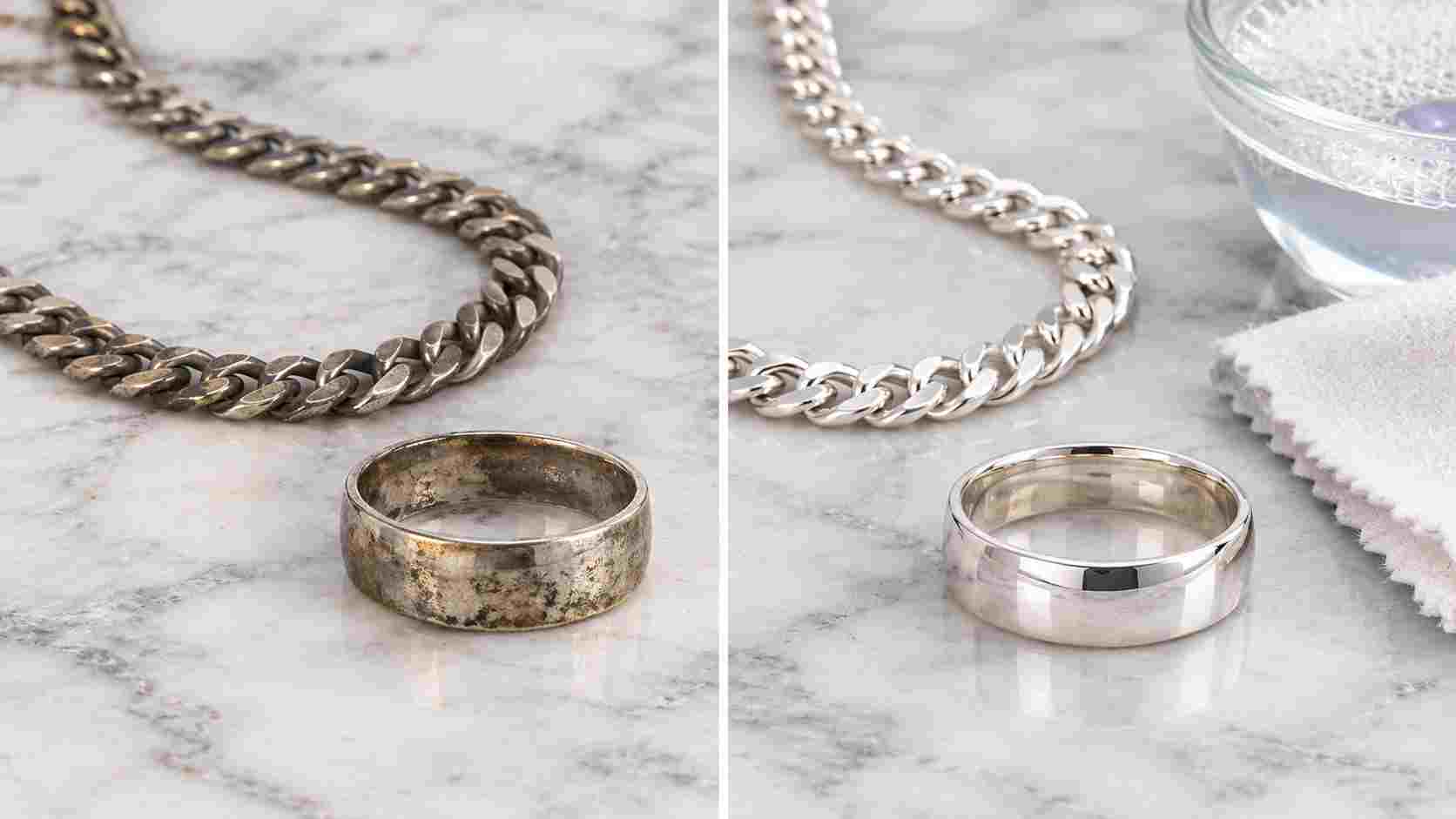
You open your jewelry box and the silver chain you loved last summer has turned yellow-gray, almost black at the links. It looks ruined, but it isn’t. That dark film sits only on the surface, and most of it comes off at home in minutes.
Here is the short answer on how to clean silver jewelry. For light dullness, wash it in warm water with a drop of mild dish soap and dry it well. For visible tarnish, rub it with a silver polishing cloth. For heavy tarnish on plain sterling silver, use a homemade bath of hot water, baking soda and aluminum foil. Skip toothpaste and harsh dips.
Quick Answer: Clean silver jewelry in three steps of increasing strength: (1) warm soapy water and a soft brush, (2) a silver polishing cloth for light tarnish, (3) a hot baking soda and aluminum foil bath for heavy tarnish on plain, solid silver. Rinse, dry completely, and store each piece in a sealed bag to slow new tarnish.
Key Takeaways
Tarnish is silver sulfide, a thin black film formed when silver reacts with sulfur in the air.
Always start with the gentlest method; every abrasive polish removes a little silver.
The foil bath turns tarnish back into silver, but it also strips intentional black “oxidized” finishes.
Never soak pieces with pearls, opals, turquoise, marcasite or glued stones.
Silver-plated jewelry has a thin coat that wears through with scrubbing.
Airtight storage slows tarnish more than any cleaner.
Why Does Silver Jewelry Turn Black?
Silver turns dark because it reacts with sulfur compounds, mainly hydrogen sulfide in the air, to form a black film of silver sulfide called tarnish. The American Chemical Society notes that contact with sulfur-rich foods such as hard-boiled eggs, mayonnaise and mustard, and with rubber bands, can also cause tarnish. Thin tarnish looks yellow or brown; thicker tarnish looks gray to black.
Tarnish is a surface reaction, not rust, and it does not eat through the piece. But removing it with abrasives takes a tiny layer of silver with it each time. That is why gentle methods come first, and why preventing tarnish matters as much as cleaning it.
How Do You Clean Sterling Silver vs Silver-Plated Jewelry?
Sterling silver is solid silver all the way through, so it tolerates polishing and the foil bath; silver-plated jewelry has only a thin silver coat over another metal, so clean it with soap and a soft cloth only. Sterling silver is 92.5% silver mixed with other metals, usually copper, for strength. Fine silver is 99.9% silver and tarnishes more slowly but is soft.
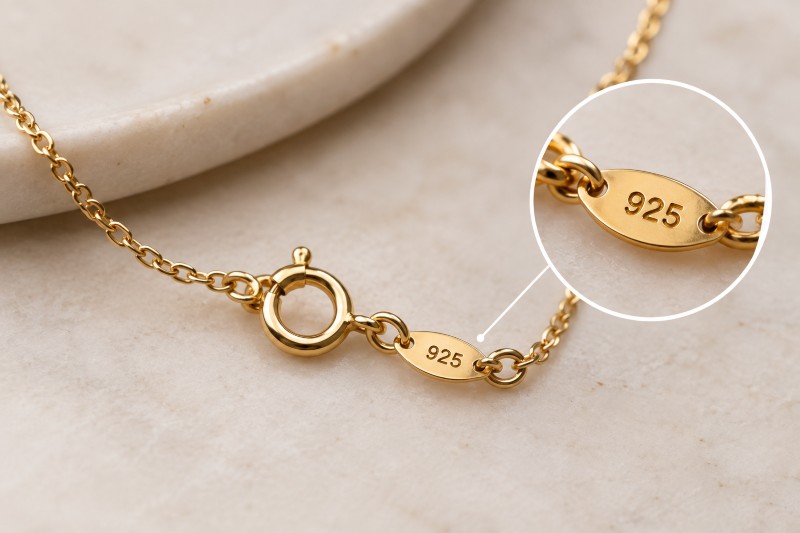
Look for a “925”, “Sterling” or “Ster” stamp on the clasp or inside a ring. Marks such as “EP”, “EPNS” or “Silver Plated” mean the piece is plated. Our guide to spotting real gold explains how to read jewelry stamps, and the same habits apply to silver. With the type of silver known, gather your supplies.
What Do You Need to Clean Silver Jewelry at Home?
You need only household items: mild dish soap, warm water, a soft toothbrush, a lint-free cloth, and for heavy tarnish, baking soda and aluminum foil. A silver polishing cloth is the one item worth buying.
Aluminum foil, baking soda, hot water, a glass or ceramic dish, tongs
10–20 minutes
Easy to moderate
Under a dollar in supplies
Jeweler cleaning
A trip to a jeweler
Varies
None for you
Often free or low cost [VERIFY]
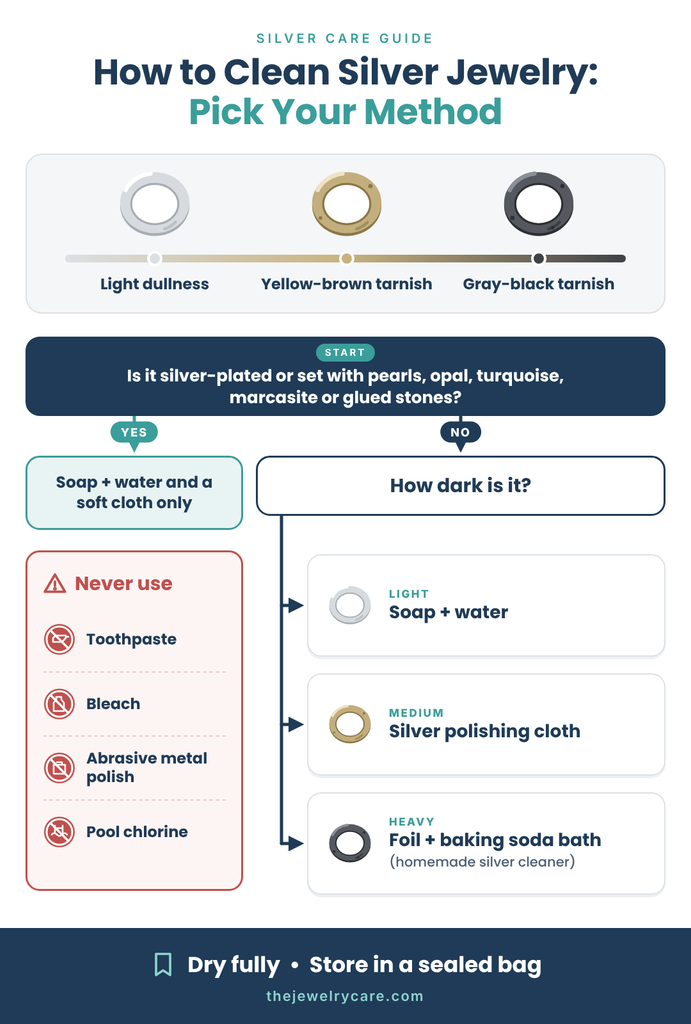
The chooser below shows which method fits your piece.
Infographic showing how to clean silver jewelry by tarnish level, from soap and water to a foil bath
Method 1: How to Clean Silver Jewelry With Soap and Water
Warm water with a few drops of mild, phosphate-free dish soap removes skin oil, lotion and dirt, which is often all a dull silver piece needs. This method is safe for almost every piece, including most stone-set and plated silver.
Fill a small bowl with warm (not hot) water and add two or three drops of mild dish soap.
Soak the piece for 2–5 minutes. Skip soaking for pearls, opals, turquoise and glued stones; wipe those instead.
Brush gently with a soft toothbrush, especially around clasps and settings.
Rinse in clean, lukewarm water. Close the sink drain or use a strainer first.
Pat completely dry with a lint-free cloth, then let it air-dry for an hour before storing.
Moisture left in links or behind stones speeds new tarnish, so drying is the step most people rush and regret.
Method 2: How to Remove Light Tarnish With a Polishing Cloth
A two-layer silver polishing cloth removes light yellow or brown tarnish quickly with gentle rubbing. The inner layer is treated with a fine polishing compound; the outer layer buffs.
Rub with long, straight strokes rather than circles, and change to a clean area of the cloth as it darkens. Do not wash the cloth, because washing removes the polishing agent. For oxidized (antiqued) designs, polish only the raised areas so the dark recesses still show the pattern.
Jeweler’s Tip: Clean first, polish second. Wash off dust and oil with soapy water before using a polishing cloth, so grit isn’t dragged across the silver, where it can leave fine scratches.
Method 3: Homemade Silver Cleaner With Baking Soda and Aluminum Foil
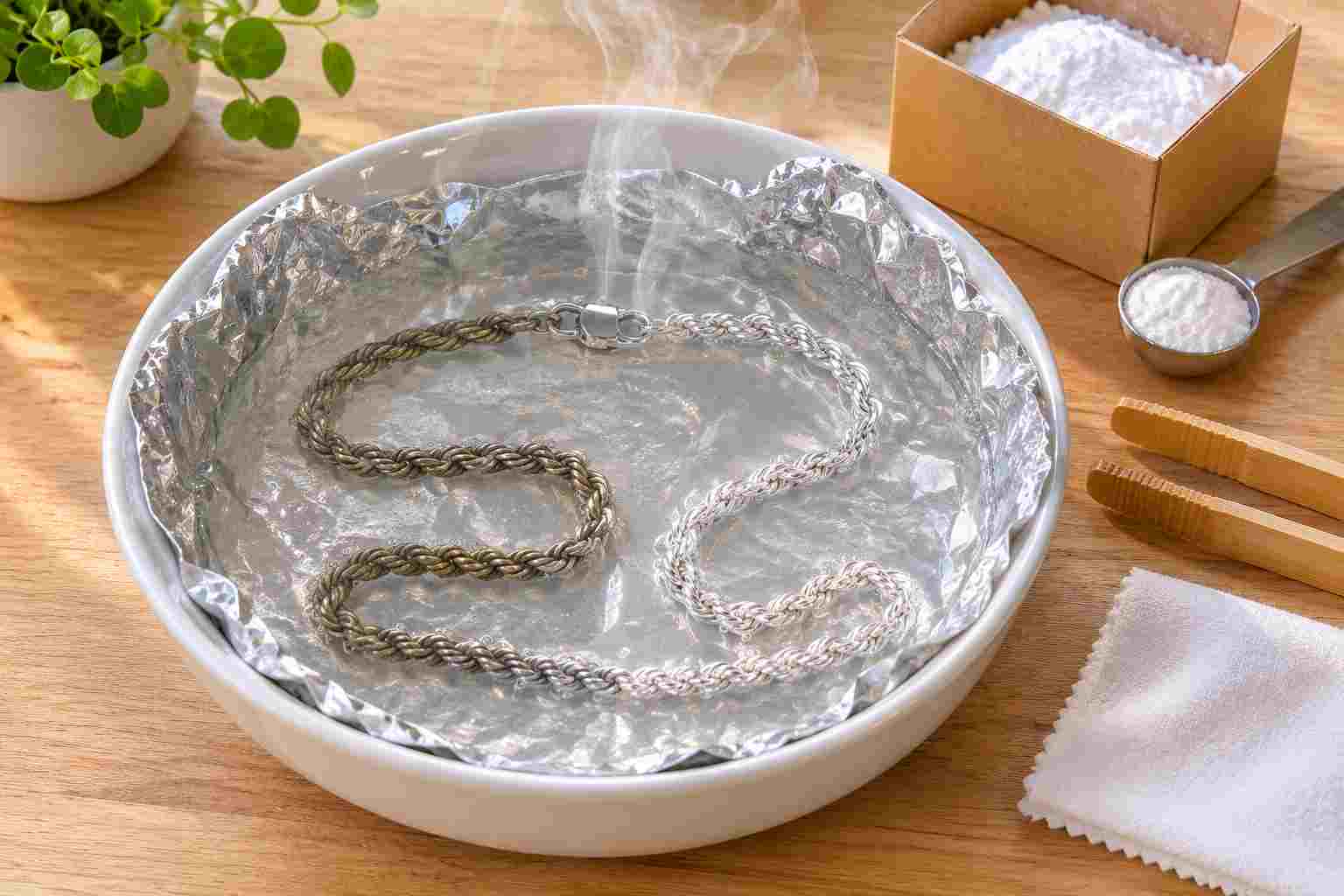
The best homemade silver cleaner for heavy tarnish is a hot bath of water and baking soda in a dish lined with aluminum foil, which chemically turns tarnish back into silver.University of Wisconsin chemists explain that sulfur moves from the silver to the aluminum, freeing the silver metal, and that the silver must touch the foil for the reaction to work.
Because this reaction does not rub metal away, it reaches tarnish in fine chains and engraved grooves that a cloth cannot. Use it only on plain, solid sterling silver with no stones, pearls, glue or intentional black finish.
Line a glass or ceramic dish with aluminum foil, shiny side up.
Lay the silver pieces on the foil so each one touches it.
Heat water to just below boiling. Add about 1 tablespoon of baking soda per cup of water (roughly 1 cup per gallon). It will fizz.
Pour the hot solution over the silver until it is fully covered.
Wait 2–10 minutes. Light tarnish disappears quickly; heavy tarnish may need a second bath with fresh hot solution.
Lift the pieces out with plastic or wooden tongs, rinse well in clean water, and dry completely.
Buff lightly with a polishing cloth; the bath can leave a slightly matte finish.
You may notice a faint rotten-egg smell. That is the sulfur leaving the silver, and it is normal. Open a window and do not breathe in the steam closely.
Method 4: Should You Use a Silver Dip or Commercial Polish?
Use a commercial silver polish or dip only for stubborn tarnish on solid silver, and apply it sparingly, because dips dissolve tarnish fast and can over-clean. Dips strip the black from oxidized designs in seconds, and many contain acids that can dull pearls, opals, turquoise and other soft stones.
If you use a dip, apply it with a cotton swab to the dark areas instead of submerging the piece, then rinse thoroughly and dry. Choose a product made for silver, not an all-purpose metal polish, which is more abrasive. The U.S. National Park Service’s museum guidance advises very gentle materials and techniques and warns never to let liquids get into hollow handles or other hollow parts that are hard to rinse and dry. The same applies to hollow lockets, hollow beads and hollow bangles.
How to Clean a Silver Necklace or Chain
To clean a silver necklace, soak the chain in warm soapy water, brush along the links, rinse, and dry it laid flat; for a heavily tarnished plain chain, the foil bath reaches between links better than any cloth. Chains collect skin oil, lotion and perfume between their links, where tarnish starts first.
Undo knots before cleaning, using two pins rather than your fingernails. Clean a pendant and its chain separately if the pendant has stones, so the stone stays out of the bath. Dry the chain by laying it straight on a towel, then hang it or store it flat so it does not trap moisture in a coil. For gold chains, our gold chain cleaning guide covers the differences, and our men’s pendant guide explains chain lengths and bails.
Which Silver Cleaning Methods Are Safe for Stones and Finishes?
Soap and water is safe for almost all silver jewelry, but the foil bath, dips and polishing are not safe for porous stones, organic gems, glued settings or plated and oxidized finishes. Check what is set in or on the silver before choosing a method.
Material or stone
Safe methods
Avoid
Why
Plain sterling silver
Soap and water, polishing cloth, foil bath, silver polish
Toothpaste, bleach, abrasive metal polish
Abrasives scratch; chlorine pits and darkens silver
Silver-plated jewelry
Soap and water, soft cloth
Foil bath, dips, any polish or scrubbing
The plating is thin and wears through to base metal
Oxidized (antiqued) silver
Soap and water; cloth on raised areas only
Foil bath, dips
Both remove the intentional black finish
Rhodium-plated silver
Soap and water, soft cloth
Polishing cloths, dips
Polishing wears the bright white plating away
Diamond, sapphire, ruby, cubic zirconia
Soap and water, soft brush
Foil bath on fracture-filled or treated stones; hot baths if glued
Heat and chemicals can harm treatments and adhesives
Opal, turquoise, emerald, lapis
Quick wipe with a damp, soapy cloth
Soaking, dips, foil bath, ultrasonic
Porous or treated stones absorb liquids and can crack or discolor
Pearls, amber, coral
Wipe with a soft damp cloth
Any soaking, dips, foil bath, polish
Organic gems are soft and damaged by acids and heat
Stop! Don’t do this. Never use toothpaste, baking soda scrubbed on dry, bleach, or chlorine pool water on silver. Toothpaste and dry baking soda are abrasive and leave fine scratches. Bleach and chlorine can pit silver and turn it black in a way that cleaning will not fully fix. And never put a hollow or glued piece into any bath.
Silver Cleaning Myths vs Facts
Many viral silver-cleaning hacks either scratch the metal or do nothing a drop of dish soap couldn’t do.
Myth
Fact
“Toothpaste is a great silver cleaner.”
Toothpaste contains abrasives that scratch silver and wear away detail.
“Tarnish means the silver is fake.”
Real sterling silver tarnishes; tarnish is a sign of copper and silver reacting with sulfur.
“Vinegar and baking soda together clean better.”
They neutralize each other with a fizz; the foil bath works because of the aluminum, not the fizz.
“Polishing more often keeps silver healthier.”
Every abrasive polish removes a little silver; prevention is better than frequent polishing.
“Silver-plated pieces can be cleaned like sterling.”
Plating is thin and wears through with scrubbing, dips and polishes.
How Do You Keep Silver Jewelry From Tarnishing?
Store silver in a small airtight bag with an anti-tarnish strip or tarnish-preventing cloth, keep it dry, and put it on after lotion, perfume and hairspray. Air and humidity carry the sulfur that causes tarnish, so limiting both slows it down.
Put each piece in its own zip-top bag, press out the air, and add an anti-tarnish strip. Keep bags away from rubber bands, wool and felt, which can release sulfur. Take silver off before swimming, cleaning with household chemicals, or using hot tubs. Wipe it with a soft cloth after wearing to remove skin oil. These habits mean you will reach for the foil bath far less often. The same storage rules suit silver bangles; our guide on how to measure bangle size helps you buy the right fit.
When Should You Take Silver Jewelry to a Jeweler?
See a jeweler when silver is deeply pitted or scratched, when stones are loose, when a piece is an heirloom or high in value, or when you can’t tell whether it is solid or plated. A jeweler can polish with professional compounds, re-oxidize antiqued designs, replate rhodium or silver, and check settings.
Go to a professional if you notice any of these signs: black spots that return right after cleaning, green or crusty areas, a stone that moves when touched, a weak clasp, worn-through plating showing a yellow or reddish metal underneath, or tarnish trapped inside a hollow piece. For permanent silver bracelets, which can’t be removed for soaking, our guide to permanent jewelry explains how studios clean and repair them.
Frequently Asked Questions About Cleaning Silver Jewelry
How often should I clean silver jewelry?
Wipe silver with a soft cloth after each wear, and wash it in mild soapy water every two to four weeks if you wear it often. Use a polishing cloth only when you see tarnish. Save the foil bath for heavy tarnish a few times a year at most. Pieces stored in airtight bags need cleaning far less often.
What is the best homemade silver cleaner?
For everyday dirt, the best homemade silver cleaner is warm water with a few drops of mild dish soap. For heavy tarnish on plain sterling silver, a hot bath of water and baking soda in a foil-lined dish works best. It converts tarnish back into silver instead of scrubbing it off. Avoid it for stones, pearls and oxidized finishes.
Can I wear sterling silver in the shower?
It is better not to. Soap residue dulls silver, chlorinated or hard water can speed tarnish, and moisture trapped in chains and settings causes dark spots. Shampoo and conditioner also leave films. Remove silver before showering, swimming and using hot tubs, then put it back on once your skin is dry.
Why does my silver turn my skin black or green?
Silver and the copper in sterling react with sweat, skin products and sulfur in the air, and the dark compounds can rub off on skin. Green marks usually come from copper. Cleaning the piece and your skin, and keeping lotions off the metal, usually stops it. Plated pieces may also show the base metal once plating wears.
Is it safe to clean silver jewelry in an ultrasonic cleaner?
Solid silver without stones usually tolerates an ultrasonic cleaner, but vibration can loosen stones and damage porous, treated or organic gems such as opal, turquoise, emerald and pearls. It can also loosen glued settings. When in doubt, use soap and a soft brush, or ask a jeweler.
Does the foil method damage silver?
The foil bath does not scratch silver, because it reverses tarnish chemically rather than rubbing it away. But it removes intentional black oxidized finishes, can leave a slightly matte surface, and is risky for stones, glue and plated pieces. Use it only on plain, solid sterling, and buff afterward with a polishing cloth.
How do I clean a silver ring with stones?
Use warm soapy water and a soft brush, working gently around the setting, then rinse and dry well. Skip soaking for porous or glued stones and wipe them instead. Never use the foil bath or a dip on a stone-set ring. Rings with sentimental meaning, such as silver promise rings, deserve the gentle route; see our promise vs engagement rings guide.
Do men’s silver bracelets need different care?
No. Men’s silver chains, cuffs and ID bracelets follow the same steps: soap and water, a polishing cloth for tarnish, and the foil bath for plain pieces. Heavier links trap more sweat, so wash them more often. Our guide to men’s bracelet styles covers metals that suit daily wear, and our post earring metals guide covers sensitive skin.
Bring Your Silver Back to Life
The safest way to clean silver jewelry is to start gentle: soap and water first, a polishing cloth for light tarnish, and the homemade foil bath only for heavy tarnish on plain sterling silver. Dry every piece completely and store it airtight, and you will clean less often and keep more of your silver for years. For more step-by-step care guides, explore The Jewelry Care’s cleaning section, starting with our gold chain cleaning guide.


 By