
If you’re trying to figure out how much a 14k gold bracelet is worth, the honest answer is: it depends on three things — how much it weighs, what gold is trading at today, and whether it has any extras like diamonds or a designer stamp. For a typical 14K gold bracelet, that usually works out to somewhere between $160 and $1,600 in raw gold value, depending on how heavy and how long it is. Heavier styles like tennis bracelets, curb chains, or bangles land at the higher end; light Italian rope or box chain bracelets sit at the lower end.
Below, you’ll find the exact formula, a full weight-based value table, and the difference between what a buyer will actually pay you versus what your bracelet is really worth.
Quick Answer: 14K Gold Bracelet Worth Right Now
Gold is currently trading at roughly $4,375 per troy ounce, which works out to about $82 per gram of 14K gold. Gold prices move daily, so treat this as a close estimate and check a live gold price tracker before finalizing any number.
| Bracelet weight | Approx. melt value (gold only) |
|---|---|
| 2 grams | ~$164 |
| 3 grams | ~$246 |
| 5 grams | ~$410 |
| 8 grams | ~$656 |
| 10 grams | ~$820 |
| 15 grams | ~$1,230 |
| 20 grams | ~$1,640 |
| 30 grams | ~$2,460 |
Most fashion bracelets (thin curb, box, or figaro chains) weigh 2–8 grams. Heavier pieces — tennis bracelets, Cuban links, bangles, and chunky Italian gold bracelets — commonly run 10–30 grams or more. This table is your floor; keep reading to see what pushes the real number higher.
What Does “14K” Mean, and Why Does It Matter for Price?
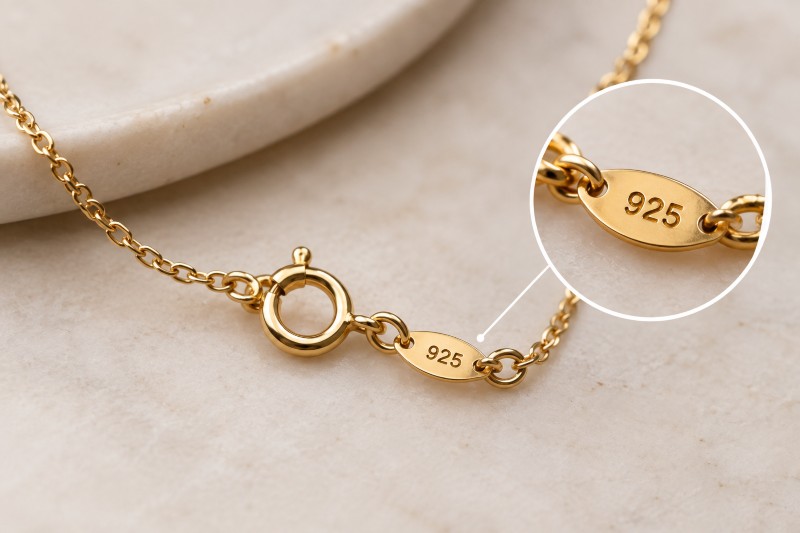
Gold purity is measured out of 24 karats. Pure 24K gold is 99.9% gold, but it’s too soft for jewelry worn daily. 14K gold is 58.3% pure gold, alloyed with metals like copper, silver, or zinc to make it strong enough for a bracelet you actually wear. You’ll usually find “14K” or “585” stamped near the clasp — 585 refers to 58.5 parts per 1,000, the European way of marking the same purity.
That alloy also determines color: more copper leans rose gold, more silver or palladium leans white gold, and a balanced mix gives the classic yellow gold look.
Here’s how 14K compares to other common purities, since a lot of people search for these side by side:
| Karat | Purity | Value per gram (at $4,375/oz spot) |
|---|---|---|
| 10K | 41.7% | ~$58.65 |
| 14K | 58.3% | ~$82.00 |
| 18K | 75.0% | ~$105.50 |
| 24K | 99.9% | ~$140.60 |
So a 10k gold bracelet worth calculation will always land lower per gram than a 14k gold bracelet worth calculation of the same weight, while an 18k or 24k gold bracelet worth calculation will land higher. 14K sits in the sweet spot most jewelers recommend for everyday bracelets — enough real gold value to matter, without being too soft to hold its shape.
The Formula: How to Calculate Your 14K Gold Bracelet’s Value
This is the exact math jewelers and gold buyers use to price a 14k gold bracelet:
Melt value = Bracelet weight (grams) × 0.583 × Current gold price per gram
Step 1: Convert spot price to grams
Gold is quoted per troy ounce (31.1 grams). At $4,375/oz:
$4,375 ÷ 31.1 = $140.66 per gram of pure (24K) gold
Step 2: Apply 14K purity
$140.66 × 0.583 = $82.00 per gram of 14K gold
Step 3: Multiply by your bracelet’s weight
Say your bracelet weighs 12 grams:
$82.00 × 12 = $984
That’s your bracelet’s gold content — its melt value. Weigh it on a jewelry or kitchen scale, plug in today’s gold price, and you can run this yourself in under a minute for any 14k gold bracelet price question.
Melt Value vs. Payout vs. Real Worth
This is where a lot of confusion happens, because “how much is a gold bracelet worth” can mean three different numbers:
1. Melt value — the raw gold content at 100% of spot price, calculated above. No buyer pays this in full.
2. Payout value — what a gold buyer, pawn shop, or refinery actually hands you. They need to cover refining and profit margin, so payouts typically run 50% to 90% of melt value depending on the buyer. Pawn shops tend to sit at the low end (50–70%); dedicated gold buyers and refineries usually pay more (70–90%). On that 12-gram bracelet worth $984 in melt, an 80% payout looks like:
$984 × 0.80 = $787.20
3. Resale or appraised value — this applies when the bracelet has diamonds, a designer name (think David Yurman, Cartier, or a fine Italian goldsmith), or exceptional craftsmanship. This number can run well above melt value, because you’re being paid for more than just the metal.
Knowing which of these three numbers you’re actually asking about is the key to understanding your bracelet’s real worth.
What Pushes a Bracelet’s Value Above Melt
The gold content is the floor. These factors can raise the real value:
- Diamonds or gemstones. A tennis bracelet lined with diamonds is priced almost entirely on stone quality (cut, color, clarity, carat weight), not the thin gold frame holding them.
- Brand or designer name. A bracelet from a recognized maker sells for a premium over its raw gold and craftsmanship cost.
- Design complexity. Hand-finished Cuban links, woven rope designs, and detailed Italian gold bracelets take more skilled labor, which adds resale value beyond melt.
- Condition. A bracelet with an intact clasp, no stretched links, and no dents holds more value than a damaged one.
- Market demand. Currently popular styles (chunky curb chains, tennis bracelets) can sell above melt value, while dated designs may only fetch scrap price.
One important caution: if your bracelet has stones, never weigh the whole piece and price it as solid gold. Prongs and stones can add real weight to the scale reading without adding gold value. Estimate the stone weight, subtract it, and calculate melt value on the gold-only portion.
Solid 14K Gold vs. 14K Gold-Filled vs. 14KGP: Know What You Have
Not everything stamped “14K” is solid gold all the way through, and this single mix-up is behind most of the “why is my bracelet worth so little” surprises:
- Solid 14K gold — stamped “14K” or “585.” Gold runs through the entire piece.
- 14K gold-filled (14K GF or 1/20 14K) — a thick layer of gold mechanically bonded over a base metal. Contains far less actual gold than solid, but more than plated.
- 14KGP (gold plated) — a very thin layer of gold electroplated over another metal. This is by far the least valuable of the three, and a 14kgp bracelet has essentially no scrap value — you’re mostly paying for the base metal and the look.
If a bracelet feels unusually light for its size, or shows a different-colored metal at worn spots (like inside the clasp), it may not be solid gold even with a “14K” stamp on it. A jeweler can confirm with a simple test in seconds.
Common 14K Gold Bracelet Styles and Typical Weights
Different bracelet styles carry very different weights — which is a big reason two 14K bracelets can have wildly different values even at the same length:
| Bracelet style | Typical weight range | Approx. melt value |
|---|---|---|
| Thin Italian box or rope chain | 2–5 grams | $164–$410 |
| Curb link bracelet | 5–12 grams | $410–$984 |
| Cuban link bracelet | 10–25 grams | $820–$2,050 |
| Solid gold bangle | 8–20 grams | $656–$1,640 |
| Tennis bracelet (gold only, stones excluded) | 4–10 grams | $328–$820 |
If you’re wondering how much gold is in a bracelet you own, weighing it is really the only accurate way to know — style and appearance alone can be misleading, since a hollow bangle can weigh far less than it looks.
Selling Your Bracelet: How to Get a Fair Price
- Calculate melt value yourself first, using the formula above. This is your absolute floor — never accept an offer below it.
- Get quotes from at least three buyers. Pawn shops typically pay the least; dedicated gold buyers and refineries usually pay more; private sales pay the most but take more effort.
- Ask the payout percentage upfront. An 85%-of-melt offer beats a 55%-of-melt offer on the same bracelet by a wide margin.
- Separate stone value from gold value if your bracelet has diamonds or gemstones — don’t let a scrap buyer price the whole piece as gold.
- Search for a certified jeweler or gold buyer near you who offers a free evaluation, and compare that quote against your own melt-value math before agreeing to anything.
- Get a professional appraisal for anything with stones, a designer name, or sentimental/estate value — a gold bracelet appraisal from a GIA-credentialed appraiser gives you a documented number, not just an estimate.
FAQ: How Much Is a Gold Bracelet Worth?
How much is a 14k gold bracelet worth per gram? At current gold prices (~$4,375/oz), 14K gold is worth roughly $82 per gram in melt value. Multiply that by your bracelet’s weight for a baseline number.
How much is a 14 karat gold bracelet worth if it has diamonds? The diamonds are priced completely separately from the gold. Weigh the bracelet, estimate the stone weight, and calculate gold value on the remaining weight only — then get the stones appraised separately.
What’s the difference between 14K and 14KGP? 14K means solid gold throughout. 14KGP means gold-plated — a thin gold layer over another metal, with only a small fraction of the scrap value of solid 14K gold.
How much does a gold bracelet weigh? It varies enormously by style. Thin Italian chain bracelets can weigh as little as 2 grams, while a solid gold bangle or heavy Cuban link bracelet can weigh 20 grams or more.
How much is a 10k gold bracelet worth compared to 14k? 10K gold is 41.7% pure versus 14K’s 58.3%, so a 10K bracelet of the same weight is worth noticeably less — roughly 71% of the 14K value at the same gold price.
How much is an 18k gold bracelet worth compared to 14k? 18K gold is 75% pure, so gram for gram, an 18K bracelet holds about 29% more gold value than the same weight in 14K.
What is 14 milligrams of gold worth? Milligrams are tiny — 14 mg is just 0.014 grams. At $140.66 per gram of pure gold, that’s under $2 worth of gold, which is why jewelry weight is almost always measured in grams, not milligrams.
Do pawn shops pay full melt value for a 14K gold bracelet? No. Pawn shops typically offer 50–70% of melt value to cover their own resale margin and refining costs. Dedicated gold buyers usually offer more.
How can I check my bracelet’s karat and value near me? Look for a stamp reading “14K” or “585,” then bring it to a local certified jeweler or gold buyer for a professional weight and purity check — most offer this as a free evaluation.
Bottom Line
Whether you’re searching “how much is a 14k gold bracelet worth,” “price for 14k gold bracelet,” or “14 karat gold bracelet price,” the process is the same: weigh the piece, multiply by 0.583, multiply by today’s gold price, and you’ve got your floor. From there, diamonds, brand, craftsmanship, and condition can push the real number higher — sometimes by a lot.
Never accept an offer below your calculated melt value, get more than one quote before selling, and get a professional appraisal for anything with stones or sentimental value attached. That’s how you find out what your bracelet is genuinely worth.


 By
By