
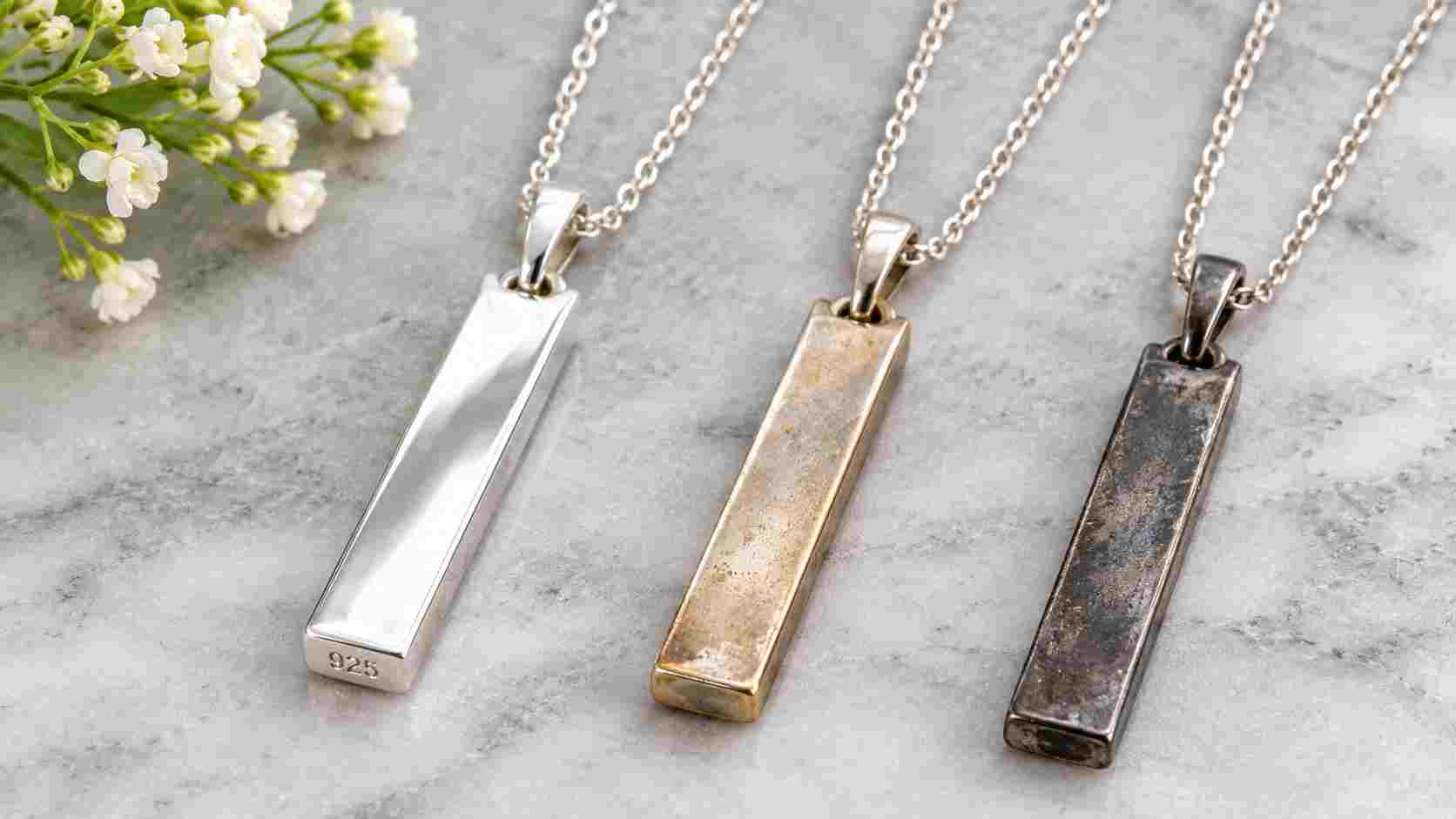
You bought a sterling silver ring because it looked bright and clean. A few months later, it has a yellow cast, and the inside of the band has turned almost black. Did you buy fake silver? Almost certainly not.
Does sterling silver tarnish? Yes. All real sterling silver tarnishes over time, because silver reacts with sulfur compounds in the air and in everyday products. The dark film is called tarnish. It sits only on the surface, comes off with gentle cleaning, and forms more slowly when silver is stored dry and airtight.
Quick Answer: Yes, sterling silver tarnishes, and so does 925 silver and fine silver. Tarnish is a thin layer of silver sulfide that forms when silver meets sulfur in the air, food, rubber and some cosmetics. Humidity, sweat, chlorine and poor storage speed it up. Tarnish is cosmetic and removable, and sealed storage slows it down.
Key Takeaways
- Sterling silver is 92.5% silver, and all real silver tarnishes; tarnish is not a sign of a fake.
- Tarnish is silver sulfide, caused mainly by sulfur, not by oxygen or water alone.
- Humidity, sweat, chlorine, rubber and sulfur-rich foods make it form faster.
- It starts yellow, turns brown, then gray-black; light tarnish is the easiest to remove.
- Airtight bags with anti-tarnish strips are the simplest way to slow it.
- Each abrasive polish removes a little silver, so prevention beats frequent polishing.
Does Sterling Silver Tarnish?
Yes. Sterling silver tarnishes because the silver in it reacts with sulfur compounds, forming a dark surface film of silver sulfide. It happens to every brand and every price level of real sterling silver. The rate varies with your climate, your skin, the products you use and how you store the piece.
Tarnish is a surface change, not a defect. It does not mean the piece is low quality or plated, and it does not lower the silver content. If anything, a piece that never tarnishes over years of wear may not be sterling at all, or may be plated with another metal such as rhodium.
Does 925 Sterling Silver Tarnish?
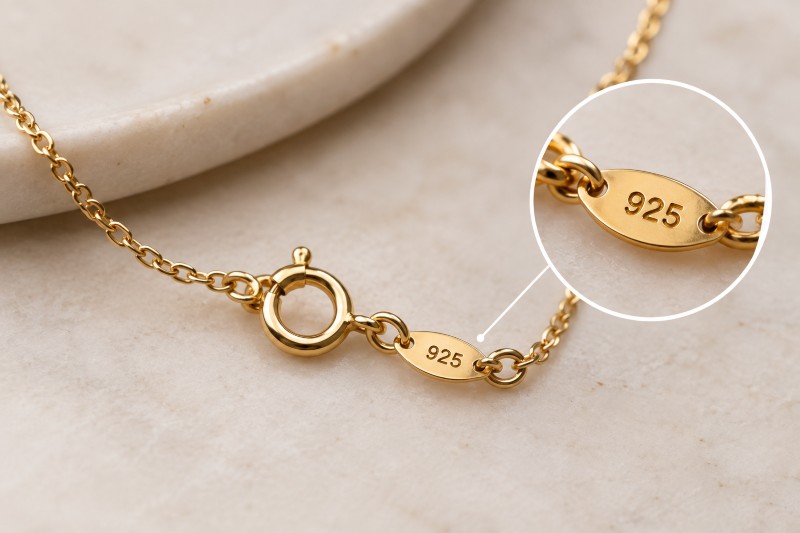
Yes. “925” is simply the mark for sterling silver, meaning 925 parts per thousand (92.5%) pure silver, so 925 silver tarnishes exactly like any sterling. Under the FTC’s Jewelry Guides, a product should be called sterling silver only if it is at least 925/1000 fine silver. The other 7.5% is usually copper, added because pure silver is too soft for most jewelry.
You will see this as “925”, “Sterling”, “Ster” or “.925” on a clasp, tag or ring band. To learn how stamps work on precious metals in general, our guide to spotting real gold explains quality marks and maker’s marks. Next, here is what actually causes the dark film.
Why Does Sterling Silver Tarnish?
Sterling silver tarnishes mainly because silver reacts with hydrogen sulfide and other sulfur compounds, forming black silver sulfide on the surface. The American Chemical Society explains that silver reacts with hydrogen sulfide gas in the air, and that contact with sulfur-containing items such as hard-boiled eggs, mayonnaise, mustard and rubber bands can also cause tarnish.
A common belief is that silver “oxidizes” from oxygen in the air. In everyday conditions, the main culprit is sulfur, not oxygen. Moisture matters because it speeds up the reaction, which is why silver tarnishes faster in humid weather and in damp bathrooms.
Does Silver Tarnish Even When It Is Pure?
Yes. Fine silver (99.9% pure) also tarnishes, because the silver itself reacts with sulfur; it simply tends to tarnish more slowly and evenly than sterling. The copper in sterling can add reddish or greenish tones to tarnish and can react with sweat, but copper is not the only cause. Here is how common silver types compare.
| Silver type | Silver content | Does it tarnish? | What to know |
|---|---|---|---|
| Fine silver | 99.9% | Yes, usually more slowly | Very soft; bends and scratches easily |
| Sterling silver (925) | 92.5% | Yes | The standard for jewelry; copper adds strength |
| Coin silver | 90% | Yes | Common in older American pieces |
| Rhodium-plated sterling | 92.5% under a rhodium layer | Not until the plating wears through | Rhodium is a bright white platinum-group metal |
| Silver-plated | A thin silver layer over base metal | Yes, and the base metal can show through | Cannot be polished hard without wearing through |
| “Silver-tone” fashion jewelry | Often no silver | It may darken, peel or turn skin green | Not real silver; can’t be restored by polishing |
If you need to know which metal is gentle on sensitive skin, our guide to post earring metals compares sterling with other options.
What Makes Sterling Silver Tarnish Faster?
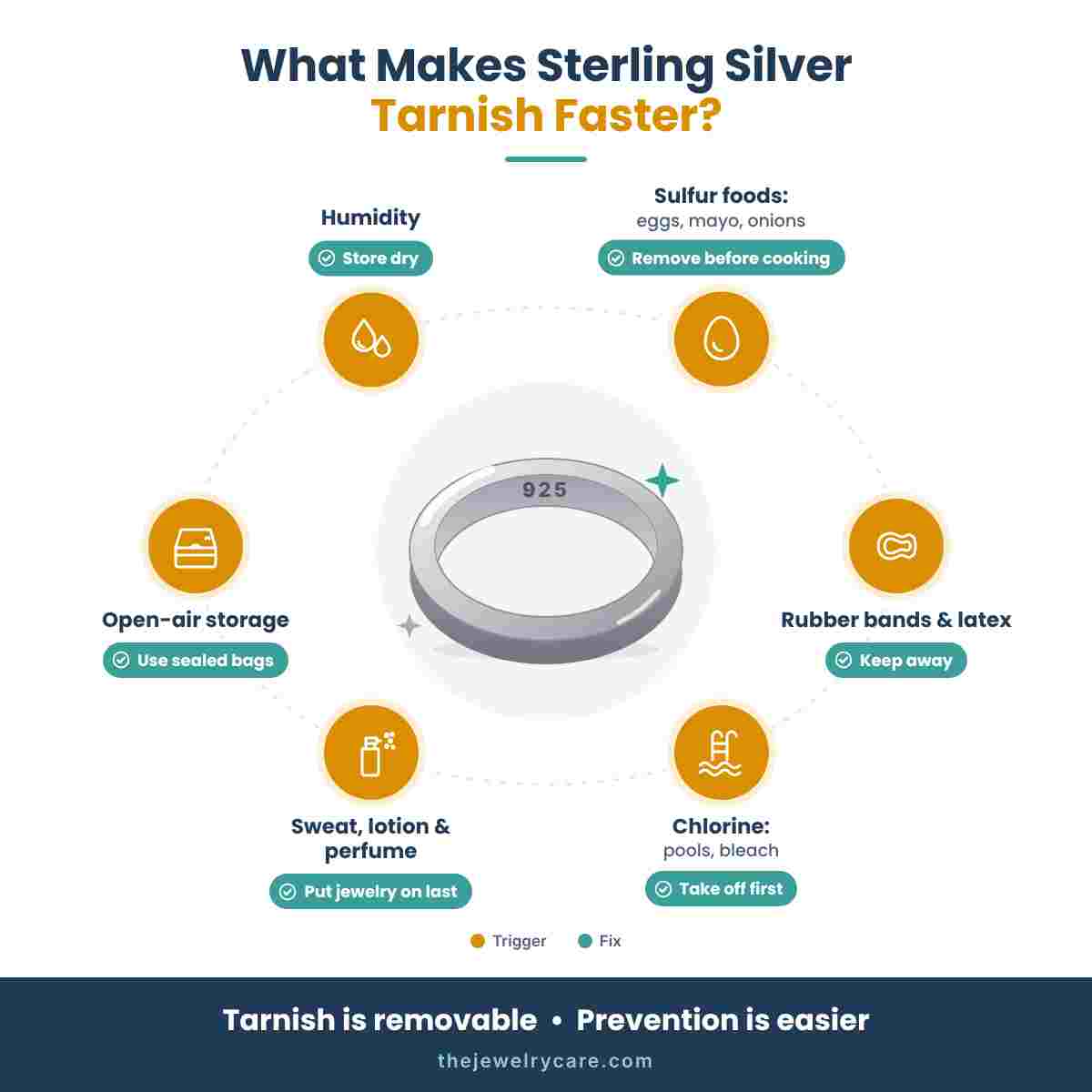
Humidity, sulfur sources, chlorine, sweat, cosmetics and open-air storage are the main things that make sterling silver tarnish faster. The infographic and table below show each trigger and the simple fix.
| Tarnish trigger | Why it matters | What to do |
|---|---|---|
| Humidity and damp storage | Moisture speeds the reaction between silver and sulfur | Store silver dry; never put it away wet |
| Sulfur-rich foods | Eggs, mayonnaise, mustard and onions release sulfur compounds | Take rings off while cooking with them |
| Rubber and latex | Rubber bands and some rubber items contain sulfur | Keep silver away from rubber bands and rubber-lined boxes |
| Chlorine | Pool water and bleach attack silver and can leave dark marks that are hard to remove | Remove silver before swimming and cleaning |
| Sweat, lotions, perfume, hairspray | They leave residues that react with silver and copper | Put silver on after getting ready; wipe it after wearing |
| Open-air storage | Constant exposure to air means constant exposure to sulfur gases | Keep pieces in sealed bags with an anti-tarnish strip |
Even gloves can matter. The U.S. National Park Service’s museum guidance warns that gloves processed with chlorine have been found to tarnish silver after only a short period of contact. At home, the takeaway is simple: keep silver away from chlorine in any form.
How Fast Does Sterling Silver Tarnish?
There is no fixed timeline: sterling silver can show light tarnish within weeks in humid air or near sulfur sources, or stay bright for months or longer when stored dry and sealed. The same ring can tarnish at very different speeds in a steamy bathroom drawer and in a sealed bag.
Tarnish builds in stages, and the color tells you how far it has gone.
| Stage | What it looks like | How easy to remove |
|---|---|---|
| 1. Early | A faint warm or yellow cast; less sparkle | Very easy: soap and water or a polishing cloth |
| 2. Moderate | Golden brown, often patchy | Easy: a silver polishing cloth |
| 3. Heavy | Gray to blue-black, especially in crevices and chains | Needs more effort, such as a foil and baking soda bath |
Catching tarnish at stage 1 or 2 means less work and less silver lost to polishing. A quick look at your favorite pieces every few weeks makes that easy.
Will Sterling Silver Tarnish If You Wear It Every Day?
Yes, sterling silver worn every day still tarnishes, but pieces that are worn and wiped often usually show less buildup than pieces left sitting in open air. Daily wear rubs the surface lightly, and regular wiping removes residues before they react. At the same time, sweat, lotion and perfume add sulfur and salts that can speed tarnish in spots.
You may read that “skin oils polish silver.” There is no solid evidence for that claim, and for some people, skin chemistry makes silver darken faster. The reliable habit is to wipe silver with a soft cloth after wearing it and to keep it dry. Rings and bracelets touch more surfaces than necklaces, so they often tarnish unevenly. Men’s chains and cuffs follow the same rules, as our guide to men’s bracelet styles explains, and so do silver pendants, covered in our men’s pendant guide.
Does Tarnish Damage Sterling Silver?
No. Tarnish is a thin surface layer and does not weaken sterling silver, but removing it with abrasive polish takes away a tiny amount of silver each time. The American Chemical Society notes that polishes usually remove tarnish through abrasion, so some silver is lost with every polish. Over many years, heavy polishing can soften fine engraving and wear through plating.
Some darkness is intentional. Many designers “oxidize” sterling on purpose to make patterns and engraving stand out. The National Park Service guidance notes that darker tarnish in recesses often helps design elements stand out, which is why it is wise to clean oxidized pieces gently and avoid harsh dips.
Jeweler’s Tip: Don’t wait for black tarnish. A 30-second wipe with a silver polishing cloth at the yellow stage removes far less metal than a deep clean months later.
How Do You Stop Sterling Silver From Tarnishing?
You cannot stop sterling silver from tarnishing forever, but you can slow it a great deal by storing it dry and airtight, keeping it away from sulfur and chlorine, and wiping it after each wear. Storage is the biggest factor you control.
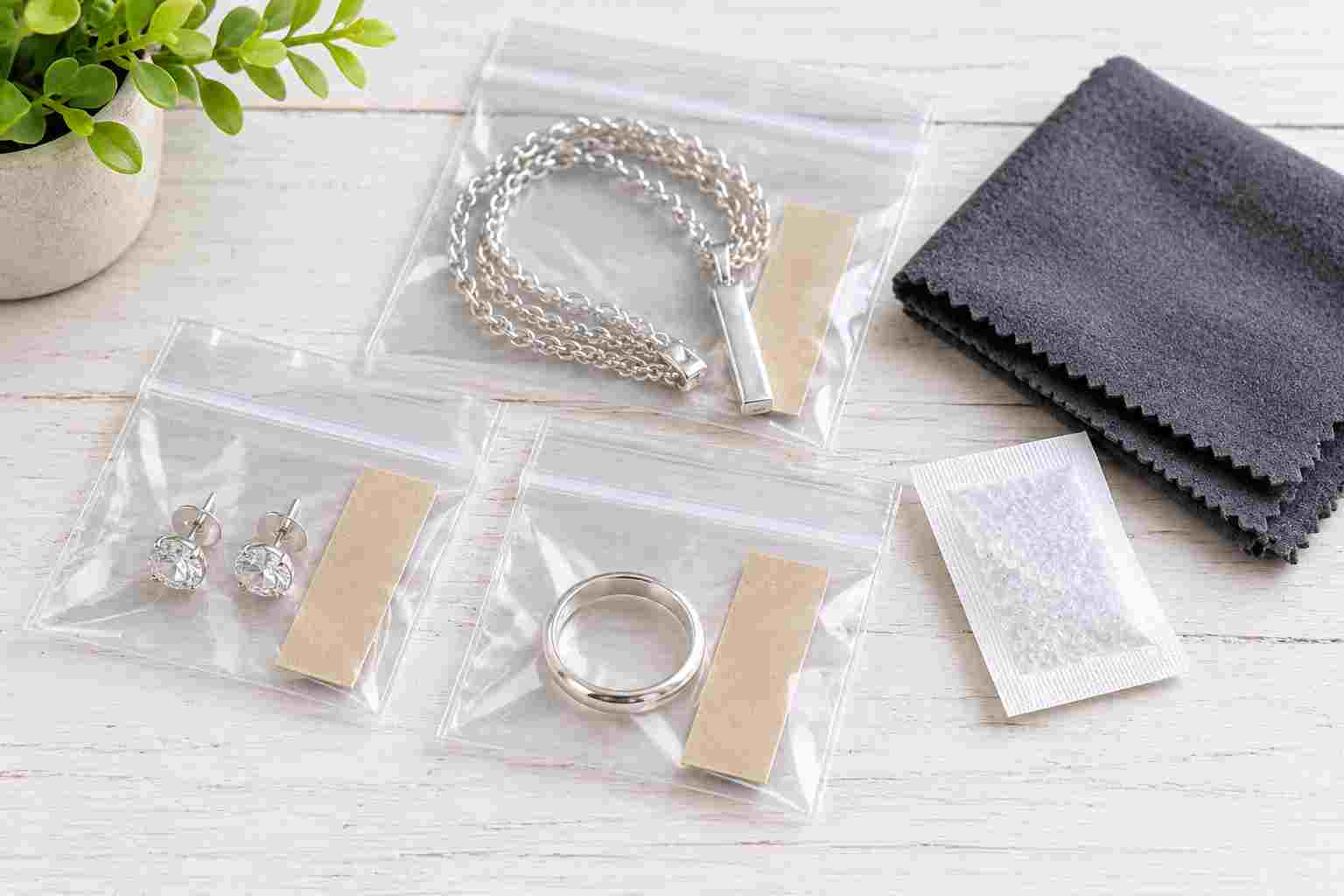
Keep each piece in its own small zip-top bag with the air pressed out and an anti-tarnish strip inside. A tarnish-preventing cloth pouch also works well. Store silver away from rubber bands and damp areas such as bathrooms. Put silver on after lotion, perfume and hairspray, and take it off before swimming, cleaning, exercising and cooking with eggs or onions. Wipe it with a soft cloth before you put it away.
Rhodium plating is another option. A jeweler can plate sterling with rhodium, which keeps it bright until the plating wears, usually first on rings. The same “take it off first” habits that protect silver also protect gold; our gold chain cleaning guide covers gold care.
Stop! Don’t do this. Never store silver in rubber-lined boxes or with rubber bands, never put it away damp, and never wear it in a chlorinated pool or hot tub. Chlorine can leave dark, pitted marks that cleaning will not fully remove.
How Do You Remove Tarnish From Sterling Silver?
Remove light tarnish with warm soapy water or a silver polishing cloth, and heavy tarnish on plain sterling with a hot baking soda and aluminum foil bath. Always start with the gentlest method and dry the piece completely afterward.
Our full guide on how to clean silver jewelry walks through each method step by step, including which stones and finishes need extra care. Diamond-set silver follows the gentle steps in our guide to cleaning a diamond ring, and colored stones such as topaz need extra care, as our November birthstone guide explains.
Sterling Silver Tarnish Myths vs Facts
| Myth | Fact |
|---|---|
| “Real silver never tarnishes.” | All real silver tarnishes, including fine silver and 925 sterling. |
| “Tarnish means my silver is fake.” | Tarnish is normal for real silver; a piece that never darkens may be plated or not silver. |
| “Silver tarnishes because of oxygen.” | The main cause is sulfur compounds such as hydrogen sulfide, sped up by moisture. |
| “Pure silver inside sterling doesn’t tarnish; only the copper does.” | Silver itself reacts with sulfur; copper adds to discoloration but isn’t the only cause. |
| “Tarnish ruins silver permanently.” | Tarnish is a surface layer and can be removed; only heavy pitting from chlorine is hard to fix. |
| “Skin oils polish silver, so wearing it prevents tarnish.” | There is no solid evidence; wiping after wear and dry storage are what help. |
When Should You Take Tarnished Silver to a Jeweler?
See a jeweler if tarnish returns within days of cleaning, if you see pitting, green crust or worn-through plating, or if the piece is valuable, antique or set with delicate stones. A jeweler can polish professionally, re-oxidize antiqued designs, add rhodium plating and check stones and clasps.
Sentimental pieces deserve extra care. A silver promise ring, for example, is worth a professional check now and then, as our guide to promise vs engagement rings notes. Permanent silver bracelets can’t be removed for cleaning, so the studio that welded them is the best place to ask; our guide to permanent jewelry explains how they are cared for.
Frequently Asked Questions About Sterling Silver Tarnish
Will sterling silver tarnish in water?
Plain water alone does not tarnish sterling silver quickly, but moisture speeds up the reaction with sulfur, and chlorinated or hard water adds chemicals that can darken it. Showers also leave soap and shampoo films. Remove silver before showering or swimming, and dry it completely if it gets wet.
Does silver tarnish faster than gold?
Yes. Pure gold does not tarnish, and higher-karat gold resists tarnish well, while silver reacts readily with sulfur. Lower-karat gold such as 10K can darken slightly because of its silver and copper content. Our guide to 14K gold ring value explains how karat changes gold content.
Does tarnished sterling silver turn your skin green?
It can. The copper in sterling silver can react with sweat and skin products, and the result can leave a faint green or dark mark on skin. It is harmless for most people and washes off. Keeping the piece clean and dry, and putting lotions on before jewelry, usually prevents it.
Does rhodium-plated sterling silver tarnish?
Rhodium-plated sterling does not tarnish while the rhodium layer is intact, because rhodium covers the silver. Over time, the plating wears, especially on rings and bracelets, and the exposed silver underneath can tarnish. A jeweler can replate the piece when that happens.
How do you know if silver is real if it doesn’t tarnish?
Check for a 925, Sterling or Ster stamp and a maker’s mark, and ask whether the piece is rhodium-plated. Plated sterling may not tarnish for a long time. Fashion jewelry marked “silver-tone” usually contains no silver. For certainty, a jeweler can test the metal.
Does storing silver in a jewelry box prevent tarnish?
An open jewelry box slows tarnish only a little, because air still circulates. A box with a tarnish-resistant lining helps more, and sealed zip-top bags with anti-tarnish strips help most. Avoid boxes with rubber parts, and never store silver while it is still damp.
Do silver bangles tarnish faster than other pieces?
Bangles touch desks, soap and skin all day, so they often tarnish in patches where lotion and sweat build up. Wipe them after wear and store them separately in sealed bags. If you are buying a new one, our guide on how to measure bangle size helps you choose a good fit.
[H3] Is it okay to leave sterling silver tarnished?
Yes, tarnish does not harm the metal, and on oxidized designs some darkness is intended. Some people like the aged look. If you prefer a bright finish, clean it while the tarnish is still light, because early tarnish takes far less effort and removes less silver.
Bright Silver Is a Habit, Not Luck
So, does sterling silver tarnish? Yes, every real piece does, but tarnish is surface-deep, removable and much slower when silver is kept dry, sealed and away from sulfur and chlorine. Wipe silver after wearing it, store each piece in its own airtight bag, and clean it at the first yellow tint. When it’s time for a deeper clean, follow our step-by-step guide to clean silver jewelry.

 By