
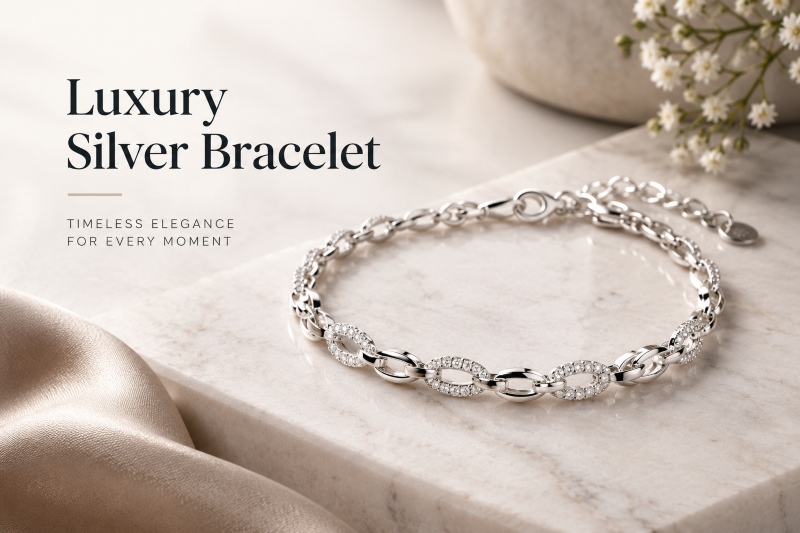
Whether you are shopping for a timeless everyday accessory, evaluating a cherished heirloom, or looking for a hypoallergenic alternative to base metals, a silver bracelet stands out as one of the most versatile, elegant, and enduring pieces of fine jewelry in human history.
However, entering the world of silver jewelry quickly reveals a complex landscape of metallurgical terms. From 925 sterling silver and 999 fine silver to Britannia silver, Argentium, and cheap silver-plated costume pieces, not all silver bracelets are created equal. Buying without understanding these differences can lead to rapid tarnishing, structural warping, skin rashes, or paying fine-jewelry prices for base metals.
In this comprehensive guide, we will unpack everything you need to know about silver bracelets: their chemical compositions, historical significance, full breakdown of styles, health and psychological benefits, precise wrist-sizing methods, and expert protocols to keep your silver shining for decades.
What Is a Silver Bracelet Made Of? Metallurgical Breakdown
At its most basic definition, a silver bracelet is a piece of wristwear crafted from elemental silver ($Ag$) or a silver-based alloy.
In its pure chemical form (Element 47 on the Periodic Table), silver is a brilliant white, highly reflective precious metal. However, 100% pure silver is too soft to be used for functional structural jewelry. On the Mohs Hardness Scale, pure silver ranks at just 2.5—roughly the hardness of a fingernail. A bracelet made from pure elemental silver would easily bend, dent, warp, and scratch under the weight of daily wear.
To solve this, master metallurgists mix pure silver with alloy metals (most commonly copper, germanium, or platinum) to enhance tensile strength and durability.
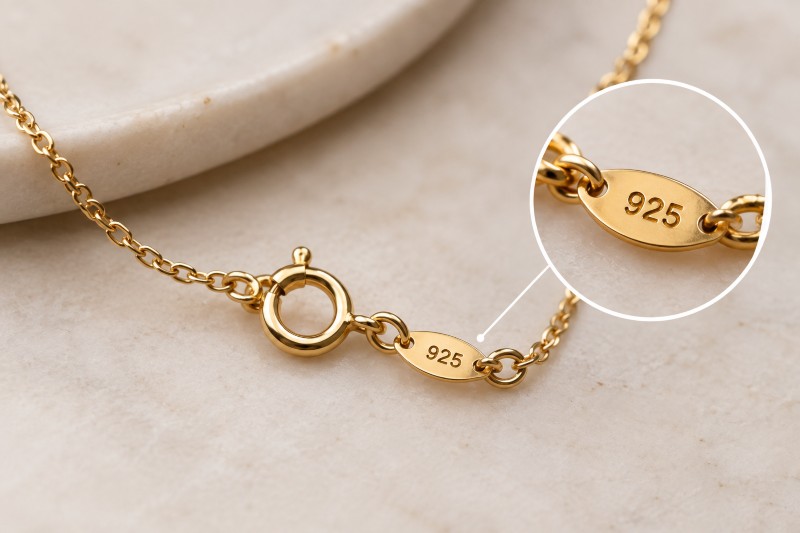
Understanding the official hallmark stamp engraved on the inside band or near the clasp tells you the exact purity and value of your bracelet:
| Silver Type | Composition | Primary Best Use |
|---|---|---|
| Fine Silver (999) | 99.9% Pure Silver | Earrings, Bezel Settings |
| Britannia (958) | 95.8% Pure Silver | High-End Artisanal Pieces |
| Sterling (925) | 92.5% Pure + Copper | Everyday Rings & Bracelets |
| Coin Silver (900) | 90.0% Pure + Copper | Vintage Antiques & Flatware |
| Reticulation (800) | 80.0% Pure + Copper | Textured Studio Jewelry |
| Silver-Plated | Base Metal + Micro | Fast-Fashion Costume Wear |
1. Sterling Silver (925 Hallmark)
- Composition: 92.5% Pure Silver, 7.5% Copper (or trace amounts of zinc/silicon).
- The Global Standard: 925 Sterling Silver is the international benchmark for fine silver jewelry. The addition of 7.5% copper significantly increases the metal’s hardness and tensile strength while maintaining silver’s characteristic bright lustre.
- Pros: Highly durable, repairable, beautiful luster, holds stones securely.
- Cons: Prone to natural oxidation (tarnishing) over time due to copper content.
2. Fine Silver (999 Hallmark)
- Composition: 99.9% Pure Elemental Silver.
- Characteristics: Also referred to as “three-nines fine,” this metal has a softer, warmer white tone than sterling silver. Because it lacks copper, fine silver does not tarnish easily.
- Pros: Extremely high tarnish resistance, non-reactive, hypoallergenic.
- Cons: Too soft for high-impact wristwear; easily dents, scratches, and warps.
3. Argentium® Silver (935 or 960 Hallmark)
- Composition: 93.5% to 96% Pure Silver, combined with Copper and Germanium.
- Modern Innovation: Argentium is a patented modern silver alloy. The addition of germanium creates a self-healing protective oxide layer on the surface.
- Pros: Highly tarnish-resistant, brighter white finish than traditional 925, nickel-free, fire-scale free during fabrication.
- Cons: Premium price point compared to standard sterling.
4. Coin Silver (900 Hallmark)
- Composition: 90% Pure Silver, 10% Copper.
- Historical Context: Historically produced in the 19th century by melting down silver coins. Common in antique, Native American vintage, and heirloom bracelets.
5. Silver-Plated & Base Metals (The Fashion Trap)
- Composition: A base metal core (such as brass, copper, or zinc alloy) coated with a microscopic layer of silver via electroplating.
- The Danger: Silver-plated bracelets carry virtually no precious metal value. Within weeks of wear, the micro-layer of silver wears off, exposing the underlying base metals which react with skin sweat to leave green or black marks on your wrist.
7 Iconic Types of Silver Bracelets
Silver’s exceptional malleability allows jewelers to form it into a wide variety of structural styles. Here is a detailed look at the 7 most popular styles:
| Bracelet Style | Design | Key Features |
|---|---|---|
| Chain & Link | Interlocking silver links | Cuban, Figaro, and cable designs with flexible movement |
| Bangle | Solid, circular band | Rigid design that works well for stacking |
| Cuff | Open-ended rigid band | Adjustable fit with a simple, structured appearance |
| Tennis | Continuous row of stones | Elegant design featuring closely set gemstones |
| Charm | Linked bracelet with hanging charms | Personalizable with symbolic or decorative charms |
| Beaded | Silver beads strung together | Lightweight design with a textured, decorative appearance |
| Slider / Bolo | Adjustable sliding closure | Easy-to-adjust fit using a central slider mechanism |
1. Chain & Link Bracelets
Interlinked silver rings create fluid, flexible movement across the wrist. Popular link styles include:
- Cuban / Curb Chain: Interlocking oval links laid flat with a uniform profile; popular in bold men’s and women’s streetwear fashion.
- Figaro Chain: Features an alternating pattern of 2–3 short circular links followed by 1 elongated oval link.
- Rope Chain: Small links twisted tightly together to mimic real rope texture, capturing light from all angles.
- Paperclip Chain: Modern rectangular links providing a minimalist, contemporary look.
2. Silver Bangles
Bangles are solid, rigid circular bands. They have no clasps and must be slipped directly over the hand onto the wrist. They are frequently worn stacked in groups to create visual contrast and a characteristic gentle metallic sound.
3. Silver Cuffs
Unlike bangles, cuffs are rigid bands featuring a c-shaped open gap on the underside. They do not close completely, allowing the wearer to slide the bracelet onto the side of the wrist just above the bone. High-quality sterling silver cuffs can be gently compressed or opened slightly for a custom fit.
4. Silver Tennis Bracelets
Originally named after tennis icon Chris Evert dropped her diamond bracelet during the 1978 US Open, a tennis bracelet features a symmetrical, flexible line of closely set gemstones (such as cubic zirconia, moissanite, or diamonds) framed in sterling silver bezel or prong settings.
5. Silver Charm Bracelets
Built using sturdy double-link chain structures designed to support individual hanging silver tokens, pendants, or gemstones. Charm bracelets act as wearable scrapbooks, recording travel, anniversaries, and personal milestones.
6. Silver Beaded Bracelets
Polished silver beads strung along high-durability elastic cord, stainless steel wire, or silver chain links. These offer a textured, tactile aesthetic that pairs exceptionally well with watches or leather wristwear.
7. Slider / Bolo Bracelets
Featuring a box chain or cord terminating in a sliding box mechanism filled with silicone grip. This allows the wearer to adjust the circumference freely, making slider bracelets an ideal choice when gifting without knowing exact wrist dimensions.
The Historical & Cultural Evolution of Silver Wristwear
Humans have fashioned silver into personal adornments for over 5,000 years.
- Ancient Egypt & Mesopotamia (3000 BCE): Because silver was rarer than gold in early Egyptian dynasties due to local mining limitations, silver bracelets were prized above gold as sacred luxury items symbolizing lunar energy and purity.
- Ancient Greece & Rome: Silver cuffs and armbands were worn by soldiers and citizens as protective amulets and status symbols signifying civic rank.
- Native American Silversmithing (1860s–Present): Navajo, Zuni, and Hopi artisans developed world-famous silver cuff techniques, hand-hammering 900 and 925 silver with intricate stamp work and hand-cut turquoise settings.
- The Victorian Era (1837–1901): Queen Victoria popularized silver charm bracelets and engraved sentimental lockets, solidifying sterling silver as a mainstream staple of fine European jewelry.
7 Proven Benefits of Wearing a Silver Bracelet
Beyond aesthetic refinement, wearing a solid sterling silver bracelet offers practical, physical, and psychological advantages:
1. 100% Hypoallergenic & Skin-Safe
Quality 925 sterling silver is nickel-free. Nickel is the single most common cause of allergic contact dermatitis in jewelry wearers, leading to red, itchy, and blistered skin. Solid silver provides a safe, comfortable daily wear experience even for ultra-sensitive skin types.
2. Natural Antimicrobial & Antibacterial Properties
Silver has a rich medical history dating back centuries. Elemental silver ions ($Ag^+$) disrupt bacterial cell membranes and inhibit viral growth. While wearing a silver bracelet is not a substitute for hygiene, its antimicrobial surface inhibits bacterial accumulation on the inner band.
3. Superior Thermal Conductivity
Silver exhibits the highest thermal and electrical conductivity of any element on Earth. When worn directly against the skin, a silver bracelet rapidly absorbs and distributes ambient body heat, creating a soothing thermal balance against the wrist.
4. Unmatched Wardrobe Versatility
Unlike yellow gold, which features warm undertones that can clash with cool-toned fabrics or casual clothing, silver offers a bright, neutral, luminous finish. It pairs effortlessly with everything from casual denim and activewear to business suits and formal evening wear.
5. Psychological Anchor (Enclothed Cognition)
Psychologists use the term enclothed cognition to describe how wearing meaningful physical items influences mood, posture, and self-perception. A solid silver bracelet offers a reassuring weight and tactile surface that acts as a grounding anchor during high-stress moments.
6. Intrinsic Value & Investment Retainage
Costume jewelry made from plastic, zinc, or base metals becomes worthless trash once broken or faded. Solid 925 sterling silver is a precious metal traded on global commodity markets. It retains intrinsic scrap metal value and can always be melted, resized, repaired, or polished to brand-new condition.
7. Accessible Fine Luxury
Silver offers the structural durability, luster, and prestige of white gold or platinum at a fraction of the cost, making fine jewelry accessible without compromising on material quality.
How to Measure Your Wrist for the Perfect Fit
A bracelet that is too tight causes discomfort, restricts circulation, and puts stress on clasp mechanisms. A bracelet that is too loose risks catching on door handles or slipping off unnoticed.
Follow this simple guide to find your exact size:
| Wrist Measurement | Recommended Fit | Total Bracelet Length to Order |
|---|---|---|
| 5.5 in (14.0 cm) | Snug Fit (+0.5 in) | 6.0 in (15.2 cm) |
| 6.0 in (15.2 cm) | Standard (+0.75 in) | 6.75 in (17.1 cm) |
| 6.5 in (16.5 cm) | Loose Fit (+1.0 in) | 7.5 in (19.0 cm) |
| 7.0 in (17.8 cm) | Standard (+0.75 in) | 7.75 in (19.7 cm) |
| 7.5 in (19.0 cm) | Standard (+0.75 in) | 8.25 in (21.0 cm) |
| 8.0 in (20.3 cm) | Loose Fit (+1.0 in) | 9.0 in (22.8 cm) |
The 3-Step Measuring Protocol:
- Wrap the Wrist: Wrap a flexible measuring tape (or a piece of non-stretching string) around your wrist bone—right where you normally wear a bracelet.
- Mark the Point: Keep your palm flat and open. Mark the exact point where the tape or string overlaps without pulling tight.
- Calculate Final Size:
- For a Snug Fit (stays in place, minimal movement): Add 0.5 inches (1.3 cm) to your measurement.
- For a Standard Fit (slight drape, comfortable flex): Add 0.75 inches (1.9 cm).
- For a Loose Fit (drapes low toward the hand): Add 1.0 inch (2.5 cm).
💡 Bangle Sizing Tip: When measuring for a rigid bangle with no clasp, do not measure your wrist. Instead, bring your thumb and pinky finger together as if putting on a bangle, and measure around the widest part of your hand (across the knuckles).
Why Does Silver Tarnish? (The Chemistry Explained)
A common misconception is that tarnishing means silver is fake. The opposite is true: real 925 sterling silver naturally tarnishes, while cheap stainless steel does not.
The Chemical Reaction
Silver tarnish is not rust (rust only occurs on iron). Tarnish is a surface chemical reaction caused when the silver and copper in the alloy react with sulfur compounds in the surrounding environment.
$$\text{4Ag (Silver)} + \text{2H}_2\text{S (Hydrogen Sulfide)} + \text{O}_2\text{ (Oxygen)} \rightarrow \text{2Ag}_2\text{S (Silver Sulfide / Black Tarnish)} + \text{2H}_2\text{O}$$
This thin chemical layer of Silver Sulfide ($\text{Ag}_2\text{S}$) turns the surface yellowish-brown at first, eventually darkening to deep black.
Common Everyday Tarnish Triggers:
- Air Pollution & Humidity: High sulfur air quickly dulls silver.
- Body Chemistry & Sweat: Amino acids containing sulfur in sweat accelerate tarnishing.
- Skincare Products: Lotions, perfumes, sunscreens, and hairsprays contain sulfates and chemicals that react with metal.
- Hot Springs & Swimming Pools: Chlorine and volcanic sulfur strip protective layers and cause instant black oxidation.
How to Protect Your Silver Bracelet from Damage & Tarnish
Proactive care prevents deep tarnish build-up and structural fatigue. Follow these golden rules of jewelry care:
1. The “Last On, First Off” Rule
Always put your silver bracelet on as the very last step of your morning routine—after applying makeup, lotions, and perfumes. Take it off as the first step when arriving home before showering or sleeping.
2. Never Wear Silver in Pools, Hot Tubs, or the Ocean
- Pools & Hot Tubs: Chlorine causes rapid chemical pitting and deep black discoloration on silver.
- Salt Water: Salt accelerates oxidation and degrades internal steel springs within lobster-claw clasps.
3. Can You Shower with a 925 Silver Bracelet?
While pure water alone will not ruin 925 sterling silver, showering with your bracelet is not recommended:
- Soap suds, shampoos, and conditioners leave a dull chemical film inside link gaps that attracts dirt.
- Hard water deposits dull the surface finish.
- Humidity in the bathroom speeds up post-shower tarnishing.
4. Airtight Anti-Tarnish Storage
Never leave your silver bracelet sitting exposed on a nightstand or bathroom counter. When not wearing it:
- Wipe the bracelet clean with a soft dry cloth to remove body oils.
- Store it inside an airtight ziplock bag or a velvet-lined jewelry box containing an anti-tarnish strip (which absorbs airborne sulfur).
- Keep each bracelet in its own pouch to prevent chain links from scratching against one another.
How to Clean a Silver Bracelet at Home (Safe Step-by-Step)
If your silver bracelet loses its shine or develops black tarnish, you can easily restore its brilliant lustre at home without aggressive chemicals.
Method 1: The Mild Soap & Water Wash (Light Cleaning)
Best for removing daily dirt, lotions, and light dullness.
| Step | Cleaning Instructions |
|---|---|
| Step 1 | Fill a bowl with lukewarm water and add 2 drops of mild dish soap. |
| Step 2 | Soak the silver bracelet for 5–10 minutes. |
| Step 3 | Gently scrub the links with a soft-bristled baby toothbrush. |
| Step 4 | Rinse the bracelet thoroughly under clean running water. |
| Step 5 | Pat the bracelet completely dry with a lint-free microfiber cloth. |
Method 2: The Aluminum Foil Electrolysis Bath (Deep Tarnish Removal)
Best for heavily oxidized chain links without gemstones. This chemical process reverses tarnish by transferring sulfur off the silver and onto aluminum foil.
- Line a shallow glass dish with aluminum foil (shiny side facing up).
- Sprinkle 1 tablespoon of baking soda and 1 tablespoon of sea salt over the foil.
- Pour boiling water into the dish until submerged.
- Place your silver bracelet directly onto the foil surface. You will see tarnish disappear within 2 to 3 minutes as sulfur transfers to the foil (accompanied by a slight sulfur odor).
- Remove the bracelet using plastic tongs, rinse thoroughly in clean cold water, and dry immediately with a microfiber cloth.
⚠️ Warning: Do not use the baking soda electrolysis bath on silver bracelets featuring delicate organic gems like pearls, opals, turquoise, or amber, as hot water and salt can damage porous stones.
Real Silver vs. Fake Silver: 4 Quick DIY Authentication Tests
Before buying or wearing a silver bracelet, use these 4 non-destructive checks to confirm authenticity:
- The Stamp Inspection: Look for
925,STERLING,999, or935stamped near the clasp or inner band. - The Magnet Test: Silver is non-magnetic. If a strong neodymium magnet pulls or sticks to the bracelet, it contains iron or nickel base metals.
- The Ice Cube Test: Silver has the highest thermal conductivity of any metal. Place an ice cube directly on the silver bracelet—the ice will begin melting instantly as if placed on a hot surface.
- The White Cloth Polish Test: Rub an unpolished section of the bracelet with a clean white polishing cloth. Real silver will leave dark grey/black marks on the cloth as oxidized surface silver transfers over.
Frequently Asked Questions
What does “925” mean on a silver bracelet?
The “925” stamp indicates that the bracelet is made of sterling silver, containing 92.5% pure elemental silver and 7.5% alloy metals (usually copper) for strength.
Will a real 925 silver bracelet turn your skin green?
No. Solid 925 sterling silver does not turn skin green. Skin greening is caused by cheap copper or brass base metals reacting with skin acids. If your silver turns skin green, it is silver-plated base metal, not solid sterling silver.
Can you wear a silver bracelet every day?
Yes! In fact, wearing your sterling silver bracelet daily helps keep it clean. Friction against skin and clothes naturally polishes the metal, while natural skin oils coat the silver and shield it from airborne sulfur.
What is the difference between white gold and sterling silver?
White gold is an alloy of pure gold mixed with white metals (like palladium or nickel) and coated in rhodium; it is significantly more expensive and denser. Sterling silver is an elemental silver alloy, lighter in weight, more reflective, and requires periodic polishing to maintain its shine.

 By
By