
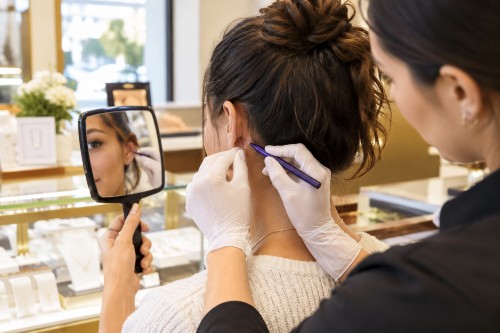
Do jewelry stores pierce ears? Yes, many jewelry stores pierce ears, but usually only earlobes, and not every location offers it. Mall jewelry chains and accessory stores often pierce lobes free or for a small fee when you buy starter studs. High-end fine jewelers usually don’t pierce. For cartilage piercings, such as the helix, tragus or conch, a professional piercing studio using a sterile needle is the better choice.
So the real question isn’t just whether jewelry stores pierce ears. It’s which store near you does it well, how it’s done, what it costs, and how to keep the new piercing healthy. This guide answers all of that.
Jewelry store vs piercing studio at a glance
| Attribute | Jewelry store / mall kiosk | Professional piercing studio |
|---|---|---|
| Typical method | Sterile, single-use cartridge in a piercing instrument (“gun”) | Sterile, single-use hollow needle |
| Best for | Standard earlobe piercings | Lobes and all cartilage piercings |
| Who pierces | Trained sales associates | Professional piercers (some studios use nurses) |
| Typical cost (US) | Often free with starter studs ($25–$80) | Piercing fee ($30–$60) plus jewelry |
| Appointment | Walk-ins common; call ahead | Usually booked |
| Jewelry choice | Small range of pre-loaded studs | Wider range, often implant-grade titanium or solid gold |
| Healing (lobe) | About 6–8 weeks | About 6–8 weeks |
Prices are typical US ranges and vary by store and city.
Which stores pierce ears?
Ear piercing is offered by many, but not all, of these types of stores:
- Mall jewelry chains and kiosks. Many offer free lobe piercing with the purchase of starter studs.
- Fashion accessory stores. Some locations pierce with a stud purchase.
- Independent local jewelers. Some pierce lobes; many don’t.
- Dedicated ear-piercing boutiques. A newer type of store that uses needles, flat-back studs, and sometimes licensed nurses.
- Pediatric or dermatology clinics. Some doctors’ offices pierce children’s ears.
And these usually don’t pierce:
- High-end fine jewelers that focus on engagement rings and watches
- Department stores without a piercing counter
- Most pawn and estate jewelry shops
Availability is store by store, not brand by brand. A location needs a trained associate on shift, a stocked piercing kit, and in some areas a local permit, so two branches of the same chain can give different answers.
Why should you call the store before you go?
A two-minute call saves a wasted trip, especially with a nervous child. Ask these questions:
- Do you pierce ears today, and is a trained person working right now?
- Do you pierce lobes only, or cartilage too?
- What’s the total cost, including the earrings?
- What ID or paperwork do we need?
- What metal are the starter studs made of?
- Is the piercing cartridge sealed and single-use?
The last two answers matter most for safe healing.
How much does ear piercing at a jewelry store cost?
At most jewelry stores, the piercing itself is free or low-cost, and you pay for the starter studs. Expect roughly:
- Starter studs: about $25–$80 per pair, depending on the metal
- Aftercare solution: often included, or about $10–$20
- Piercing studios: about $30–$60 per piercing plus jewelry, which often starts around $30–$50
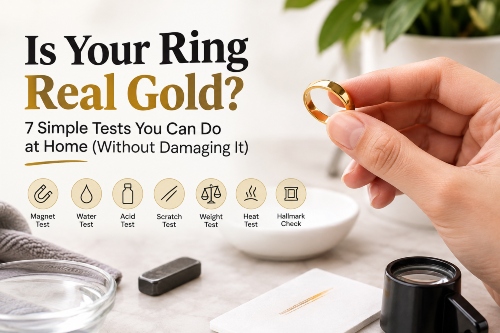
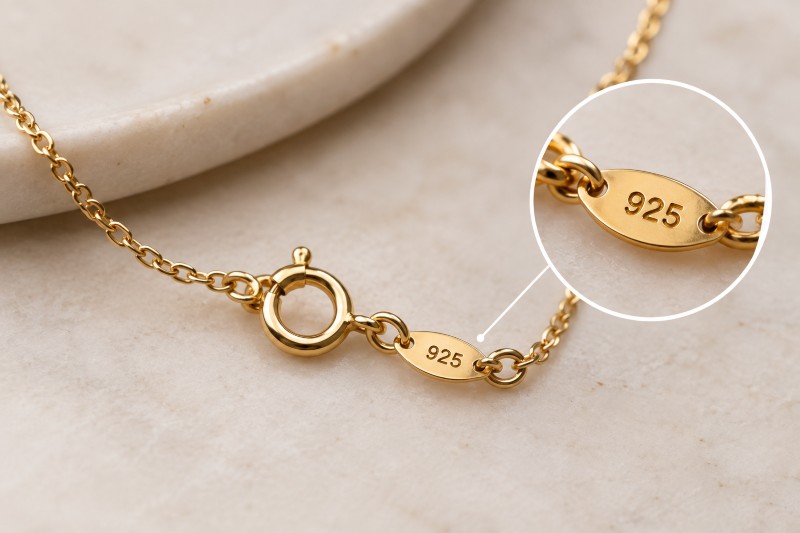
If you’re paying more for solid gold starter studs, they’re worth checking. Our guide on how to tell if gold is real explains stamps such as 14K and 585, and our 14K gold value guide shows how gold is priced.
Piercing gun or needle: which is better?
For a standard earlobe, a trained associate using a sealed, single-use cartridge can give a good result. For cartilage, choose a needle at a professional studio.
Here’s the difference:
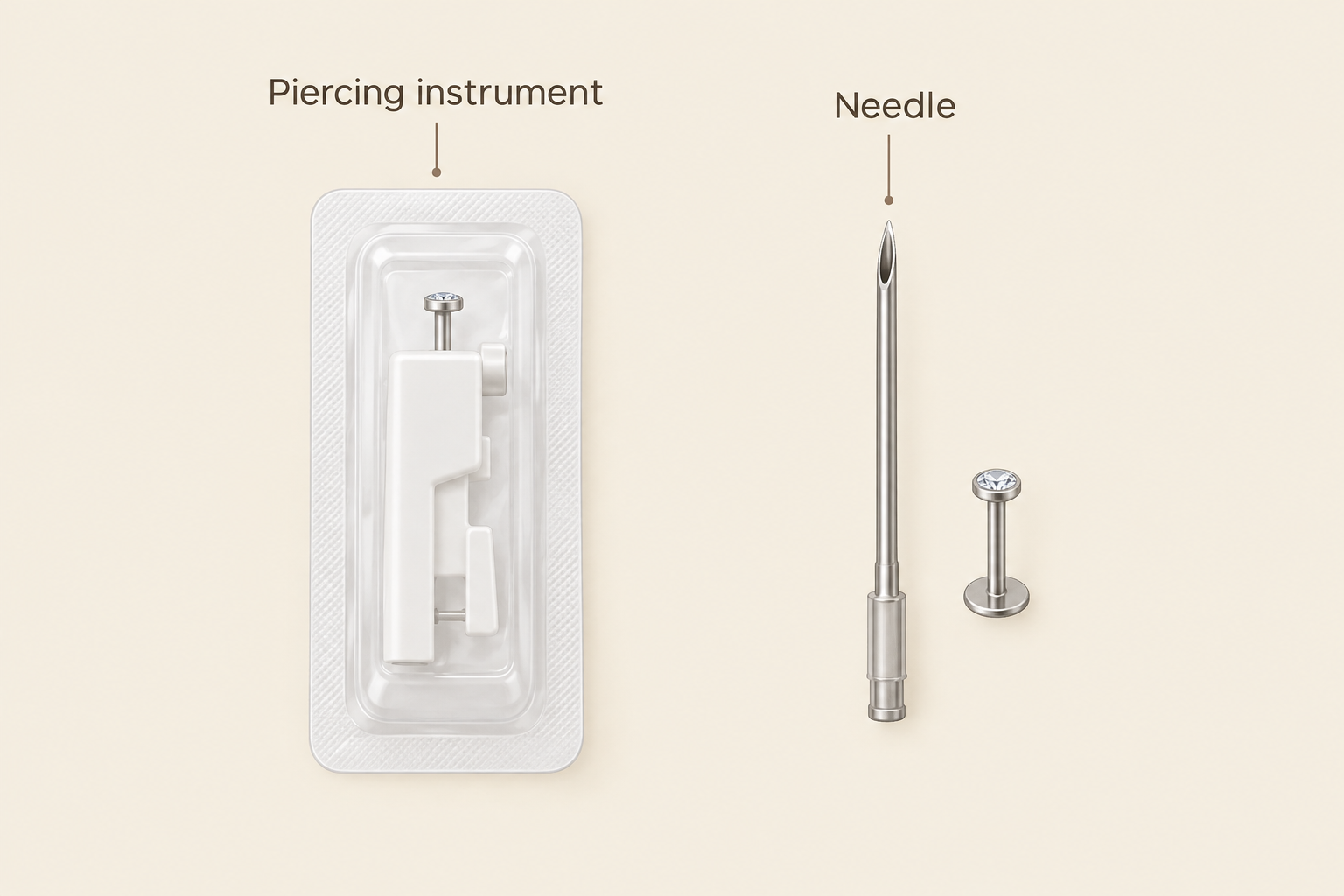
- A piercing instrument (often called a gun) pushes a pointed stud through the earlobe in one quick motion. Modern jewelry-store systems use a sealed, pre-sterilized cartridge so the stud never touches the device.
- A piercing needle is a hollow, sharp, single-use needle that creates a clean channel. The jewelry is then put in through the channel.
The Association of Professional Piercers (APP) takes a firm position. Its journal, The Point, explains that APP members may not use reusable piercing guns, because plastic guns can’t be autoclave-sterilized, and because blunt studs forced through tissue can cause more trauma. A public health annex to the Body Art Model Code from the National Environmental Health Association adds that state regulation of piercing guns is patchy, and that many states exempt them from sterilization rules.
What this means for you:
- Walk away from any store using a reusable device where the stud or any part that touches skin isn’t fully sealed and single-use.
- Choose a needle for any cartilage piercing, and ideally for a second or third lobe piercing too.
- Ask about flat-back studs if you can. They don’t catch on hair, towels or pillows during healing.
Do jewelry stores pierce cartilage?
Most don’t, and you shouldn’t ask them to. Cartilage has less blood supply than the earlobe, so it heals much more slowly, usually 6–12 months instead of 6–8 weeks. Blunt pressure from an instrument can damage cartilage and lead to stubborn bumps. Mayo Clinic advises that a painful, red, swollen cartilage piercing should always be checked by a doctor, rather than treated at home.
What age can you get your ears pierced at a jewelry store?
There’s no single legal age. Store policies and state rules vary, so check before you go.
- Children and teens under 18 usually need a parent or legal guardian present, with photo ID.
- Adults usually need a driver’s license or state ID.
- Babies: Some stores pierce infants; others set a minimum age or ask that the baby has had early vaccinations.
The American Academy of Pediatrics’ HealthyChildren.org says ear piercing carries little risk at any age when it’s done carefully and cared for properly, but suggests waiting until a child is mature enough to care for the piercing themselves. Talk to your pediatrician first if you’re unsure.
Which metal is safest for new ear piercings?
The starter stud’s metal matters more than the method. Many “infected” piercings are actually reactions to metal.
| Metal | Safe for a fresh piercing? | Notes |
|---|---|---|
| Implant-grade titanium (ASTM F-136) | Yes, the best choice | Nickel-free and lightweight |
| Niobium | Yes | Nickel-free; available in colors |
| Solid 14K or 18K gold | Usually | Must be nickel-free; white gold may contain nickel |
| Platinum | Yes | Rare and expensive |
| Surgical stainless steel (316L) | Often | Contains some nickel; avoid if you react to cheap jewelry |
| Sterling silver | No | Tarnishes in a healing wound |
| Gold-plated or “gold-tone” | No | Plating wears off inside the hole |
The APP’s standards for initial piercing jewelry list implant-grade titanium and niobium among the materials suitable for new piercings. The American Academy of Dermatology names earrings and earring backs among the biggest causes of nickel allergy, and Mayo Clinic notes that the allergy usually lasts for life once it develops.
Sterling silver is a lovely metal for healed ears, but not for a fresh piercing. Learn more about sterling silver and how it tarnishes.
What happens during an ear piercing at a jewelry store?
The whole visit usually takes 10–20 minutes, mostly paperwork and choosing studs.
- Paperwork and ID. A parent or guardian signs for anyone under 18.
- Choose your starter studs. You pick from a small tray of sealed, sterile piercing earrings, not the regular earring display.
- Clean and mark. The associate cleans each earlobe and marks the spot with a surgical pen.
- Approve the marks. Look in the mirror and check that both dots are level. Ask them to redo it if one looks higher or lower. Uneven dots mean uneven holes forever.
- Pierce. A quick click and pinch. Some stores pierce both ears at once with two associates, which is easier for children.
- Aftercare handoff. You get saline or cleaning solution and written instructions.
How do you care for a new ear piercing?
Good aftercare is the biggest factor in smooth healing.
Do:
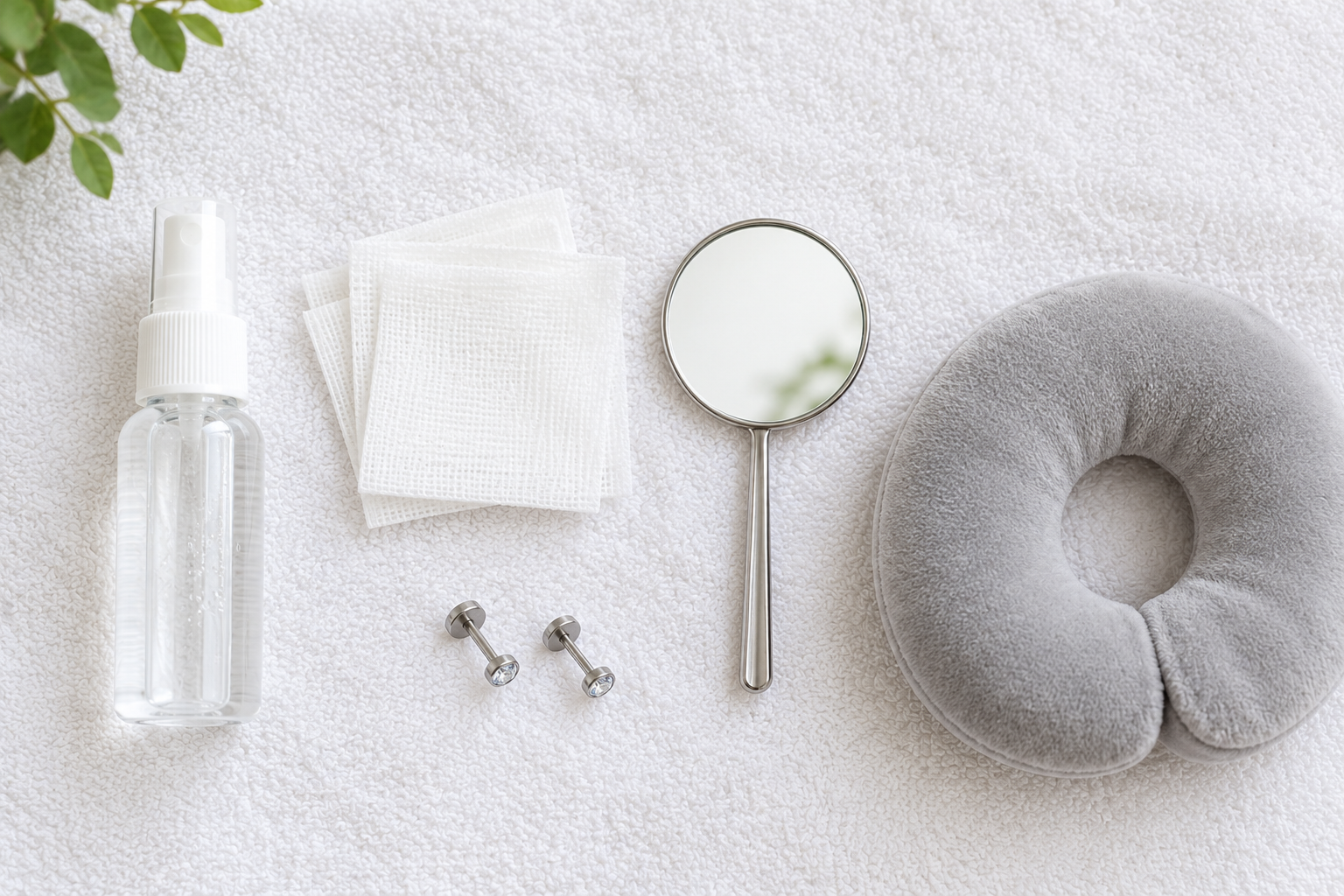
- Clean the front and back twice a day with sterile saline wound wash.
- Wash your hands before touching your ears, every time.
- Leave the starter studs in for at least 6–8 weeks for lobes.
- Sleep on your back, or use a travel pillow so your ear isn’t pressed.
- Keep wearing earrings for several months after healing; new holes can shrink quickly.
Don’t:
- Don’t twist the studs. Older advice said to, but twisting irritates the healing channel.
- Don’t use rubbing alcohol, hydrogen peroxide or harsh antiseptics daily; they dry out new tissue.
- Don’t swim in pools, lakes or hot tubs for the first few weeks.
- Don’t over-tighten the back. Leave a small gap so a swollen lobe doesn’t press against it.
- Don’t change to new earrings early, even if the piercing looks healed.
How long does an ear piercing take to heal?
| Piercing | Typical healing time | When to change earrings |
|---|---|---|
| Earlobe | 6–8 weeks (fully settled in a few months) | After 6–8 weeks |
| Upper lobe | 2–3 months | After about 3 months |
| Helix and other cartilage | 6–12 months | Only when your piercer says it’s healed |
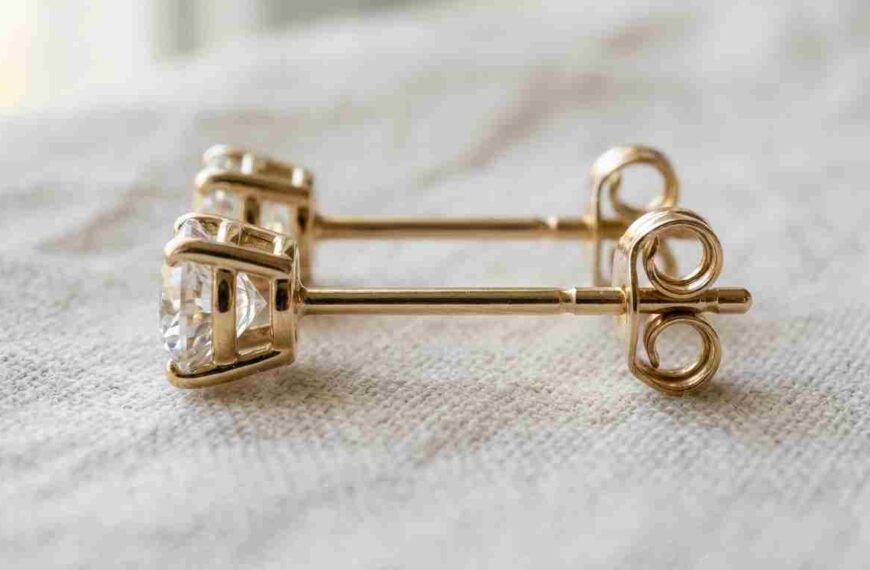
For your first earrings after healing, choose secure posts with good backs. Our guide to post earrings explains post length, gauge and which backs stay put.
What problems can happen after an ear piercing, and what should you do?
Most issues are minor and fixable if you catch them early.
It’s red, warm and puffy on day 2 or 3. Normal for a fresh wound. Keep cleaning and leave it alone.
It’s still painful at week 3, with yellow-green discharge or throbbing. This may be an infection. See a doctor, and don’t remove the earring first, because the hole can close and trap the infection. Mayo Clinic suggests seeking care if a minor earlobe infection doesn’t improve within three days.
My ear itches, turns red or flakes around the stud. Often a metal reaction. Switch to implant-grade titanium or solid nickel-free gold.
There’s a small bump near the hole. Usually an irritation bump from snagging, pressure or sleeping on it. Fix the cause and it often settles.
A firm bump is growing larger than the hole. This could be a keloid, an overgrowth of scar tissue. A study published in the NIH’s PubMed Central describes ear piercing as one of the major risk factors for keloids. People with darker skin or a family history of keloids are more prone to them, as noted in this Florida state health encyclopedia entry. See a dermatologist early; keloids are easier to treat when small.
The back is stuck or sinking into the lobe. Stop pulling. Use a warm saline compress and gentle pressure. If it’s embedded, go to urgent care or a professional piercer.
I took them out and they won’t go back in. Don’t force a blunt post through. A warm shower and a tapered post may help, but if it resists, get it re-pierced.
When should you choose a piercing studio instead of a jewelry store?
Choose a professional studio if any of these apply:
- You want a cartilage piercing of any kind.
- You’re getting a second or third lobe piercing placed close to others.
- You want implant-grade titanium or solid gold flat-back studs from day one.
- You’ve had keloids, metal allergies or poor healing before.
- You want a piercer who can advise on placement for a curated ear look.
A jewelry store is a good choice for a straightforward, single earlobe piercing with a sealed cartridge and good-quality studs.
How do you keep earrings looking good after healing?
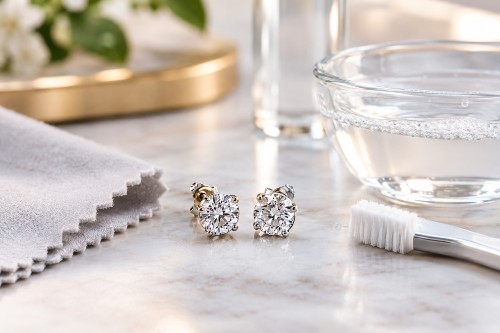
Once your piercing has healed, clean your earrings regularly. Skin oil, hair products and makeup build up around posts and stones. For diamond studs, follow our step-by-step guide on how to clean diamond earrings. For gold earrings that look dull or show a different color underneath, check whether they’re plated with our guide on telling if gold jewelry is real.
Some jewelry stores that pierce ears also offer welded, clasp-free bracelets. If you’re curious, see our guide to permanent jewelry.
Frequently asked questions
Do jewelry stores pierce ears for free? Many pierce for free when you buy starter studs, which usually cost about $25–$80.
Do jewelry stores pierce ears with a needle? Most use a piercing instrument with a sealed cartridge. Some newer ear-piercing boutiques use needles; call and ask.
Do I need an appointment? Walk-ins are common, but booking or calling ahead makes sure a trained associate is working.
Can I bring my own earrings? Almost never at a jewelry store, because they use sealed, sterile studs. Some studios allow it if the jewelry meets implant-grade standards.
Does getting your ears pierced at a jewelry store hurt? It feels like a quick pinch. Most people say the soreness afterward is mild and fades within a few days.
How long until I can change my earrings? At least 6–8 weeks for lobes and 6–12 months for cartilage.
Can men get their ears pierced at jewelry stores? Yes. The process, cost and aftercare are the same.
Is it safe to pierce a baby’s ears at a jewelry store? It can be, with sealed equipment and good studs, but many pediatricians suggest waiting until the child can help care for it. Ask your pediatrician first.

 By