
Your gold chain used to shine like the sun. Now it looks kind of… foggy. Maybe you spilled sauce on it. Maybe it fell in the mud. Or maybe it’s just been soaking up sweat, lotion, and dust for months without a single clean.
Good news: you don’t need a jeweler, and you don’t need fancy tools. In most cases, you can get your chain sparkling again with stuff already sitting in your kitchen cabinet.
This guide walks you through every safe method, tells you exactly what to avoid, and answers the questions people actually search for — like how often to clean your chain and how to tell if it’s real gold in the first place.
Quick Answer: The Safest Way to Clean a Gold Chain
If you only remember one thing from this whole article, remember this:
Soak your chain in warm water with a few drops of mild dish soap for 15–20 minutes, gently brush it with a soft toothbrush, rinse well, and pat it dry with a soft cloth.
That’s it. That single method works for almost every gold chain — solid gold, gold-filled, gold vermeil, or gold-plated. Everything below builds on that basic idea, with extra tricks for tougher grime and pieces that need a little more care.
Step-by-Step: The Dish Soap Method (Best for Everyday Use)
This is the method every jeweler recommends first, because it’s gentle and it works.
- Fill a small bowl with warm (not hot) water.
- Add 3–4 drops of mild dish soap. Skip anything with bleach, degreaser, or added scrubbing agents.
- Lay the chain flat in the bowl. If you’re cleaning more than one chain, do them separately so they don’t tangle or scratch each other.
- Let it soak for 15–20 minutes. This softens up the oils and grime so you’re not scrubbing hard later.
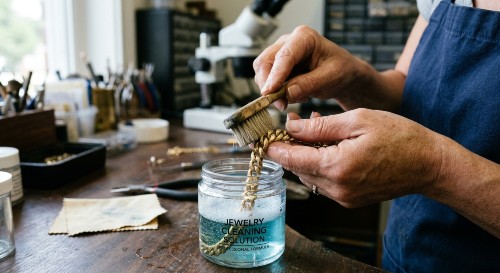
- Brush gently. Use a soft-bristled toothbrush (a clean, unused one) and pay extra attention to the clasp and the tiny gaps between links — that’s where gunk hides.
- Rinse thoroughly under lukewarm running water. Leftover soap can actually attract more dirt if you don’t rinse it all off.
- Pat dry with a soft, lint-free cloth. Don’t rub — just gentle pats.
- Let it air dry completely before you wear it or put it away. Trapped moisture inside the clasp can cause problems down the road.
Tools you’ll need: small bowl, warm water, mild dish soap, soft toothbrush, soft cloth.
Method 2: Baking Soda Soak (For Deeper Buildup)
If a simple soap soak isn’t cutting it — say your chain has been ignored for a year — baking soda gives you a little extra cleaning power.
- Fill a small bowl with warm water and stir in about 1 tablespoon of baking soda until it dissolves.
- Add a few drops of the same mild, unscented dish soap.
- Soak the chain for 10–15 minutes.
- Gently scrub with a soft toothbrush, focusing on the links and clasp.
- Rinse thoroughly and dry completely with a soft cloth.
You can also make a thicker paste (about ¼ cup baking soda with 2 tablespoons of water) and rub it gently in small circles on stubborn spots with your finger or a soft cloth. Rinse it off completely afterward — baking soda is mildly abrasive, so don’t overdo it, and skip this method entirely on chains with glued-in stones or delicate, antique finishes.
Method 3: A Jewelry Cleaning Kit
If you want something fast and foolproof, a store-bought jewelry cleaning kit works well, especially if you travel a lot or just don’t want to mix anything yourself.
- Spray the chain generously with the cleaning solution.
- Use the included brush to get between the links and around the clasp.
- Wipe down with the polishing cloth.
- Make sure the chain is completely dry before storing or wearing it.
Just double check the label says it’s safe for your specific type of gold — some solutions are too harsh for gold-plated pieces.
Method 4: Professional Cleaning
Some chains are better left to the pros — especially anything with gemstones, intricate antique detailing, or a clasp that feels loose or sticky. A jeweler has ultrasonic cleaners and steamers that reach spots a toothbrush never will, and they can spot small problems (like a weak link) before they turn into a lost necklace.
Signs it’s time to see a professional:
- The chain still looks dull after a proper at-home clean
- Gemstones feel loose or misaligned
- The clasp is sticky, stiff, or hard to close
- The gold surface looks scratched, faded, or discolored in patches
A yearly professional inspection, even for chains you clean regularly at home, is a smart habit.
What NOT to Use on Your Gold Chain
A few “hacks” floating around the internet can actually damage your jewelry. Steer clear of these:
- Bleach — way too harsh; it can eat away at metal and any plating.
- Lemon juice or straight vinegar soaks — the acid can discolor gold alloys, gemstones, or pearls. (A quick vinegar drop test, covered below, is different from soaking your whole chain in it.)
- Toothpaste, on delicate or plated chains — it’s mildly abrasive, which can help with heavy grime on solid gold, but it can scratch thinner plating.
- Rough sponges or paper towels — always use a soft cloth instead.
- Ultrasonic cleaners at home — these can loosen prongs and settings if you don’t know what you’re doing. Leave this one to a jeweler.
- Ammonia soaks longer than a few seconds — a very diluted ammonia dip (1 part ammonia to 6 parts water, dipped for no more than 10 seconds) can brighten dull solid gold, but it’s risky for daily-wear chains, plated pieces, or anything with stones. When in doubt, skip it.
- Showering, swimming, or working out in your chain regularly — occasional exposure won’t ruin it, but soap residue, chlorine, and salt water dull the shine and can work into the clasp over time.
- Storing it in the bathroom — steam and humidity speed up dulling.
How to Tell if Your Chain Is Real Gold
Before you clean anything, it helps to know what you’re working with, since solid gold, gold-filled, gold vermeil, and gold-plated chains all handle cleaning a little differently.
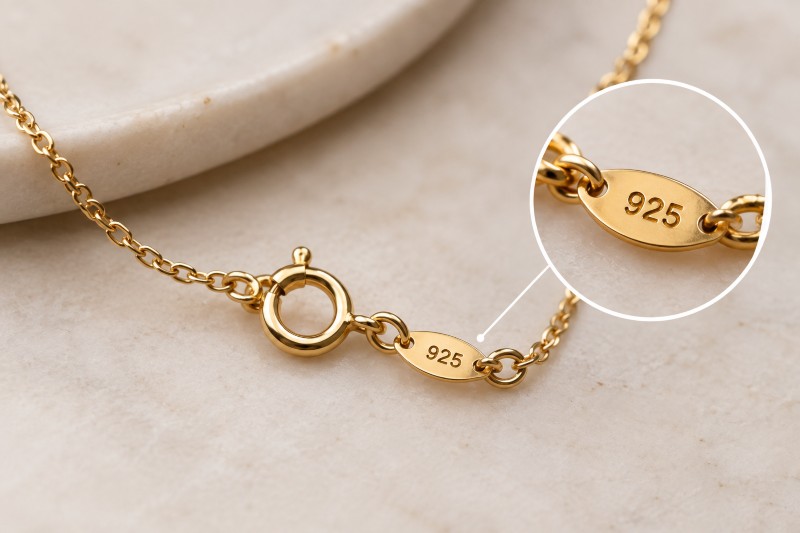
- Check for a karat stamp. Look for a tiny mark like 14K, 18K, or 24K near the clasp. The higher the number, the purer the gold — and the softer and more scratch-prone it is.
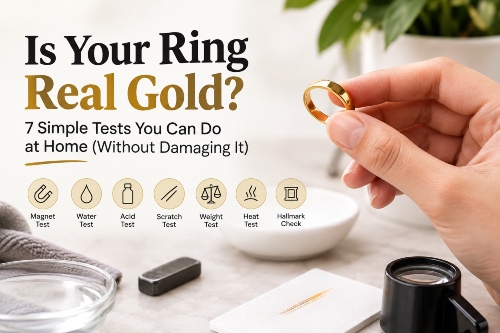
- Try the magnet test. Real gold isn’t magnetic. If your chain sticks to a magnet, it’s likely not solid gold.
- Try the water test. Drop the chain in a glass of water. Real gold sinks. Cheap fakes tend to float or hover near the surface.
- Try a vinegar drop test. Put one small drop of vinegar on the chain. Real gold won’t react or change color. Fake gold often discolors.
If you’re still not sure, a jeweler can confirm it in seconds — and it’s worth knowing before you soak anything in chemicals.
How Often Should You Clean a Gold Chain?
| Type of wear | How often to clean |
|---|---|
| Worn every day | Every 1–2 weeks |
| Worn a few times a week | Every 2–3 weeks |
| Worn occasionally / special events | Every 1–2 months |
| Exposed to sweat, lotion, or perfume often | Clean sooner, or after each heavy-wear day |
A quick wipe with a polishing cloth after each wear takes about 10 seconds and cuts down dramatically on how often you’ll need a full soak-and-scrub session.
Everyday Habits That Keep Your Chain Cleaner, Longer
- Wipe it down with a soft polishing cloth after each wear.
- Put it on last — after your lotion, perfume, and makeup have already dried.
- Take it off before swimming, showering regularly, working out, or cleaning the house.
- Store it properly in a fabric-lined box, pouch, or drawer — not tossed on a dresser or left in a steamy bathroom.
- Keep chains separated in storage so they don’t tangle or scratch each other.
- Replace your polishing cloth once it starts looking grimy — a dirty cloth just moves grime around instead of removing it.
FAQ: How to Clean a Gold Chain
What’s the best thing to clean a gold chain with? Mild dish soap and warm water is the safest, most reliable option for nearly every gold chain. A dedicated jewelry cleaning kit is the fastest store-bought alternative.
What’s the best homemade gold cleaner? A warm water, mild dish soap, and baking soda soak is the most effective DIY option for chains with real buildup, not just everyday dust.
How do I make my dull gold chain shiny again? Start with the dish soap soak, then finish by buffing with a dry polishing cloth. If it’s still dull afterward, move up to the baking soda soak, or consider a professional polish.
Can I clean my gold chain in the shower? It’s best to avoid it. Hard water and soap residue from shampoo and body wash can build up in the clasp and dull the shine over time.
Do real gold chains actually get dirty? Yes. Gold doesn’t tarnish like silver, but body oils, lotion, sweat, and everyday dust still build up on any chain — real or not — so regular cleaning still matters.
Is it safe to clean gold-plated or gold-filled chains the same way? Mostly, yes, but be gentler. Skip long soaks and hard scrubbing, since the gold layer is thinner and can wear down faster than solid gold.
The Bottom Line
Cleaning a gold chain really is this simple: warm water, a little dish soap, a soft brush, and a few minutes of patience. Keep the harsh chemicals in the cabinet, wipe your chain down after you wear it, and store it somewhere safe and dry. Do that, and your chain will keep that just-bought shine for years — no jeweler visit required, unless you just want the extra peace of mind.

 By
By