Connect with us

Chain

How to Clean a Gold Chain

Published

on

How to Clean a Gold Chain at Home The Complete Guide (Every Method, Every Mistake, Every Fix)

How to Clean a Gold Chain at Home: The Complete Guide (Every Method, Every Mistake, Every Fix)

Most guides on cleaning a gold chain tell you to mix soap with warm water and call it done. That advice isn’t wrong — but it’s about 20% of what you actually need to know. It doesn’t tell you why your chain looks dull again two days later, which methods will strip your plating if you’re not careful, what “mild soap” actually means in practice, or why the toothpaste trick you read about online is slowly scratching your chain every single time.

This guide is written for someone who owns a gold chain they actually care about — whether it cost $30 or $3,000 — and wants to clean it the right way, keep it clean, and not accidentally damage it in the process. You’ll learn the science behind why chains dull, how to identify your gold type before touching it, four cleaning methods ranked by safety and effectiveness, a step-by-step walkthrough for each, and a complete troubleshooting section for every problem that comes up.

At The Jewelry Care, we’ve seen every cleaning mistake there is. This guide exists so you don’t have to make them.


What You’ll Walk Away With:

  • The ability to identify your gold type before you clean (this changes everything)
  • Four methods from gentlest to most powerful — with the right one for your specific chain
  • A maintenance routine that keeps your chain clean between deep cleans
  • A full troubleshooting table: every common problem and exactly how to fix it
  • A quick-reference chart for every gold type vs. every method

Why Your Gold Chain Gets Dull (And Why It’s Not Permanent)

Before you clean anything, it helps to understand what you’re actually removing. Gold itself doesn’t corrode, rust, or tarnish — 24K pure gold stays bright indefinitely. The problem is that almost no gold jewelry is 100% pure gold.

Most chains are gold alloys — gold mixed with other metals like copper, silver, zinc, or nickel to make the gold harder and more durable. Those other metals do react with the environment. Add to that everything your chain encounters daily, and dullness becomes inevitable.

The five main culprits behind a dull gold chain:

1. Skin oils and sweat Your skin naturally produces oils that leave a thin, invisible residue on everything it touches. Sweat compounds this — it contains salts and mild acids that, over time, create a film on the metal surface that scatters light instead of reflecting it. This is why a chain worn close to the skin dulls faster than one worn over clothing.

2. Lotions, perfumes, and hairspray These are the biggest offenders. Lotion creates a sticky, waxy layer. Perfume and hairspray contain alcohol, which can interact with certain alloy metals. Over time, these products build up in the tiny gaps between links — the most common place where chains look dark and grimy.

3. Hard water minerals Calcium and magnesium deposits from tap water leave a dull, whitish film on metal surfaces. If you shower or rinse dishes while wearing your chain (please don’t), this buildup accelerates significantly.

4. Household chemicals Bleach, chlorine (swimming pools, hot tubs), and even some cleaning sprays can permanently discolor gold alloys and strip plating. This isn’t dullness — this is actual damage that can’t be reversed at home.

5. Physical micro-scratches Gold is a soft metal. Rubbing, contact with hard surfaces, and even certain cleaning materials leave microscopic scratches that diffuse light and reduce shine. This type of dullness requires professional polishing to fully correct, but regular gentle cleaning prevents it from worsening.

The good news: all five of these effects — except the last — are completely reversible with the right cleaning method. Your chain isn’t ruined. It just needs the right treatment.


Step One: Identify Your Gold Type Before You Touch Anything

This is the most important section in this entire guide. The cleaning method that’s perfect for solid gold can strip and permanently damage a gold-plated chain. Using the wrong method is how people accidentally ruin their jewelry.

Spend two minutes here before doing anything else.

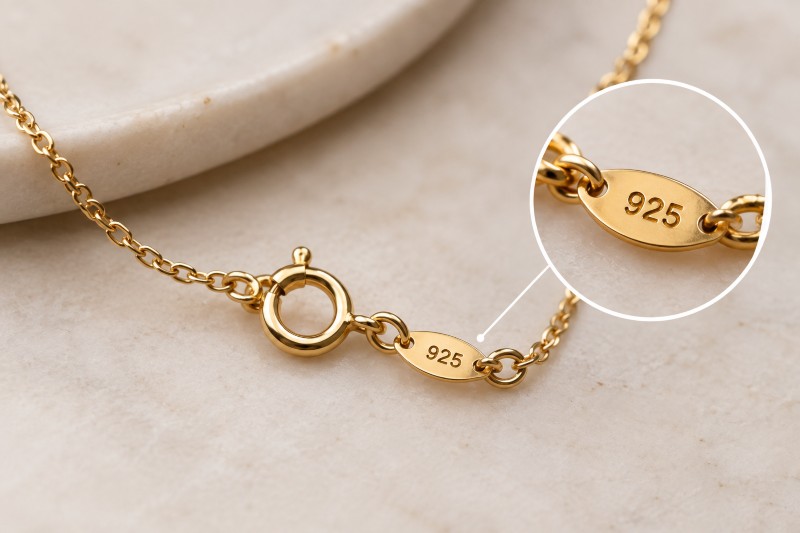
How to Read a Hallmark Stamp

Every genuine gold piece has a stamp — usually on the clasp, or on a small tag attached to the chain. You’ll need good lighting and possibly a magnifying glass to find it.

Gold Hallmark Identification Guide

Stamp You See What It Means Gold Content Durability
999 or 24K Pure gold 99.9% gold Soft — handle gently
750 or 18K 18-karat gold 75% gold Very good
585 or 14K 14-karat gold 58.5% gold Excellent — most jewelry
417 or 10K 10-karat gold 41.7% gold Very hard, most durable
GF or 1/20 14K GF Gold-filled Thick gold layer bonded to base Good — treat like solid
GP, GEP, GRP Gold-plated Thin gold layer over base metal Delicate — clean gently
925 + gold color Gold vermeil Gold plating over sterling silver Delicate — clean gently
No stamp Unknown / fashion jewelry Varies widely Treat as plated to be safe

The Jewelry Care Rule: When in doubt, always treat your chain as gold-plated. The soap-and-water method is safe for every type. You can always escalate your cleaning method once you’ve confirmed what you’re working with — you can’t undo damage to plating.


The Three Gold Types You’ll Encounter

Solid Gold (10K, 14K, 18K, 24K)

This is genuine gold alloyed with other metals for strength. The karat number tells you how much of the metal is actually gold — 14K means 14 parts gold out of 24. Solid gold is the most forgiving to clean. It can handle all four methods below, including baking soda paste and moderate scrubbing with a soft brush.

Gold-Filled

A thick layer of solid gold (usually 14K or 12K) is mechanically bonded — pressure and heat applied — to a base metal core, usually brass. The gold layer is substantially thicker than plating: typically 50–100 times thicker. Gold-filled jewelry can be treated almost identically to solid gold, though very harsh chemicals should still be avoided.

Gold-Plated / Gold Vermeil / Gold-Bonded

A very thin layer of gold (anywhere from 0.5 to 2.5 microns) is electrochemically deposited over a base metal — usually brass, copper, or sterling silver (in the case of vermeil). This plating is the most common and the most delicate. Aggressive scrubbing, abrasive ingredients, or extended soaking can wear through the plating and expose the base metal underneath. Once plating wears off, it cannot be restored at home — replating requires professional equipment.


The Four Cleaning Methods — Ranked and Explained

Here’s the master overview before we go step-by-step on each one.

Cleaning Method Quick-Reference Chart

Method Best For Safety Level Time Required Effectiveness
Warm Water + Mild Dish Soap All gold types ✅ Safest 25–30 min ★★★★☆ Excellent for regular maintenance
Baking Soda Paste Solid gold only ⚠️ Moderate 15 min ★★★★★ Best for heavy tarnish on solid gold
Isopropyl Rubbing Alcohol Solid gold + gold-filled ⚠️ Use carefully 10 min ★★★★☆ Excellent for oils and residue
Ultrasonic Cleaner Solid gold + gold-filled ⚠️ Not for delicate 5–10 min ★★★★★ Deepest clean, gets into every link

What You Should NEVER Use on Any Gold Chain

Product Why It’s Dangerous
Bleach Permanently discolors and weakens gold alloys. Irreversible damage.
Chlorine (pools, hot tubs) Corrodes alloy metals; strips plating.
Toothpaste Mildly abrasive — causes micro-scratches with every use.
Lemon juice or white vinegar Acidic. Safe only on 24K. Corrodes alloys in 10K–18K chains.
Ammonia-based cleaners Can damage certain alloys and stone settings
Baking soda on plated chains The mild abrasive will accelerate plating wear
Boiling water Thermal shock can loosen settings; too harsh for clasps
Steel wool or abrasive pads Scratches everything — even solid gold

Method 1: Warm Water + Mild Dish Soap

Best for: Every single type of gold chain. This is your go-to method — the one you should use for regular maintenance and the first one to try on any chain you’re unsure about.

The Jewelry Care uses this method for all routine cleaning because it’s the safest, it works on everything from 24K solid gold to delicate gold-plated chains, and it’s genuinely effective at removing oils, lotion buildup, and daily grime.

What You Need

  • A small bowl (not the sink — never the sink)
  • Warm water (not hot — hot water can stress clasps and settings)
  • 2–3 drops of mild dish soap (plain Dawn, Palmolive, or Fairy — unscented, no “antibacterial” additives)
  • A soft-bristled toothbrush (baby toothbrush preferred — regular toothbrushes can be too stiff)
  • Two soft, lint-free cloths (microfiber or a glasses cleaning cloth)
  • A fine-mesh strainer or bowl for rinsing (never rinse over an open drain)

Step-by-Step

Step 1 — Prepare your solution: Fill the bowl with warm water — comfortable to the touch, not steaming. Add 2–3 drops of dish soap and stir gently. The water should be very slightly sudsy, not foamy.

Step 2 — Submerge and soak: Lay the chain flat in the bowl. Let it soak for 15–20 minutes. This step does most of the work — the soapy water loosens oils, softens product buildup, and begins lifting grime from the links without any scrubbing. Don’t rush it.

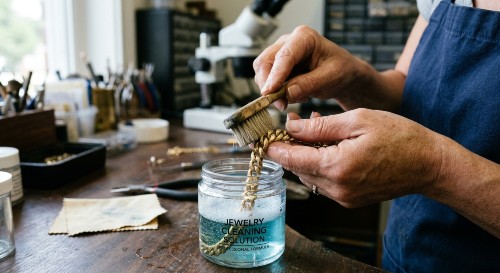
Step 3 — Gentle scrubbing (where needed): After soaking, pick up the chain and hold it over the bowl. Use the soft-bristled toothbrush to gently work along the length of the chain, paying special attention to: the clasp and clasp mechanism (grime accumulates in the hinge), the links (especially tightly woven or rope-style links where buildup hides in the gaps), and any pendant attachment points.

Use light pressure only. You are not trying to scrub hard — you are gently dislodging what the soak already loosened. For gold-plated chains, skip the brushing entirely on the first attempt. Often the soak alone is sufficient.

Step 4 — Rinse carefully: Place the chain in a fine-mesh strainer and rinse under warm running water for 30–45 seconds, turning the chain so all surfaces are rinsed. Alternatively, fill a second clean bowl with plain warm water and swish the chain through it twice.

Do not rinse over an open drain. Gold chains are light and can slip through fingers when wet. This step has caused many people to lose beloved jewelry down the drain.

Step 5 — Pat dry: Lay the chain on a clean, dry lint-free cloth. Gently pat — never rub — to remove surface moisture. Lay it flat to finish air-drying for at least 30 minutes before wearing or storing. Storing a damp chain encourages tarnishing and can cause mildew in fabric pouches.

Step 6 — Optional polish: Once completely dry, run a jewelry polishing cloth along the chain in both directions. This removes any remaining water spots and restores a mirror-like shine. The difference in results between “dried only” and “dried + polishing cloth” is significant and worth the 60 seconds it takes.

Pro Tip from The Jewelry Care: “Mild dish soap” means plain, basic dish soap — nothing with added moisturizers, antibacterial agents, or citrus chemicals. Dawn Original (the blue one), plain Palmolive, or a simple supermarket own-brand all work perfectly. Fancy scented or specialty dish soaps sometimes contain ingredients that leave residue on metal.


Method 2: Baking Soda Paste

Best for: Solid gold chains (10K, 14K, 18K, 24K) with visible tarnish, dark spots, or stubborn buildup that soap and water didn’t fully remove.

Do not use on: Gold-plated, gold vermeil, or any chain you’re unsure about. Baking soda is a mild abrasive — completely safe on solid gold, but capable of accelerating plating wear on thinner-plated chains with repeated use.

What You Need

  • Baking soda (bicarbonate of soda)
  • Water
  • A small dish for mixing
  • Soft cloth or your fingertips
  • Soft toothbrush (optional, for chain links)
  • Clean warm water for rinsing
  • Lint-free cloth for drying

Step-by-Step

Step 1 — Mix the paste: Combine ¼ cup of baking soda with 2 tablespoons of water in a small dish. Stir until you have a thick, spreadable paste — the consistency of toothpaste. If it’s too runny, add a little more baking soda. If it’s too stiff to spread, add a few more drops of water.

Step 2 — Apply to the chain: Using your fingertips or a soft cloth, apply the paste along the length of the chain. Work it gently into the surface using small circular motions. Focus on any areas where you can see visible tarnish, darkening between links, or discoloration.

Step 3 — Let it sit briefly: Leave the paste on the chain for 3–5 minutes. Don’t let it dry completely — dried baking soda is harder to rinse out from tight links.

Step 4 — Light scrubbing (solid gold only): For chains with intricate links, use a soft toothbrush to work the paste further into the crevices. Very gentle pressure only — you’re applying the mildly abrasive paste to the tarnish, not sanding the gold.

Step 5 — Rinse thoroughly: This step requires extra attention. Baking soda residue left in chain links will leave a white, chalky deposit when dry, which looks worse than the original tarnish. Rinse under warm running water for 60 seconds, actively working the chain between your fingers to flush out all paste from between the links.

Step 6 — Dry and polish: Pat dry with a lint-free cloth. Allow to air dry completely. Follow with a jewelry polishing cloth for maximum shine.

Important: The baking soda method is for deeper cleaning, not daily maintenance. Used occasionally on solid gold, it’s excellent. Used repeatedly, even on solid gold, the mild abrasion will dull the polish over time. The Jewelry Care recommends using this method no more than once every 2–3 months, with regular soap-and-water cleaning in between.


Method 3: Isopropyl Rubbing Alcohol

Best for: Solid gold and gold-filled chains with heavy oil buildup, residue from skincare products, or a sticky film from perfume or lotion. Alcohol cuts through oils extremely effectively and evaporates completely, leaving no residue.

Use cautiously on: Gold-plated chains. Repeated use can dry out and weaken lower-quality plating. Occasional use is generally fine, but it shouldn’t be your regular method for plated pieces.

Avoid if: Your chain has pearls, opals, turquoise, coral, or any porous stone attached. Alcohol can permanently damage these materials.

What You Need

  • Isopropyl alcohol (70% concentration minimum; 91% or 99% works well)
  • A small glass or ceramic bowl
  • Soft lint-free cloth

Step-by-Step

Step 1 — Pour a small amount: Pour just enough alcohol to submerge the chain — you don’t need a large amount.

Step 2 — Soak: Place the chain in the alcohol and let it soak for 5–10 minutes. You may see the liquid turn slightly cloudy or yellowish — that’s the oils and product residue releasing from the metal. This is the method working.

Step 3 — Remove and wipe: Lift the chain and gently wipe along its length with a soft cloth. For chains with tight links, use the cloth folded into a thin strip and draw the chain through it.

Step 4 — Air dry: Alcohol evaporates quickly — your chain will be dry within a few minutes without any toweling needed. Do ensure it’s completely dry before storing.

Pro Tip: Rubbing alcohol is exceptionally effective after a chain has been exposed to sunscreen, heavy lotion, or perfume. Keep a small bottle in your jewelry drawer for a quick clean after beach days or events where fragrance and products were applied before putting on jewelry — The Jewelry Care’s biggest “undo-this-quickly” scenario.


Method 4: Ultrasonic Cleaner

Best for: Solid gold chains and gold-filled chains, especially those with intricate or tight link styles (Cuban links, rope chains, Franco chains) where manual brushing can’t reach into every gap. Ultrasonic cleaners are genuinely impressive — they use high-frequency sound waves that create microscopic pressure waves in the liquid, which dislodge particles from every surface simultaneously, including crevices too small to physically access.

Do not use for:

  • Gold-plated or vermeil chains (vibration accelerates plating wear)
  • Chains with gemstones, pearls, or fragile settings
  • Hollow chains (the vibration can cause stress fractures in thin-walled hollow links)
  • Very delicate or antique chains

What You Need

  • A personal ultrasonic cleaner (available online for $20–$50; brands like Magnasonic or iSonic are reliable)
  • Warm water
  • 2–3 drops of mild dish soap
  • Lint-free cloth for drying

Step-by-Step

Step 1 — Set up the cleaner: Fill the tank to the marked line with warm water. Add 2–3 drops of mild dish soap. Do not use specialty ultrasonic cleaning solution unless it specifically states it’s safe for gold.

Step 2 — Place your chain: Lay the chain flat in the basket or directly in the tank. Make sure it’s fully submerged and not tangled or bunched up. Tangled links can vibrate against each other and cause wear.

Step 3 — Run the cycle: Set the timer for 3–5 minutes on the first use. You do not need to run full 20-minute cycles for routine jewelry cleaning — shorter cycles are gentler and usually sufficient.

Step 4 — Inspect: Remove the chain and inspect it in good light. If stubborn spots remain, run a second 3-minute cycle. After ultrasonic cleaning, you can optionally follow with a very brief soap-and-water rinse to remove any loosened particles.

Step 5 — Rinse and dry: Rinse under warm water, pat dry, air dry completely, then buff with a polishing cloth.

The Jewelry Care Note: An ultrasonic cleaner is the single best tool for solid gold chain maintenance if you wear your chains daily. The results on a well-worn Cuban link or rope chain are genuinely dramatic — completely restored to its original shine, including in every crevice, in under 5 minutes. But it’s a tool for solid gold only. The moment you use it on plating, you accelerate wear that cannot be undone.


Cleaning Gold Chains with Pendants or Gemstones

If your chain has a pendant, charm, or gemstone, the cleaning rules become more specific. The chain itself can usually be cleaned normally — it’s what’s attached to it that requires care.

Gemstone Cleaning Safety Reference

Stone Safe to Soak? Safe to Brush? Method to Use
Diamond ✅ Yes ✅ Yes (soft brush) Full soap-and-water method works well
Ruby / Sapphire ✅ Usually ✅ Gently Soap and water; avoid if treated or fracture-filled
Emerald ❌ No ⚠️ Very gently Damp cloth on metal only; emeralds are often oiled
Pearl ❌ Never ❌ No Damp soft cloth on metal only; keep pearl dry
Opal ❌ Never ❌ No Opals crack with temperature/moisture change
Turquoise ❌ No ❌ No Damp cloth only; turquoise is porous
Coral ❌ No ❌ No Porous; any liquid damages the structure
Amethyst / Citrine ✅ Usually ✅ Gently Soap and water generally fine
Cubic Zirconia ✅ Yes ✅ Yes Cleans like diamond

The Jewelry Care universal rule for stones: When in doubt, take a damp cloth to the metal and leave the stone alone. A jeweler can deep-clean stones professionally without risk. You can’t undo damage to a pearl or an opal.


How Often Should You Clean Your Gold Chain?

The honest answer: most people clean their jewelry far too rarely, then wonder why it looks dull all the time.

Cleaning Frequency Guide

Wear Frequency Recommended Cleaning Schedule Method
Daily wear Every 1–2 weeks Soap and water
Several times per week Every 2–3 weeks Soap and water
Occasional / special events Before and after wearing Soap and water + polishing cloth
After gym / sports Immediately after Quick soap rinse
After swimming Immediately after Soap and water — chlorine and saltwater must be removed quickly
After applying heavy lotion or perfume directly to skin near chain Same day Rubbing alcohol method
Deep clean Every 2–3 months Baking soda (solid gold) or professional cleaning

The single most effective thing you can do between cleans is this: a 10-second wipe with a microfiber cloth or jewelry polishing cloth after every wear. This removes surface oils before they build up. Ten seconds. It makes a significant difference.


How to Keep Your Gold Chain Clean Longer: 9 Daily Habits

Cleaning restores shine. Prevention is what keeps it there. These habits from The Jewelry Care are the difference between a chain that needs deep cleaning every two weeks and one that stays brilliant for two months between cleans.

1. Put your jewelry on last, always. Apply perfume, lotion, hairspray, and makeup first. Let everything dry and absorb into your skin — then put on your chain. This single habit eliminates the majority of product buildup.

2. Remove your chain before swimming. Chlorinated pools and hot tubs are particularly damaging — chlorine reacts with the alloy metals in most gold chains and can cause permanent discoloration. Saltwater is abrasive and corrosive to clasps. Neither is worth the risk.

3. Take it off before the gym. Sweat is acidic and salt-heavy. An hour of intense exercise deposits more salt and acid on your chain than a full day of regular wear. Remove it before working out, or clean it immediately after if you forget.

4. Don’t sleep in your chain. Sleeping creates friction against pillowcases, tangles delicate links, and stresses clasps. It also means 8 hours of body heat and oils without any air circulation. Most chain damage that people attribute to “daily wear” actually happens during sleep.

5. Wipe it down after every single wear. Keep a microfiber or polishing cloth in your jewelry box. One pass along the chain before storing it takes 10 seconds and prevents the majority of oil and product buildup.

6. Store it properly. A chain left on a bathroom vanity or tumbled into a jewelry bowl with other pieces is being slowly damaged. Each piece should be stored in a soft pouch or in a lined compartment, separated from other jewelry. Never store chains on a bathroom counter — steam and humidity from showers accelerate tarnishing faster than almost anything else.

7. Never apply perfume over your chain. Spraying fragrance directly onto or near your chain is one of the most common ways people accelerate tarnishing. The alcohol in perfume interacts with certain alloy metals, and fragrance compounds can leave a residue that attracts more dirt. Spray, let it dry, then put on your jewelry.

8. Remove before household cleaning. Bleach, kitchen cleaners, bathroom disinfectants — many common household products contain chlorine or harsh chemicals that can damage gold alloys. Take your chain off before cleaning the bathroom or kitchen.

9. Check the clasp regularly. A worn or bent clasp is how chains get lost. Every few weeks, hold the chain up to a light and check that the clasp closes firmly and fully. If it feels loose or stiff, have it checked by a jeweler before it fails. The Jewelry Care sees more lost chains from faulty clasps than from any other cause.


When to Take Your Chain to a Professional

Home cleaning handles everything up to deep maintenance beautifully. But some situations require professional tools and expertise.

Professional Cleaning Situations

Situation Why Home Methods Won’t Fix It What a Jeweler Will Do
Persistent dark tarnish that doesn’t respond to cleaning Heavy oxidation or corrosion requires professional solutions Ultrasonic + steam cleaning + chemical treatment
Visible scratches dulling the surface Scratches are physical damage, not buildup Professional polishing on a buff wheel
Broken or stiff clasp Repairs require soldering or replacement Repair or replace the clasp
Worn-through plating on gold-plated chain Can’t be restored at home Re-plating (electroplating) in gold
Loose gemstone setting Risk of losing the stone if not caught Tighten the setting professionally
Annual inspection (daily-wear pieces) Cumulative wear builds in ways not visible to the naked eye Full cleaning, inspection, and integrity check

The Jewelry Care recommends: If you wear your chain every single day, take it to a jeweler once per year for a professional cleaning and inspection. Think of it as a service appointment for a piece you’ve invested in. The cost is minimal. The peace of mind is considerable.


Troubleshooting: Every Common Problem and How to Fix It

This is the section that most guides skip entirely. Bookmark it.

Gold Chain Problem-Solver

Problem Why It Happens How to Fix It
Chain looks dull immediately after cleaning Hard water deposits during rinsing Use distilled or filtered water for the final rinse; follow with polishing cloth
Chain looks darker in some spots after cleaning Soap or baking soda residue trapped in links Re-rinse thoroughly; use a soft toothbrush to flush trapped residue
White chalky residue after baking soda treatment Baking soda dried in the links before rinsing Soak in plain warm water for 10 min, then rinse and scrub links with soft toothbrush
Chain turned slightly darker/discolored after cleaning Wrong method for the gold type; alloy reaction If plated: you may have stripped plating. Consult a jeweler for re-plating assessment.
Clasp is stiff after cleaning Water got into spring mechanism and dried with mineral deposits Place a single drop of jewelry lubricant or baby oil into the clasp mechanism
Chain is tangled after cleaning Loose storage; not laid flat during cleaning Lay flat on a towel next time; use a separate pouch for storage
Chain still looks dull after soap-and-water clean Buildup is heavier than one wash can remove, or micro-scratches Try baking soda method (solid gold) or professional polish (all types)
Green marks on skin after wearing Plating has worn through to copper or brass base metal Gold needs to be re-plated; this is harmless but a sign the plating is gone
Clasp is not closing properly after cleaning Clasp spring weakened by age or the cleaning process Have it inspected — a jeweler can replace the clasp if needed
Chain smells slightly after cleaning Organic residue (oils, sweat) wasn’t fully removed Repeat the soap-and-water soak with a longer soaking time (30 min); dry thoroughly
Gemstone looks cloudy after cleaning Soap film on the stone surface Polish the stone with a dry, clean microfiber cloth
Ultrasonic cleaner made chain look worse Wrong type of chain (plated or hollow links) Avoid ultrasonic cleaners for plated or hollow chains; switch to soap-and-water only

Quick Reference: Which Method for Which Gold Type

This chart consolidates everything above into one decision-making reference. Save it, screenshot it, come back to it.

Master Cleaning Method Chart

Gold Type Soap + Water Baking Soda Paste Rubbing Alcohol Ultrasonic Cleaner
24K Pure Gold ✅ Yes ✅ Yes (sparingly) ✅ Yes ✅ Yes
18K Solid Gold ✅ Yes ✅ Yes ✅ Yes ✅ Yes
14K Solid Gold ✅ Yes ✅ Yes ✅ Yes ✅ Yes
10K Solid Gold ✅ Yes ✅ Yes ✅ Yes ✅ Yes
Gold-Filled ✅ Yes ⚠️ Sparingly ✅ Yes ⚠️ Carefully
Gold-Plated ✅ Yes (gently) ❌ No ⚠️ Occasionally ❌ No
Gold Vermeil ✅ Yes (gently) ❌ No ⚠️ Rarely ❌ No
Unknown / Unsure ✅ Yes only ❌ No ❌ No ❌ No

Frequently Asked Questions

Can I clean my gold chain with vinegar? White vinegar is sometimes recommended for pure 24K gold, and it does work in that specific case. However, most gold jewelry is an alloy — 10K, 14K, or 18K — and the acidity in vinegar reacts with the copper and other metals in the alloy. Repeated use can cause discoloration over time. The Jewelry Care’s recommendation: plain dish soap and water is just as effective, far safer, and free of acid risk.

Why does my gold chain turn my skin green? This is a sign that the plating has worn through to expose the base metal underneath — usually copper or brass. When these metals contact your skin’s oils and sweat, they form copper compounds that leave a green or black tint on your skin. This is completely harmless, but it tells you the plating is gone in that spot. A jeweler can re-plate the chain if you want to restore it.

Can I clean my gold chain in the dishwasher? No. The high heat, water pressure, and harsh dishwasher detergent are all damaging to jewelry. Clasps can be warped, plating stripped, and delicate links stressed by the pressure. Never put jewelry in a dishwasher.

My chain has a stamp that says “925” but looks gold — what is it? You likely have gold vermeil — gold plating over sterling silver. The 925 refers to the sterling silver base (92.5% silver). Treat it as you would any gold-plated piece: soap and water, gentle handling, no abrasives.

How do I clean a very fine or delicate chain without tangling it? Lay it flat in a shallow bowl rather than bunching it up. Use a soft brush very lightly and directionally — always brushing from clasp to end, not side to side. When rinsing, hold one end and pour water along the length of the chain rather than dunking. Lay it out flat on a towel in a straight line to dry. Never hang a wet fine chain — the weight of the water can stretch the links.

Is hydrogen peroxide safe for gold chains? Hydrogen peroxide (3% standard household concentration) is generally safe for solid gold and gold-filled chains. It’s a mild oxidizer that can help lift certain types of buildup. However, it’s no more effective than plain soap and water for regular cleaning, so there’s rarely a need for it unless you’re dealing with a specific residue issue. It’s not suitable for plated chains or chains with porous stones.

Can I use a silver cleaning cloth on a gold chain? Yes — jewelry polishing cloths work on both silver and gold. They’re an excellent finishing step after any cleaning method. Just make sure the cloth is designated for polishing only (not a “tarnish-removing” dip cloth, which contains chemicals not intended for gold).

My gold chain has no stamp at all — is it real gold? Not necessarily. Some very old pieces predate mandatory hallmarking. Some fashion jewelry uses unlabeled base metals with a surface gold color that isn’t gold at all. The absence of a stamp doesn’t automatically mean fake — but it warrants caution. Treat it as you would plated jewelry until you can have it tested. A jeweler can do a quick acid test or XRF test to confirm the metal content.


The Jewelry Care’s Final Word

A gold chain is one of the few pieces of jewelry that genuinely works for every occasion, every outfit, and every day of life. It’s worth taking care of. The good news is that taking care of it properly isn’t complicated — it just requires knowing what you’re working with and using the right method consistently.

Start with soap and warm water. Let the soak do most of the work. Rinse carefully. Dry completely. Polish. That routine, done every couple of weeks, will keep most chains looking exceptional for years.

Build the daily habits: put jewelry on last, wipe it down after wearing, store it separately, take it off before swimming or sleeping. These small actions prevent the majority of problems before they start.

When something more stubborn comes up, escalate your method — but only to the level appropriate for your specific gold type. And when in doubt, The Jewelry Care’s rule always applies: if you’re not sure, start with the gentlest method. A little extra soaking time never hurt anyone. A wrong cleaning method used once can do irreversible damage.

Your chain was made to be worn and loved — and the longer you care for it, the more of that life it holds.

Continue Reading
Click to comment

Leave a Reply

Your email address will not be published. Required fields are marked *

Trending